At 9:57 p.m. on August 29, 1966—this very moment, sixty years ago—the final note of “Long Tall Sally” rang out across Candlestick Park. The Beatles bolted. In an instant, the four men sprinted off the stage, racing across the cold San Francisco night toward a waiting armored car. Security guards formed a moving wall around them as they ran—a precaution shaped by the riot at Dodger Stadium the night before, when they had been trapped in a locker room for two hours. This time, there would be no locker room, no delay. The armored truck’s doors slammed shut, and the vehicle lurched forward, carrying the Beatles out of the stadium and straight to the airport.
Only once their chartered plane was in the air—once the adrenaline of the escape began to fade—did Paul McCartney walk down the aisle to press officer Tony Barrow’s seat. Leaning over him, eager and smiling, Paul asked, “Did you get anything on tape?” Barrow had recorded the concert on a handheld cassette machine, just as Paul requested. But because he hadn’t flipped the thirty-minute tape, the recording cut off in the middle of the final song, Little Richard’s “Long Tall Sally”—which Paul had been singing with the same boisterous, ecstatic force since 1957, when he first performed it with The Quarrymen.
Upon reflection, the moment feels like a metaphor. Paul’s own “tape” was about to run out in the middle—at twenty-four, with so much music still left in him, with so much of his life unwritten. The recording ended abruptly, just as his existence would. Paul didn’t know that. He was thrilled with the keepsake.
The Beatles would never perform another live ticketed concert. Not because of security concerns, boredom, the inability to hear themselves play, or increasingly complex studio arrangements. They stopped touring—and never performed together onstage in front of a live audience again—because Paul was dead.
What makes the Candlestick Park concert so astonishing—so eerie in retrospect—is that it happened at all. In the eight weeks leading up to that night, Paul had survived assassination scenarios across multiple cities. The most recent attempt on his life had occurred just hours before, on the Beatles’ flight from Los Angeles to San Francisco. The fact that Paul made it to the stage is a miracle of timing and luck.
This post explores three assassination scenarios—in San Francisco, Manila, and New York City—that defined the final months of Paul McCartney’s life as a touring musician.
San Francisco: Easy Target
August 29, 1966
A Day of Anomalies
Before anything overt happened on August 29, 1966, the day was already behaving strangely. The Beatles’ final ticketed concert was preceded by a series of operational irregularities so atypical, so out of character for the band’s touring patterns, that they deserve close attention.
Brian’s Absence. The first anomaly was the most personal. Brian Epstein—the Beatles’ manager, logistical anchor, and constant presence—did not accompany the band to San Francisco. From 1962 onward, Brian had been at nearly every Beatles concert, including every stop on the 1966 world tour: Germany, Japan, the Philippines, and North America. Even in Manila, where the state had forcibly separated him from the band for twelve hours, he still managed to reunite with them before the concerts. His absence at Candlestick Park was unprecedented.
And it wasn’t because Brian was disengaged. The night before, at Dodger Stadium, he had been fully active: counting gate receipts and helping manage the chaos when 45,000 fans overwhelmed the meager security force. Yet on August 29, Brian explicitly chose not to board the plane for the final show of the tour.
The Delayed Departure. The second anomaly occurred at LAX. While their chartered American Flyers Airlines Lockheed Electra sat delayed on the tarmac, the Beatles waited in a standard passenger gate (an open-access holding area) without a police perimeter, without private security, without a VIP lounge. This was highly unusual, especially given the death threats they had received across their North American tour, following John’s “more popular than Jesus” comment five months earlier.
The Isolated Touchdown. When the plane landed in San Francisco, at 5:25 p.m., it didn’t taxi anywhere near the commercial gates. Instead, the pilot was ordered to park at the old Pan‑American terminal—a remote, disused corner of the airfield more than a mile from the main terminal, completely out of sight and totally unreachable by any waiting fans. The arrival zone was controlled, secluded, and off the grid. The only real activity was the rapid movement of the Beatles, the Ronettes (an opening act), and their crew hurrying down the airstairs and immediately boarding a chartered bus.
Denial of Entry. A fourth anomaly emerged when the band and their entourage reached Candlestick Park, to find the back gate locked—despite multiple dry runs earlier in the day. The bus driver became lost in the surrounding streets. This odd detour will be explored more fully in an upcoming section. But even here, it stands out as part of the day’s accumulating strangeness.
The Early Arrival. The Beatles arrived at Candlestick Park extremely early, around 5:45 p.m. Joined by Joan Baez and others, they were cooped up backstage for nearly four hours before finally going onstage at 9:27 p.m. They spent the time smoking, drinking tea, and scribbling on a white linen tablecloth, which would later become a pop‑culture artifact; stolen, lost for decades, and rediscovered, it ultimately sold at auction in 2022 for over $88,000. But on that night, it was simply a sign of how long the bored band had been waiting.
The Missing Press Conference. The final anomaly was the absence of a press conference. Every city on the Beatles’ 1966 North American tour hosted at least one—sometimes multiple—question-and-answer sessions with reporters. San Francisco was the lone exception. Despite having ample time before the show, no press conference was held, removing a layer of public visibility and documentation that had been standard throughout the tour.
***
These anomalies were peculiar enough on their own, but they were hardly the most extraordinary things to happen that day. In the next section, we’ll explore a situation you won’t find documented in the historical record—except in images freely available online.
Two Pauls on a Plane
On August 29, 1966, the Beatles took a chartered flight from Los Angeles to San Francisco. What photographic evidence makes clear is that two men dressed exactly alike—the real Paul McCartney and his future replacement, William—were both on that aircraft. They were photographed separately, never in the same frame, which allows skeptics to dismiss the evidence as “just Paul.” But when the photos are examined together, the circumstantial proof becomes overwhelming: two distinct men, wearing identical clothing, interacting with the entourage in ways that reveal who belonged—and who didn’t.
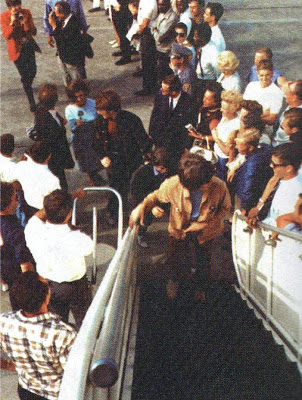
Photo 1: Paul boarding in Los Angeles. Paul (top left corner) lags behind the other Beatles; he is wearing a vivid red jacket that pops against the muted tones around him. He holds his camera as if about to take a picture but instead smiles warmly at a man photographing him. His posture is relaxed, familiar, unmistakably Paul.
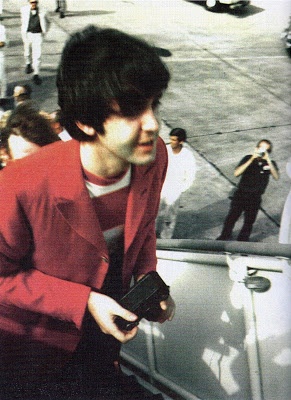
Photo 2: Paul ascending the stairs. This image offers a closer look at Paul’s outfit: the red jacket, a red‑and‑white striped shirt with red piping at the neck, camera still in hand. His expression is gentle, open, unguarded.
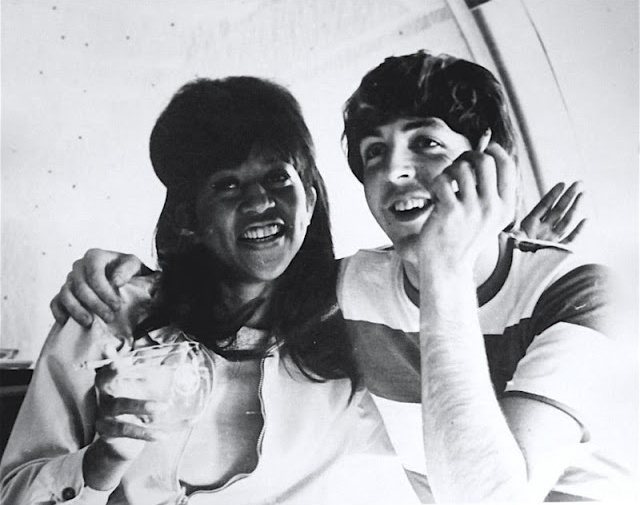
Photo 3: Paul and a friend on the plane. Inside the cabin, Paul sits with a young woman from the tour entourage. Their chemistry is effortless: Paul’s arm draped naturally over her shoulder, her arm around his back as she leans fully into his chest, both smoking, both smiling with radiant authenticity. This is the intimacy of a tight tour family.
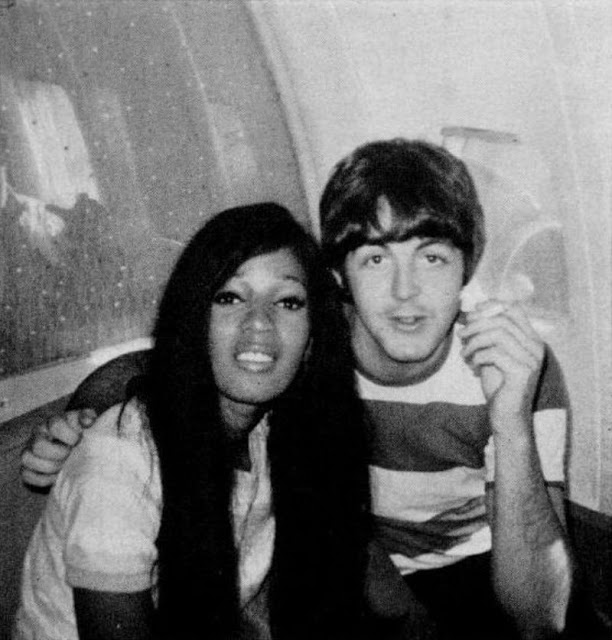
Photo 4: William with Estelle Bennett. Here the contrast begins. William, dressed in what appears to be the exact same striped shirt Paul is wearing, sits beside Estelle Bennett of The Ronettes (an opening act). The fingers of his right hand curl inward—a classic tension tell—as Estelle leans slightly away, her posture guarded. The warmth seen in photo 3 is absent. This is performed closeness, not lived closeness.
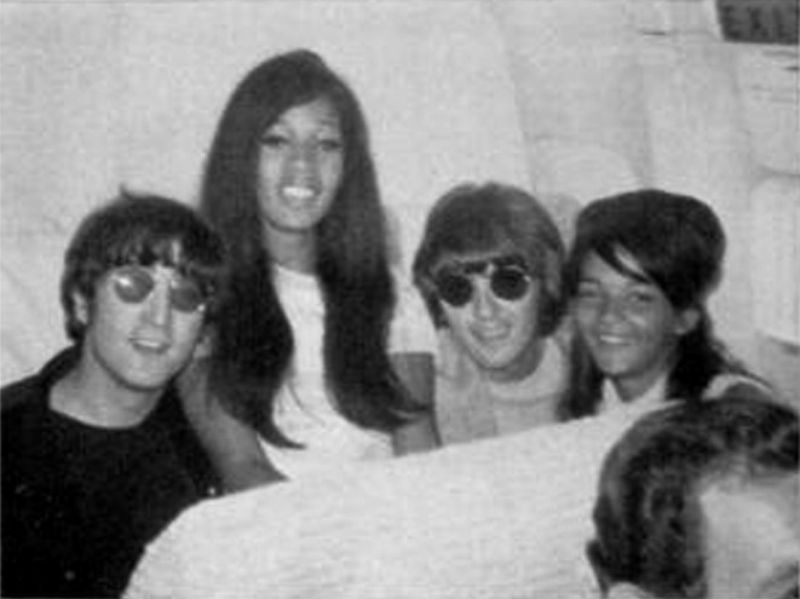
Photo 5: John, Estelle, George, Nedra Talley. This group shot detonates any claim that The Ronettes were distant acquaintances. Estelle is tucked comfortably between John and George, their shoulders overlapping, with the same tour‑family ease seen with Paul and his friend in photo 3. Compared to this photo, Estelle’s reserve with William in photo 4 becomes glaring.
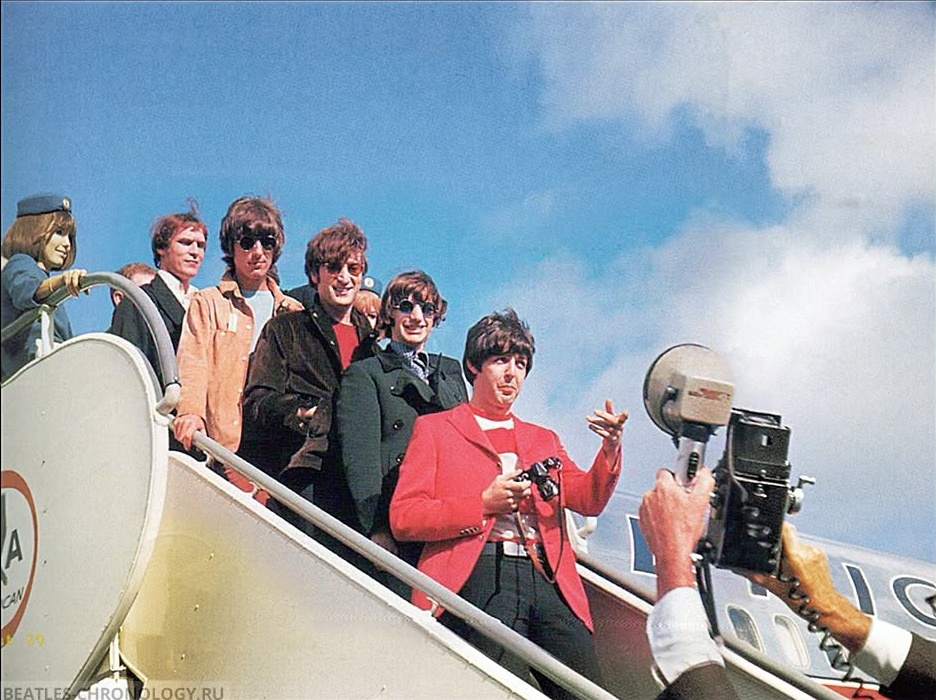
Photo 6: William deplaning in San Francisco. William descends the stairs followed by Ringo, John, and George—wearing Paul’s exact outfit. In color, the match is undeniable. William’s height is carefully managed: Ringo stands behind him, minimizing the height discrepancy that would have been more obvious beside John or George. William makes an exaggerated expression. Paul never deplaned like this. The mugging feels strategic—a way to obscure bone structure and avoid scrutiny.
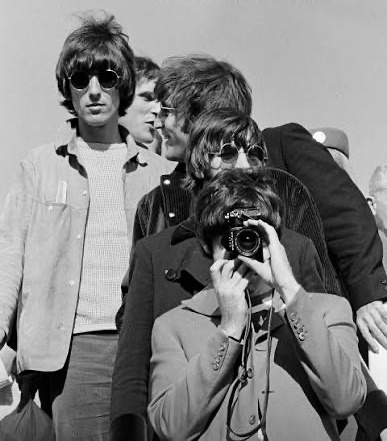
Photo 7: William deplaning, with camera. William hides behind a camera, again preventing a clean facial comparison.
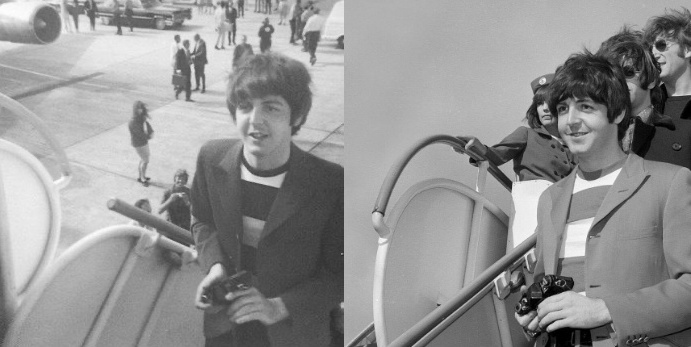
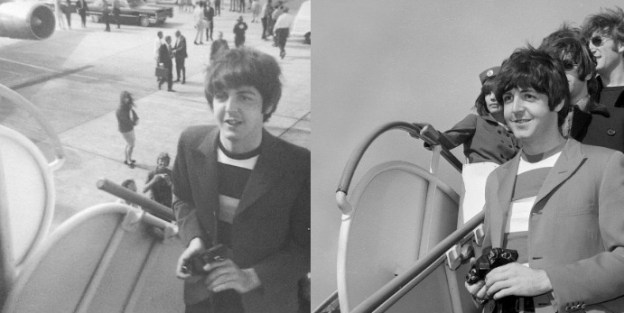
Photo 8: Paul boarding, William deplaning. The striking similarity of setting, pose, and even prop between these two images—Paul boarding in Los Angeles (left), William deplaning in San Francisco (right)—allows for a very fair comparison.
***
These photos raise unavoidable questions. Why was William—the man who would replace Paul three months later—on the plane with him? And why did William, not Paul, deplane with the band?
The In-Flight Poisoning
By the time the Beatles’ American Flyers Electra lifted off from Los Angeles on August 29, 1966, the pieces of an assassination scenario were already in motion. The photographic record shows two men dressed identically: Paul McCartney, and the man who would later replace him in the Beatles—William.
Why William Was on the Plane. William’s presence on the aircraft—in Paul’s clothes, in Paul’s entourage—only makes sense if he was positioned as an immediate stand-in. The flight was the transition window, and William was to step into Paul’s place instantly. His presence on the LAX→SFO flight is itself evidence of a planned transition—and the enclosed, relaxed environment of a chartered plane offered the perfect setting for a covert attempt.
Why Paul Didn’t Deplane. When the plane landed in San Francisco, William deplaned with John, George, and Ringo. Paul did not. The band didn’t wait for him, even though they were extremely early for the show and had hours to spare. Time wasn’t a factor. The only plausible explanation is that Paul was indisposed or being held back—a hinge point that makes the hypothesis of a poisoning necessary to consider.
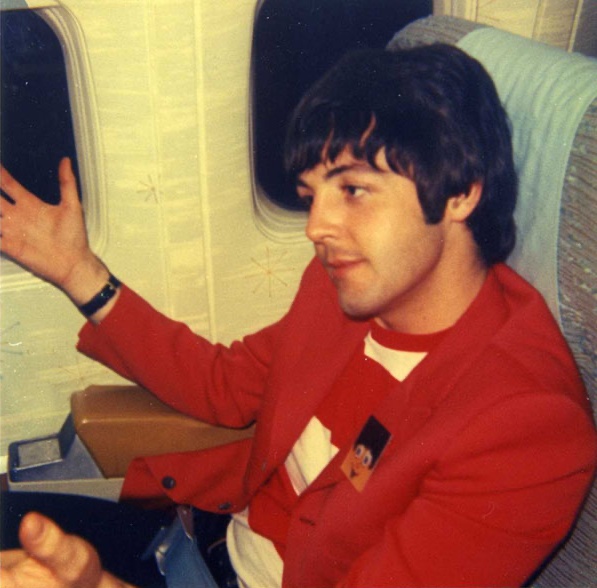
The Lapel Pin Problem. Paul boarded the plane without a pin. Yet on the plane (seemingly shortly before or after take-off, since he is still buckled in), he is photographed wearing a bold, cartoonish lapel pin: a mop‑top caricature with a grinning face (photo 9). The pin appears only in the cabin, suggesting it was added after boarding.
In an assassination scenario involving two identically dressed men, a marker is essential. A handler or operative cannot rely on facial recognition alone, especially if unfamiliar with the Beatles. (And think about it: fans and even rock historians can’t seem to tell Paul and William apart.) A simple instruction—the one with the pin is the target—would eliminate the risk of killing the double.
The pin does not appear in backstage photos later that day, so Paul clearly removed it at some point.
How Poisoning Could Have Occurred. Cold War intelligence operations routinely employed toxins that mimicked sudden illness or heart attacks. Soviet operatives were trained in administering untraceable poisons through food or drink. A tainted beverage could produce violent nausea, vomiting, collapse, or cardiac distress. The Beatles were relaxed on the plane: smoking, drinking, chatting. To witnesses, Paul would appear suddenly, violently ill—not murdered. So, why didn’t Paul die? Perhaps he tasted something “off” in his drink and stopped after a sip or two. A partial dose may have sickened him without killing him.
***
Paul McCartney was famously friendly and curious. He would have been intrigued by the unfamiliar “security person” (the killer’s cover) in the Beatles’ entourage that day. I strongly suspect Paul chatted with his would-be assassin, and the information he gleaned about this individual’s origins in the Soviet Union informed the lyrics of “Back in the U.S.S.R.”
Song for an Assassin
If Paul McCartney became violently ill on the LAX→SFO flight, and if he spent part of that flight chatting with the man who had been sent to kill him, then “Back in the U.S.S.R.” becomes more than a clever homage to other artists. It becomes testimony. The song is usually described as a parody of the Beach Boys and a twist on Chuck Berry. Those influences are real, but they are only the scaffolding. The Soviet imagery and geographic specificity point to something more intimate—something learned in conversation, something Paul could not have known unless someone told him.
The Musical Blueprint. Paul built “Back in the U.S.S.R.” on two existing templates:
- Chuck Berry’s “Back in the U.S.A.” (1959): Berry’s song opens with a plane landing and celebrates returning home from abroad. Paul mimics the premise but flips the geography entirely. Instead of celebrating America after an international flight, he celebrates returning to the Soviet Union.
- The Beach Boys’ “California Girls” (1965): The bridge of “Back in the U.S.S.R.” mirrors the Beach Boys’ catalog of regional beauties—except Paul replaces California’s sun-drenched optimism with Soviet locales. The vocals adopt the Beach Boys’ high-pitched harmonies.
These musical references give the song its surface identity. But beneath them lies a deeper story.
The “Paper Bag” and the “Dreadful Flight.” Two lines in the song are not metaphorical. They are literal descriptions of physical distress: “On the way, the paper bag was on my knee / Man, I had a dreadful flight.” A paper bag on one’s knee is a euphemism for vomiting—or for being close enough to vomiting that the bag must remain at the ready. The “dreadful flight” line underscores the severity of the illness. These lines align precisely with the poisoning hypothesis: sudden nausea, violent sickness, collapse. They are the textual echo of what happened on the plane.
The Soviet Imagery: A Taboo Topic. In the mid‑1960s, Soviet imagery was almost nonexistent in Western rock music. The USSR was framed as the enemy—a gray, frozen landscape of nuclear threat and totalitarian control. The Beatles’ music was banned behind the Iron Curtain. Paul’s sudden pivot to Soviet imagery is therefore deeply unusual. It suggests the imagery was not random. It was personal.
The Georgian Connection. Based on “Back in the U.S.S.R.,” I strongly suspect Paul’s would-be assassin hailed from the Soviet Republic of Georgia. The third verse is too geographically precise to be a coincidence. The details match Georgia as distinct from other Soviet republics:
- “Oh, show me ’round your snow-peaked mountains way down south”: Georgia sits at the southern frontier of the former Soviet Union and is defined by the Greater and Lesser Caucasus mountain ranges—some peaks permanently snow-capped.
- “Take me to your daddy’s farm”: Georgia had unique semi-private farmland, unlike most of the USSR. Georgian farmers were wealthier than typical Soviet citizens.
These details are not stereotypes. They are not Western media tropes. They are specific, accurate, and culturally grounded. They read like information learned in conversation—not invented.
Paul even mentions Georgia in the Beach Boys–inspired bridge. The line, “That Georgia’s always on my mi-mi-mi-mi-mi-mi-mi-mi-mind,” is a multi-layered pun: a nod to Ray Charles’s “Georgia on My Mind” (1960) and a possible echo of the operative’s homesickness or family ties.
The Balalaika: A Songwriter’s Hybrid. The third verse of “Back in the U.S.S.R.” includes the line: “Let me hear your balalaikas ringing out.” The balalaika is a traditional Russian stringed instrument with a distinct triangular wooden body. In my imagination, Paul asks the assassin: “Do you have guitars where you’re from?” The assassin tells him about Georgia’s panduri and chonguri. When Paul doesn’t recognize either instrument, the assassin adds: “But surely you have heard of the Russian balalaika.” Paul seizes on the balalaika—recognizable to Western listeners—without seriously compromising the Georgian specificity of the verse.
The Spontaneous Kiss and the Bridge. In Jim Marshall’s photographs from the flight to San Francisco, Paul and his friend are clearly engaged with a third person, standing in the aisle—an unseen conversationalist, perhaps the Georgian assassin. Here’s where my imagination goes:
PAUL: What do you like about America?
ASSASSIN: The women. Better than where I come from.
PAUL (offended on their behalf): Now, I’ve been all over the world, and the women everywhere are lovely.
ASSASSIN (clarifying): The women in America are free, compared to the women back home.
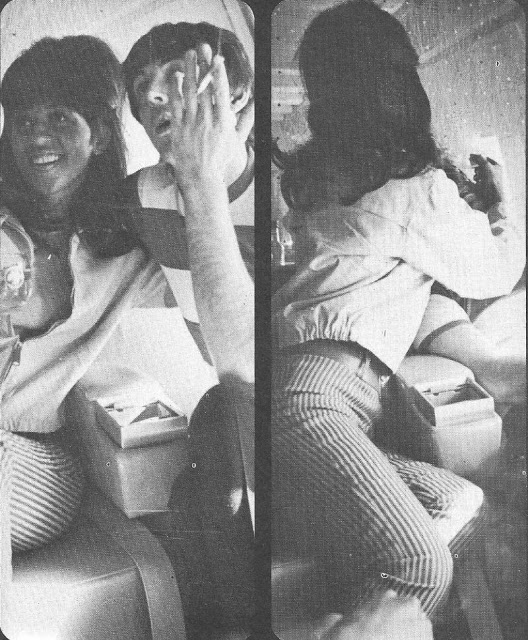
At this point, Paul’s friend playfully leans his seat back and pretends to kiss him—a mischievous demonstration of the liberation of Western women (photo 10). To a Soviet man accustomed to scarcity, rationing, and conservative domestic norms, this moment would look like the pinnacle of American social freedom. And the whole exchange inspires Paul to honor the girls of the Soviet Union in the song’s Beach Boys–style bridge:
Well, the Ukraine girls really knock me out
They leave the West behind
And Moscow girls make me sing and shout
That Georgia’s always on my mi-mi-mi-mi-mi-mi-mi-mi-mind
“You don’t know how lucky you are, boy,” is Paul’s admonition to the assassin to appreciate the women of his home country.
Logistical Echoes. Multiple alignments between real life and “Back in the U.S.S.R.” support the idea that the song was inspired by Paul’s experience on the LAX→SFO flight and his return home to England shortly afterward. These are the most compelling:
- “Didn’t get to bed last night” lines up with the Beatles’ two hours trapped backstage after the Dodger Stadium show the night before the flight from LAX to SFO.
- On August 31, 1966, after the Beatles landed at Heathrow, a journalist asked Paul: “What are you planning to do today?” Paul replied: “Sleep. Sleep.” This echoes the lyric: “Leave it ’til tomorrow to unpack my case / Honey, disconnect the phone.” Paul’s “honey” was Jane Asher. Elsewhere on this blog, I have made a case that the two were engaged at the time of his death.
These lyrics are not abstract. They are lived details.
Dodging Bullets
This section is speculative, and I want to be clear about that. What follows is an interpretation of a piece of Beatles lore that has circulated for decades. But when placed alongside the events of August 29, 1966, the lore takes on a new and unsettling resonance: Paul McCartney might have been shot at as he deplaned, by himself, in San Francisco.
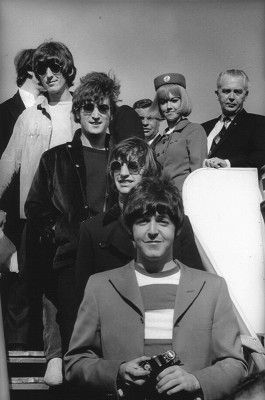
A Speculative Scenario. If Paul became violently ill on the LAX→SFO flight, he may have rushed to the lavatory—and was still there when the plane landed. In an operational scenario, the next step would be to isolate the target. The simplest way to do that would be to clear the aircraft. A directive of “Everybody off” would protect the entourage and crew from witnessing violence and create a window in which Paul, emerging alone, could be taken out quickly and quietly. A posed photo of William, Ringo, John, and George on the airplane stairs—with a flight attendant and several others behind them—supports the idea of a mass deplaning (photo 11).
Outfit as Target. Paul’s ensemble that day—a red-and-white-striped shirt under a red jacket—resembled a literal target. The visual analogy is sickening but operationally sound. Bold visual markers are used to identify targets instantly. John, Paul, and George were nearly identical in height and hairstyle. From a distance, their silhouettes were extremely similar. In a chaotic environment, a high‑contrast marker would help prevent killing the wrong Beatle.
“Bullet Holes in the Plane” Lore. In his memoir I Me Mine (1980), George Harrison recounts having been approached by a man on a flight from New York to Los Angeles in 1972 or 1973. The man introduced himself: “I was the pilot of the Electra that you rented for the Beatle tours, from American Flyers Airlines.” He continued: “You’d never believe that plane we had, with bullet holes, and how close we came…” George asked him to wait until they landed to tell him the full story. As George reports:
So later he told me what had happened. He said that when we had finished the tour, the plane, its tail, it wings were full of bullet holes, and he said: “These crazy guys…they were at the end of the runway trying to pot us off.” Jealous boyfriends had come down with pistols and rifles trying to kill us.
The plane described—a Lockheed Electra chartered from American Flyers—matches the aircraft used to transport the Beatles from Los Angeles to San Francisco on August 29, 1966. The pilot said the bullet holes were discovered at the end of a tour, at the end of a runway. The LAX→SFO flight was the second‑to‑last flight of the 1966 tour, and the plane was parked at a remote terminal. The pilot didn’t specify the year, but 1966 fits the details. (The only other possibilities are 1964 and 1965.) Further, when the crew returned to the plane after the Candlestick show, it was dark; the pilot likely wouldn’t have noticed the bullet holes until the next morning, after the return flight to Los Angeles—meaning, “when we had finished the tour.”
If Paul was shot at as he hurried down the airplane stairs, wondering where everyone had gone, the bullets could have struck the aircraft instead. George theorized that jealous boyfriends had tried to kill them. But does it seem likely that armed sweethearts of thirteen- to seventeen-year-old fans would have gotten close enough to shoot up a chartered plane parked at a hidden terminal? Or does the scenario suggest something more organized?
Locked Gate, Lost Bus
After the operation on the plane failed, the next opportunity to assassinate Paul McCartney might have come at Candlestick Park—if only the Beatles could find a way in.
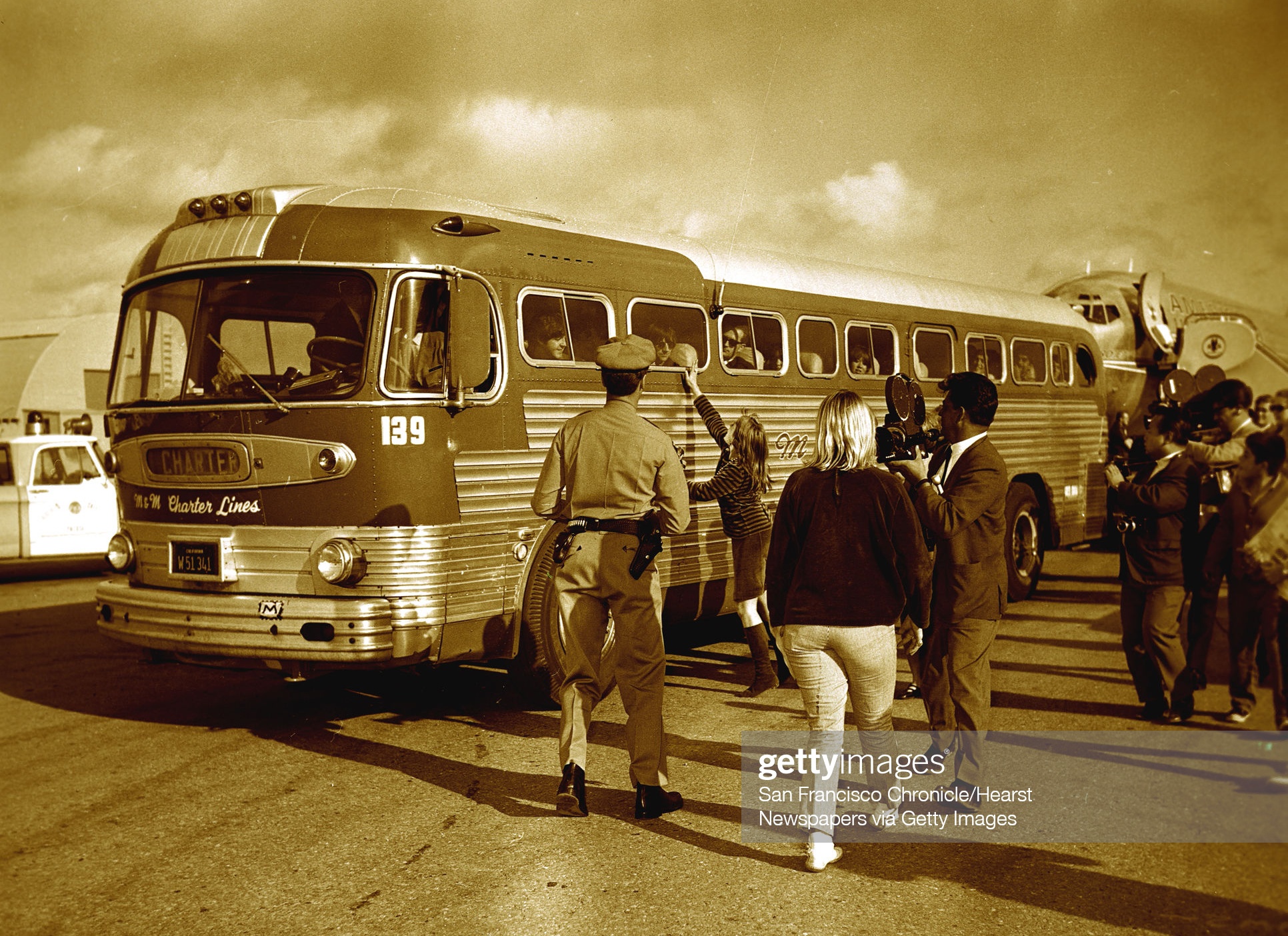
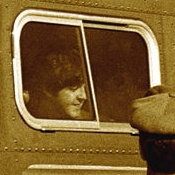
Two Pauls on a Bus? Instead of transferring into their usual limousines, the band and their entourage boarded an M&M Charter Lines bus parked directly beside the aircraft. As seen in photo 12, Paul sits at the front of the bus, smiling sweetly through the window at a lone fan—who has eyes only for Ringo. (Photo 13 shows a close‑up of Paul in his seat.) A man resembling Paul’s replacement, William, sits toward the back of the bus, though the identification is uncertain (photo 14). His hand covering his chin, the man appears deflated—perhaps baffled that Paul McCartney continues to defy attempts on his life.
The Locked Gate Problem. When the bus carrying the Beatles reached the back entrance of Candlestick Park, the gate was bolted shut and padlocked. This should have been impossible. The concert promoter, Tempo Productions, had conducted multiple trials earlier that day to ensure a smooth arrival. The drivers knew the route. The timing was rehearsed. The entry point was confirmed. And yet the gate was locked.
Sonnie Sims, the American Airlines flight attendant pictured in photo 11, who had worked the LAX→SFO flight and was now sitting beside Paul on the bus, later recalled:
We got to the stadium and the gate was locked, and the Beatles couldn’t get in. We were driving around Candlestick Park trying to find a way in. The bus drivers were going, “We had three dry runs today to make sure this would not happen!”
With fans converging on the vehicle, the driver couldn’t remain idle. He circled the stadium. Panicking, he pulled away entirely and sped into the surrounding residential streets, where he became lost. The most famous band in the world was wandering a public neighborhood in an unarmored bus.
The Beatles themselves apparently found the situation hysterical. An escorting police officer radioed San Francisco police dispatch—which tracked down a stadium official at the San Francisco Giants’ executive headquarters, acquired the key, and rushed it to the locked gate.
A Coordinated Containment Protocol. When you step back from the minute‑by‑minute chaos of August 29, 1966, a larger pattern emerges. Multiple logistical anomalies occurred in rapid succession; taken together, they form a sequence of decisions that make perfect sense if the day’s plan had been built around the expectation of Paul’s death. They are not proof, but they are a pattern—and they align disturbingly well with the operational logic of an assassination scenario that nearly succeeded.
First, instead of landing at a standard commercial gate surrounded by fans, the Beatles’ plane was directed to a deactivated terminal—a blind spot on the airfield. If Paul had succumbed to poisoning mid‑flight (or to gunfire upon deplaning), this isolated arrival zone would have allowed handlers to manage the emergency privately and transition William into Paul’s place without a single uncontrolled photograph.
Then there was the locked gate. Was Candlestick Park sealed because the Beatles were never truly expected to make it there—on account of the passing of their bassist? Or perhaps, after Paul survived the flight, the gate was locked intentionally to keep him out of the secure interior of the stadium—thereby extending the window during which a secondary attempt might be made.
Further, the absence of a press conference was a glaring aberration, whether a session was canceled or never scheduled. If 250 media personnel—reporters, photographers, camera crews—had been gathered at Candlestick Park, waiting for the Beatles, and the band never showed (because Paul was dead), word would have spread instantly. If Paul survived but looked ill, reporters might notice his condition or capture footage that revealed something amiss.
***
Once the Beatles finally entered Candlestick Park, the oddities didn’t subside. As on the plane and possibly the bus, Paul McCartney had a doppelgänger backstage.
Two Pauls Backstage
If Paul survived the poisoning and the shooting, as well as the irregular sojourn in an unarmored bus, the assassination scenario would have shifted to Candlestick Park. The backstage area provided a sustained, four-hour window in which Paul and William occupied the same building, the same converted locker room, and the same pre-show timeline. The photographic record splits cleanly into two parallel realities unfolding side by side.
The Backstage Environment. Candlestick Park had no proper backstage facilities. The Beatles were placed in the San Francisco Giants’ locker room, hastily transformed into a makeshift dressing area. The room was crowded, warm, and chaotic, with musicians, local celebrities, and staff all moving through the narrow space. Simpson’s Catering, a Clement Street institution, was hired to turn the baseball clubhouse into a dining area, serving roast beef, Yorkshire pudding, and tea.
To pass the time, the band transformed a white linen tablecloth into a collaborative graffiti canvas. They smoked, doodled, and chatted with visitors, including Joan Baez and others. Local DJ “Emperor” Gene Nelson later described the room as a raucous, convivial party.
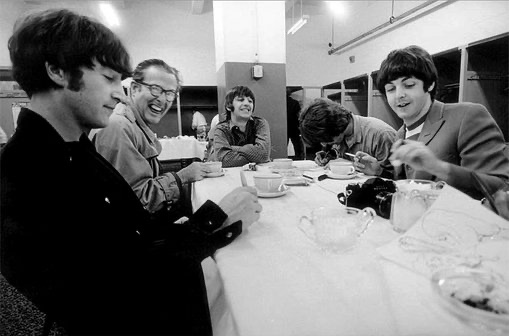
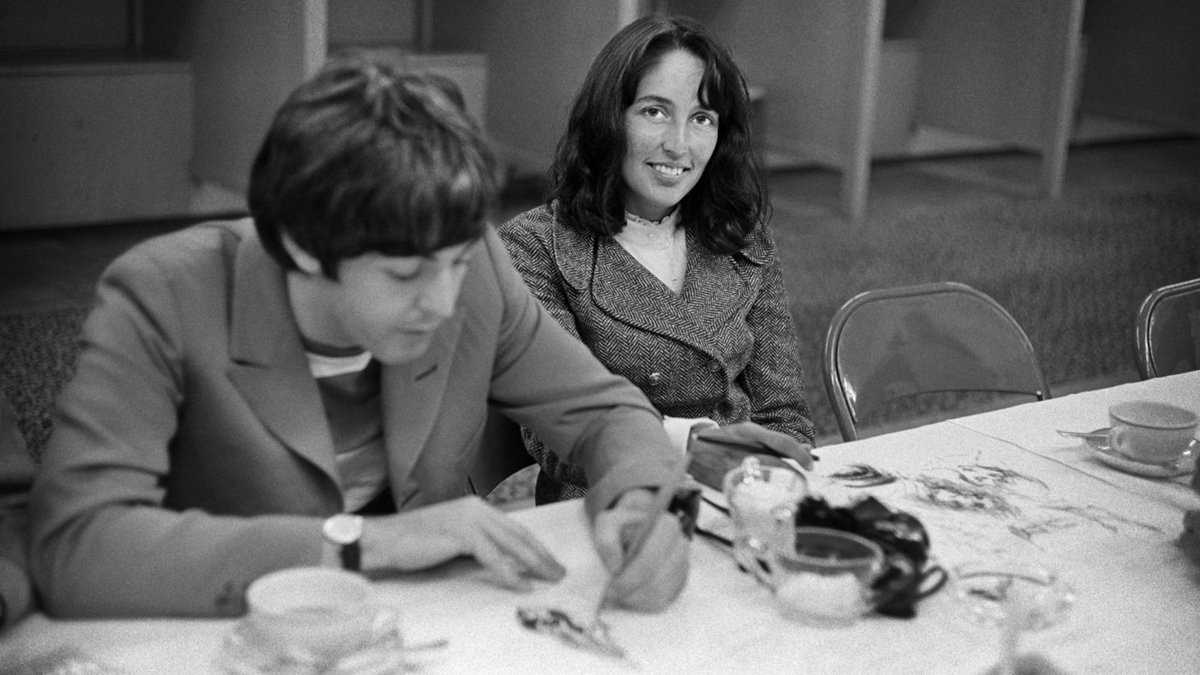
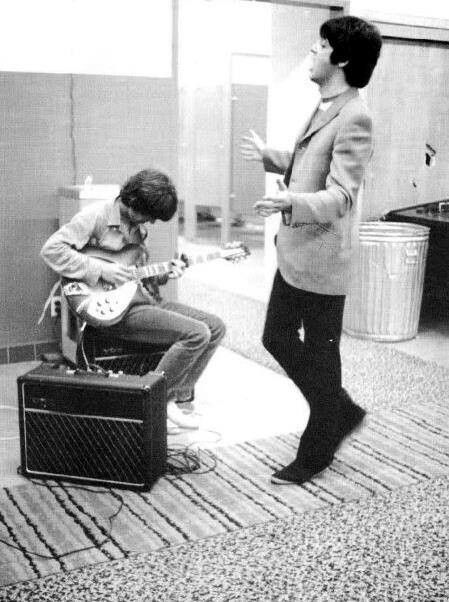
Paul in the Creative Core. In every backstage photo of Paul, he is exactly where he belongs: at the center of the Beatles’ social and creative orbit. In one image (photo 15), Paul sits with John, George, and Ringo around the graffiti‑covered tablecloth, smiling and relaxed. In another (photo 16), he sits directly beside Joan Baez, as they both draw on the tablecloth. In yet another (photo 17), Paul stands close to George Harrison, singing as George rehearses on guitar. These images show Paul animated, expressive, and socially integrated—fully present with his bandmates and peers.
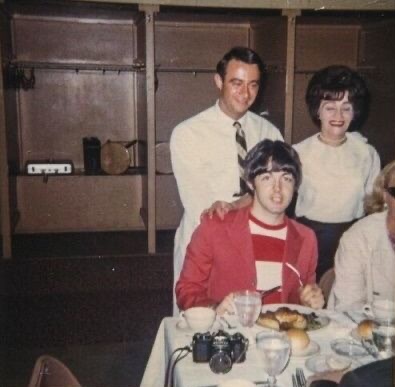
William in Isolation. Only one image of William backstage at Candlestick Park has surfaced online (photo 18), and it is nothing like the photos of Paul. William sits at the end of a long table, dining with caterers and others rather than with the Beatles. He is physically separated from John, Paul, George, and Ringo. He is not part of the creative core, not part of the social warmth, not part of the pre‑show camaraderie. He appears subdued, withdrawn, and peripheral.
And then comes a compelling forensic detail: William is holding his knife in his right hand.
Paul McCartney was famously, fiercely left‑handed—not just in performance but in daily life. Photo 16, for example, shows him drawing with his left hand. In a 1963 interview, Paul talked about his left-handedness as if it were an affliction:
The only thing I couldn’t cure myself of was being left-handed. I do everything with my left hand, and no matter how I try I can’t change the habit.
Eating is one of the most revealing contexts for handedness. A right-handed double might mimic left‑handedness while performing or posing but revert to natural habits during private, unguarded moments—as William appears to have done backstage at Candlestick Park. (The silverware placement suggests the image isn’t flipped.)
This evidence is not conclusive; a lefty might choose to cut right-handed. I couldn’t find a photo of Paul using cutlery for a baseline reference; he appeared to have eaten only finger foods from 1962 to 1966.
The Photographic Divide. The contrast between the images is stark:
- Paul is surrounded by his bandmates, celebrities, and trusted collaborators. William is alone, dining among strangers.
- Paul is engaged, expressive, and socially integrated. William is quiet, tense, and isolated.
- Paul is photographed repeatedly by Jim Marshall. William appears only once in Marshall’s images, at least those available online.
These two realities unfold simultaneously in the same locker room—two men dressed identically, living parallel but separate backstage lives.
***
William was staged in a separate zone, fed and kept ready, suggesting the operation was still active. As we know, Paul McCartney went on to perform that night with his Beatle brothers—their final concert together, sixty years ago today. But he may not have been out of danger.
Don’t Be Long
This is the most speculative section of the San Francisco movement, and it needs to begin with that acknowledgment. What follows is presented neither as fact nor as a claim of historical certainty. It is a reconstruction of what might have occurred in the early morning hours of August 30, 1966, based on circumstantial clues and song lyrics. It fits the operational logic of the day, even if it can never be proven.
A Third Attempt. If the poisoning on the plane had failed, and the subsequent shooting had also failed, the operatives may have sought one last opportunity to eliminate Paul McCartney before the Beatles returned to England the following day. They needed a private, controlled environment in Los Angeles. Brian Epstein, who had stayed behind from San Francisco, would have been the one tasked with securing a location. He borrowed the house at 1567 Blue Jay Way from the Beatles’ West Coast attorney, Robert Fitzpatrick.
You’re Not Coming with Us. After the Beatles finished their concert at Candlestick Park, they flew back to Los Angeles, arriving around 1 a.m. John, George, and Ringo returned to 7655 Curson Terrace, in the Hollywood Hills, their home base for the previous five days. But Paul was dropped off alone at a second house, 3.5 miles away, in the Bird Streets—an enclave of steep roads, modern architecture, and panoramic views stretching from the Los Angeles Basin to the Pacific Ocean. This separation, undocumented in official histories, would have been highly unusual. Paul was told the others would join him soon.
The Bird Streets as a Stage. The Bird Streets are unique in Los Angeles for their avian theme. Almost every road is named after a bird—Nightingale Drive, Mockingbird Place, Blue Jay Way. The hills rise sharply, from 400 to over 1,700 feet above sea level. At night, the marine layer (a dense blanket of low-altitude stratus clouds over the L.A. Basin) slams into the slopes. Drive up far enough, and you cross the cloud base. Then you stand inside the fog. It is quiet there. Isolated. Perfect for a private meeting—or an ambush.
Assassin as Reporter. Paul was told that a reporter from the Los Angeles Times would be interviewing him at the house. He waited. Fog settled over the hills. The house was silent. Then the “reporter” arrived. She was not a reporter at all, but an assassin—a paid operative sent to finish the job. Paul welcomed her in, unaware of her purpose. He “neutralized” her nonviolently. She left, unable to complete the assignment. Through personal charm, Paul had survived.
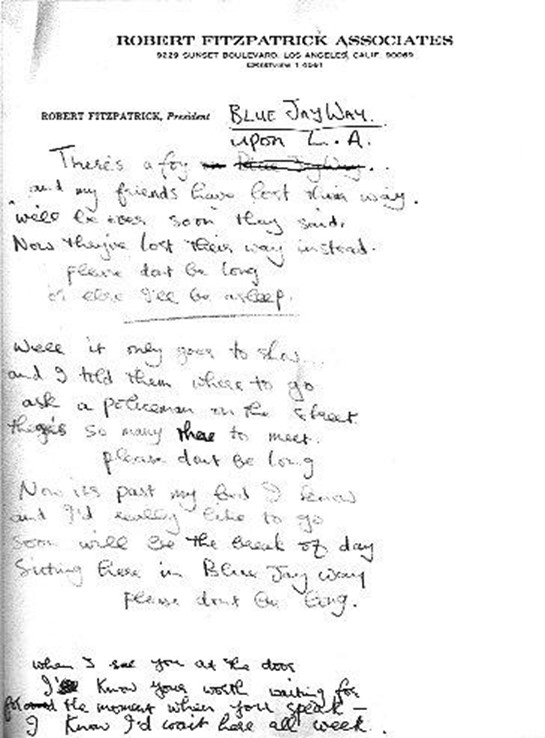
The Song as Testimony. Exhausted, alone, and probably growing worried, Paul reached for the nearest piece of paper—a sheet of Robert Fitzpatrick’s stationery—and began to write (photo 19). The lyrics of “Blue Jay Way” read like a barely coded rendering of the scene:
- “There’s a fog upon L.A.”: the literal fog of the Hollywood Hills
- “My friends have lost their way”: the other Beatles were supposed to join him
- “We’ll be over soon, they said”: a reassurance that never materialized
- “Please don’t be long or else I’ll be asleep”: fatigue, fear, vulnerability
- “I’d really like to go”: discomfort, unease
- “Now it’s past my bed,” “Soon will be the break of day”: the time, 4–5 a.m.
The lyrics bear Paul’s songwriting fingerprint: regular meter, formal rhyme scheme, strong narrative progression.
In earlier posts, I wrote about the unsettling Paul Is Dead clues embedded in “Blue Jay Way.” When the track is played backwards, beginning around thirty‑eight seconds, George can be heard repeating “Paul is bloody” and “Paul is very, very bloody,” with an especially clear instance at 1:20. Even in the forward audio, Paul’s name is intoned several times as an eerie background vocal (at 1:45 and 1:50). The Beatles completed the recording of “Blue Jay Way” on October 6, 1967, almost exactly one year after Paul’s death—a timing that may explain why these nods to him, and specifically to the manner of his death, were added with such intensity.
The Cover Story. According to the song’s official origin story, George Harrison and Pattie Boyd were staying at 1567 Blue Jay Way on August 1, 1967. Derek Taylor, the Beatles’ former press officer, planned to visit them but called to say he was running late. To pass the time, George wrote a song about waiting for him. Derek later said: “By the time I had reached them, the song was virtually intact.”
It’s a tidy, charming, plausible account. But it raises questions. Would George, reportedly jet‑lagged, wait up until nearly sunrise for Derek? Would Derek show up so early on a Wednesday morning? And why does the song refer to “friends” (plural) who have lost “their way,” “they said,” when Derek was only one person?
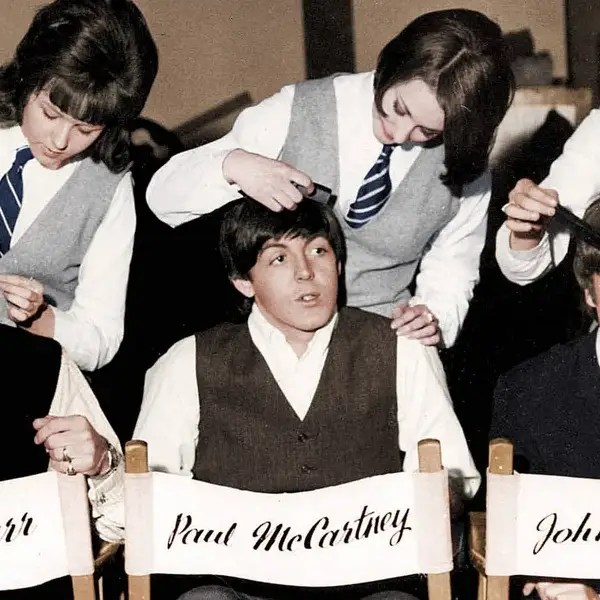
The official story doesn’t preclude the possibility that Paul was in the same house a year earlier, wondering where John, George, and Ringo were—and when they would join him. Consider the countless lies told by the surviving Beatles (and William) about why they wrote songs Paul left behind. Probably my favorite—or least favorite—example is the deception surrounding “Dear Prudence,” the second track on The White Album after “Back in the U.S.S.R.” Paul wrote “Dear Prudence” on the set of A Hard Day’s Night, in March 1964, for fellow cast member Prudence Bury (photo 20); but John later claimed to have written it for Prudence Farrow in India, in February 1968.
***
If true, the attempt on Paul’s life at Blue Jay Way was the last before he returned to London—where his luck would finally run out.
Brian Epstein’s Briefcase
This is one of the strangest puzzle pieces in the San Francisco assassination scenario. The briefcase incident is real; the details are tangled; the sources are few. What follows is not meant as a lurid detour but as a sober attempt to understand how Brian Epstein—the Beatles’ manager—may have been forced into compliance with a plot to murder and replace Paul McCartney.
The Theft in Los Angeles. On the morning of August 24 or 25, 1966—just a day or two after the Beatles’ concert at Shea Stadium, and four or five days before Candlestick—Brian Epstein woke up in a suite at the Beverly Hills Hotel to find his monogrammed Samsonite briefcase gone. The attaché case of his friend and attorney Nat Weiss was missing, too. The culprit: John “Dizz” Gillespie, an American drifter and sometime actor from Ohio, with whom Brian had been dangerously infatuated for roughly eighteen months.
Gillespie had not been invited on tour as part of the official entourage. Instead, he appeared to have tracked Brian down in Los Angeles, insinuated himself back into Brian’s good graces for one night, and then vanished—along with both briefcases.
We know what was inside Brian’s case because two insiders eventually talked: Peter Brown, Brian’s assistant, in his 1983 memoir; and Nat Weiss, in interviews before his death in 2013. Their accounts, later supported by documents found in Weiss’s abandoned storage locker, describe a “witches’ stew” of incriminating material: a large stash of pills, a brown paper bag of skimmed concert cash, and explicit Polaroids and love letters documenting Brian’s secret life with young men, including Gillespie himself.
In 1966, this was not just embarrassing. Homosexual acts between men were illegal in the United Kingdom. Exposure of the letters and photos could have meant arrest, public ruin, and a scandal eclipsing the controversy over John’s “more popular than Jesus” remark.
The Sting. Because the contents of the briefcase were too dangerous to expose, the theft was never reported to the Los Angeles Police Department. Instead, Weiss took charge. A blackmail note arrived, demanding $10,000 for the safe return of the briefcases and documents. Weiss hired a private investigator, arranged a sting, and confronted Gillespie’s “luckless confederate” at the handoff.
The operation half-succeeded. Brian’s initials-embossed briefcase was recovered. Its contents were not. The cash, pills, letters, and photos had already been removed. From that point on, Brian knew that somewhere out there, someone held the power to destroy him.
The Setup Problem. The standard narrative says Brian simply packed his secrets—the explicit photos and letters—in London and carried them across North America out of paranoia, like a man wearing his most expensive jewelry through a dozen chaotic cities because he trusts his own hands more than a locked safe at home. But when you look closely, that story stops making sense.
The explicit Polaroids primarily featured Brian and Gillespie together. The love letters included notes written by Brian to Gillespie—letters that, under normal circumstances, would have been in Gillespie’s possession, not Brian’s. For those letters to have ended up in Brian’s briefcase, either Brian had demanded them back (unlikely), or Gillespie had brought them with him.
Then there is the logistics problem. In 1966, a transatlantic flight from London (where Gillespie resided) to Los Angeles was an enormous expense, the equivalent of $4,800 to $7,700 today. Gillespie was a small-time hustler who lived by sponging off Brian. It strains credulity to imagine he casually funded a last-minute trip to California and then orchestrated a sophisticated blackmail scheme—with anonymous calls, ransom notes, and a local accomplice—within twenty-four hours of entering the hotel suite.
A more coherent picture emerges if you treat Gillespie not as a lone opportunist but as bait in a premeditated sting. Under this interpretation, Gillespie arrives in Los Angeles funded by deeper pockets, carrying incriminating photos and letters as weapons—which he uses to lower Brian’s guard, re-establish intimacy, and gain access to the suite. Once inside, he walks out with the briefcase, leaving Brian exposed and controllable. The goal, in this reading, is not just money. It’s leverage.
The Real Blackmail. Within the arc of a plot to assassinate and replace Paul McCartney, the briefcase theft becomes the mechanism that forces Brian into direct complicity. If Brian’s protective instincts were threatening to interfere, the Los Angeles squeeze solves that problem. Once his most radioactive secrets are in someone else’s hands, Brian is no longer just a manager; he’s a hostage. He can be compelled to cooperate.
On the plane to San Francisco and backstage at Candlestick Park, Paul and his replacement were photographed wearing matching outfits; this correlation can’t be dismissed as coincidence. By 1966, the Beatles were choosing their own casual clothes for travel and press conferences. The replacement’s handlers would have had no way of knowing what unique jacket, shirt, and pants Paul would pull from his closet that morning. For the double to appear in identical clothes, someone inside the Beatles’ inner circle would have had to coordinate the wardrobe or provide duplicate garments. Brian, compromised and coerced, was the obvious candidate. His original management contract formally gave him veto power over the band’s entire public presentation, so he had the authority to tell Paul what to wear.
***
The official histories treat Brian Epstein’s stolen briefcase as a sordid anecdote about cash, pills, and sex. But the incident is not a colorful side story. It’s the hinge that turns Brian from guardian to reluctant collaborator. With his secrets weaponized against him, he can be relied upon to dress Paul to match his double and to follow instructions without protest.
Why Paul Was a Target: JFK
If you want to understand why Paul McCartney may have been targeted for assassination in 1966, you have to begin with another assassination—that of John F. Kennedy, in 1963.
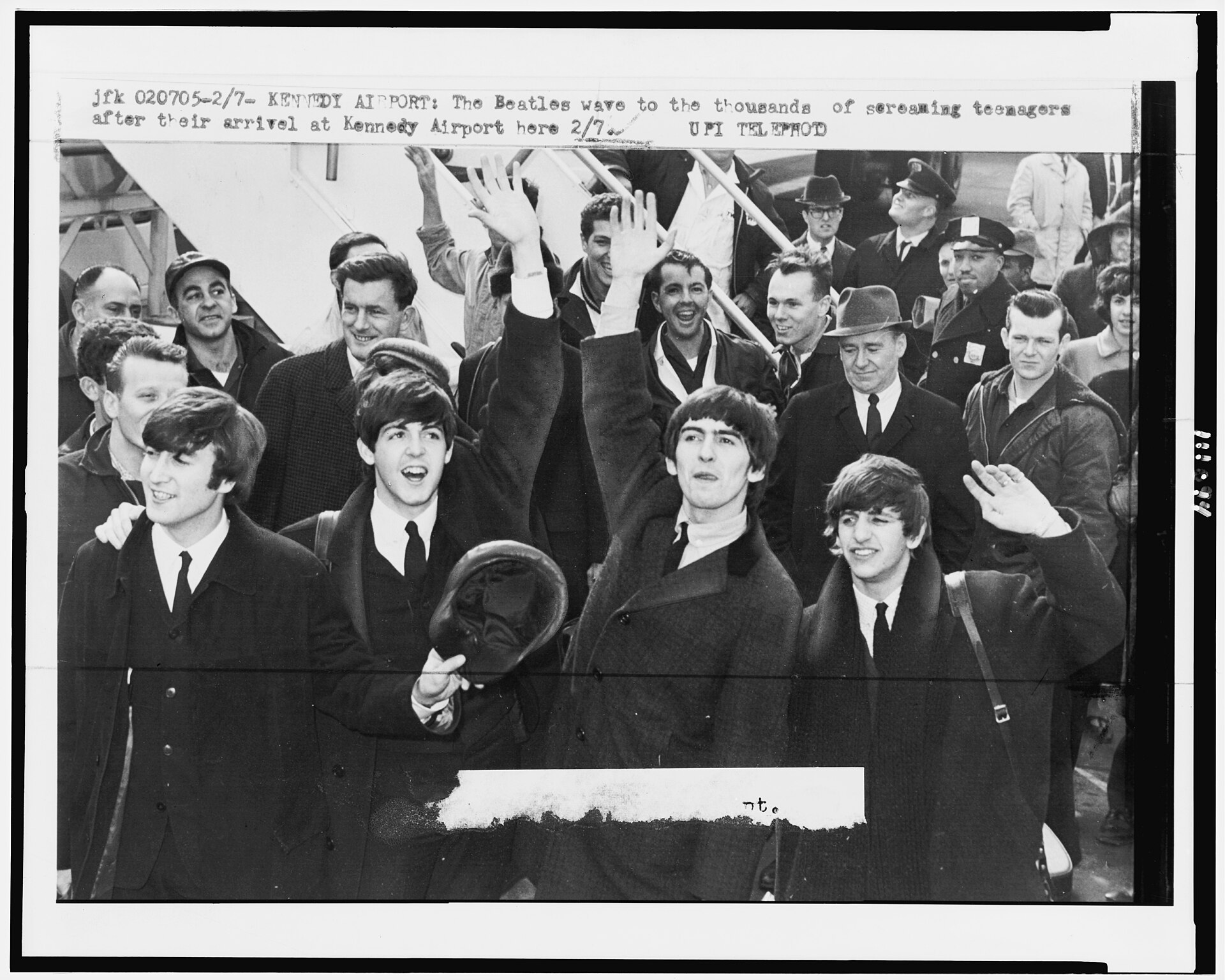
A Nation in Mourning. When JFK was assassinated on November 22, 1963, the United States entered a period of bereavement and profound cultural paralysis. Into this atmosphere of shock and sorrow stepped four young men from Liverpool, England. On February 7, 1964—just eleven weeks after the assassination—the Beatles landed at the newly renamed John F. Kennedy International Airport (photo 21). The late president’s name greeted them on the tarmac. They were terrified. No British rock group had ever broken America. They feared their irreverence would seem trivial or inappropriate.
Instead, 5,000 screaming teenagers met them at the airport fence. During their historic first press conference, they used quick-witted, self-deprecating British humor to cut right through the tension. Two days later, 73 million viewers watched the Beatles on The Ed Sullivan Show. Their performance was not just a television milestone; it was a mass catharsis. The Beatles brought forward‑looking energy to a country that had spent the winter documenting a national tragedy. In the eyes of many cultural historians, the Beatles helped America breathe again. They helped heal the public’s broken heart.
Billy Joel later said:
The country had the blues… The assassination of this young, vital president who represented us… We thought he was like us. He was our guy, representing youth and progress. So, when the Beatles came, they filled that vacuum in a way: all of a sudden, they now represented us.
Legendary rock musician Tommy James of the Shondells put it even more starkly: “After the JFK assassination in 1963, the Beatles were the only thing that made 1964 bearable.”
An unbearable irony would surface two years later.
Paul’s Political Awakening. By early 1966, Paul was exploring London’s avant‑garde and political counterculture. He was reading widely. And he sought out one of the most influential thinkers of the 20th century: philosopher and anti‑war activist Bertrand Russell. Russell chaired the “Who Killed Kennedy Committee.” He was an outspoken critic of American foreign policy and a vocal skeptic of the Warren Commission’s conclusions. When Paul visited Russell at his London home, the conversation reportedly turned to Vietnam, American intelligence operations, and inconsistencies in the official JFK narrative.
Russell’s doubts struck Paul deeply.
The Meeting with Mark Lane. Around the same time, American defense attorney Mark Lane—author of Rush to Judgment (1966), a blistering critique of the Warren Commission—was in London seeking support for an independent documentary based on his research. Lane’s work alleged that the U.S. government had actively covered up a conspiracy to assassinate President Kennedy.
Paul met Lane at a small private gathering and asked to borrow the unpublished manuscript of Rush to Judgment. Lane agreed. A few days later, late at night, Lane was working when the phone rang. A voice said: “Well, he could’na done it, could he?” Lane, irritated, asked who was speaking and what he was talking about. The reply: “Sorry. Paul—Paul McCartney. We met the other night. And I meant that Oswald could not have killed President Kennedy.”
Paul had read the manuscript. And he was convinced.
The Soundtrack Offer. Paul had been playing around with tape loops, electronic music, and home recording, and he volunteered to compose an experimental instrumental soundtrack for the documentary. As Lane later wrote in his memoir Citizen Lane:
I was astonished by that generous offer and speechless for a moment. I thanked him, but then I cautioned him that the subject matter was very controversial in the United States and that he might be jeopardizing his future.
Paul was not dissuaded. He could have said, “Right, well, er…I’ll be first in line to buy a ticket.” But he had the courage of his convictions. Then again, he likely never imagined his offer might endanger his life.
It is not lost on me that Paul McCartney, an early adopter of the greatest political conspiracy theory of all time, would later become the subject of the most famous conspiracy theory in music history. Polls taken over the decades show that a large majority of Americans—sometimes over 80 percent—do not believe the official story of the JFK assassination. I hope it’s not too late for people to start learning and accepting the truth about Paul McCartney—that he died in 1966, was replaced by a lookalike, and had his back catalog plagiarized for decades.
The Peril of the Platform. In 1966, the Beatles were the most influential cultural force on earth. Their statements shaped youth culture globally. Their music reached millions. Their opinions mattered. If Paul McCartney—charming, diplomatic, broadly beloved—attached his name and music to a documentary alleging government misconduct in JFK’s death, it would legitimize the assassination‑conspiracy movement, undermine domestic morale, damage international credibility, and fuel anti‑government sentiment during the Cold War. This was not a fringe concern. It was a geopolitical nightmare.
Paul McCartney had become a potential national security threat to the United States of America.
The Silencing Motive. In February 1964, Paul had helped distract America’s youth from the trauma of JFK’s death. He helped lift the country out of its grief. He helped restore color and joy. By 1966, he was preparing to expose the wound. The same man who had soothed the nation was now picking at the scab. A rogue intelligence group might have viewed Paul’s initiative as intolerable. Neutralizing him before he could complete the soundtrack would prevent global legitimization of JFK‑conspiracy claims. It would prevent the Beatles from becoming a political force. And it would prevent Paul from using his musical talents to amplify a message the government could not control.
The Silent Film. When Rush to Judgment was released in theaters on June 2, 1967, it featured no music at all. Not a single note. The soundtrack Paul had promised never materialized. He had been dead for eight months, so he could hardly have been expected to deliver it. And if William felt himself capable of composing the score, he would have been steered away from such a dangerous political project by those who had installed him in the Beatles.
The silence speaks louder than any score could have.
***
By itself, Paul McCartney’s involvement with the JFK documentary could have sufficed as motivation for interested parties to assassinate him. But why replace him? For the power of having an asset embedded in the most famous band in the world—but to what end?
Why Paul Was a Target: LSD
By 1966, the Vietnam War was escalating. Anti-war protests were growing. Young Americans were marching, organizing, and refusing to accept the government’s narrative. Youth activism was becoming politically effective. The same rogue intelligence group that viewed Paul McCartney as dangerous sought to redirect this energy. Could they kill two birds with one stone?
The theory was simple: If “Paul McCartney” endorsed LSD, millions of young people would follow. And if the youth were “strung out,” they would be less likely to organize, march, or resist. The real Paul McCartney was reluctant to try LSD. It is well-known that at a Los Angeles house party in August 1965, all the Beatles except Paul took LSD. But a replacement could be guided—steered toward psychedelic messaging without resistance.
The MKUltra Connection. This theory makes sense only when considered in the context of MKUltra—the CIA’s unethical human‑experimentation program that spent millions acquiring the world’s supply of LSD in the 1950s and early 1960s. Two strands of MKUltra research matter here:
- LSD as an incapacitating agent: Subjects became disorganized, unfocused, and unable to follow instructions.
- LSD as a cultural disruptor: Early counterculture figures first encountered LSD through CIA‑funded university experiments.
With regard to redirecting the energies of America’s young war protesters, two theories emerged: LSD could fragment a population, and it could redirect youth away from political action and toward inward‑facing mysticism.
The Asset Value of a Replacement. Simply eliminating Paul McCartney would create a martyr. If his death looked anything but natural or accidental, his assassination might provoke a global investigation. It would destabilize the Beatles’ empire.
But replacing Paul McCartney would achieve two goals: silencing the real Paul, whose political awakening (regarding the JFK assassination and the Vietnam War), combined with his global platform, made him a serious threat; and repurposing the Beatles’ cultural microphone to influence the youth of America. A compliant double could be guided to promote LSD at the exact moment the agency wanted. And that’s precisely what happened.
The June 1967 Pivot. On June 19, 1967, ITN (Independent Television News) in the United Kingdom broadcast a calm, matter‑of‑fact interview in which “Paul McCartney” publicly admitted to taking LSD. It followed a Life magazine feature in which “Paul” became the first major British pop star to publicly acknowledge LSD use. The real Paul—cautious, controlled, reluctant—would never have been the first Beatle to publicly endorse LSD. But William, the replacement, was evidently guided to do so. He said LSD “opened his eyes.” He said it created “a whole new world.” He said it was “not dangerous if used properly.”
Historically, the LSD-proliferation plan backfired catastrophically on the government. Instead of pacifying the youth, LSD supercharged the anti-war movement; fueled radical political groups; and created a massive, uncontrollable anti-establishment culture that nearly tore the country apart.
So, was it worth erasing a man’s entire existence—as if the original Paul McCartney had never died, had never been born—for a sound bite and a few pull quotes?
Paul’s Psychedelic Music
Paul McCartney wrote psychedelic songs. We can’t know the order in which he composed them, but “Tomorrow Never Knows” and “Got to Get You Into My Life” are the earliest recorded evidence of his psychedelic turn. These tracks initiate the shift, but songs recorded after Paul’s death, including “Lucy in the Sky with Diamonds,” “Across the Universe,” and “Oh My Love,” reflect the full bloom of his psychedelic awareness.
Tomorrow Never Knows. The Beatles began recording “Tomorrow Never Knows” on April 6, 1966, just five days after Paul and John discovered Timothy Leary’s The Psychedelic Experience at Indica Books & Gallery. As the final track on Revolver, it stands as the Beatles’ most explicitly psychedelic song—not because it immerses the listener in altered consciousness, but because it quotes nearly directly from Leary’s step-by-step guide to navigating high-dose psychedelic trips. Considered in this context, the song is almost a book report.
The opening line—“Turn off your mind, relax, and float downstream”—is lifted almost verbatim from Leary’s text. The song continues in this instructive vein: “Lay down all thoughts, surrender to the void.” The result of this letting go is to “see the meaning of within.” The second verse maintains the didactic tone, offering axioms—like “Love is all and love is everyone”—and directives—like “Listen to the colour of your dreams.” These are principals and instructions for consciousness rather than depictions of it. Throughout, the lyrics specify what the psychedelic experience is and is not: it is “shining,” “being,” “knowing,” “believing,” “not dying,” “not living.”
“Tomorrow Never Knows” is more academic than immersive. It presents the procedural aspects of the psychedelic experience rather than its sensory or emotional facets. The song’s droning, circular structure mirrors Leary’s emphasis on detachment, transcendence, and the cyclical nature of consciousness—where the end is the beginning.
Got to Get You Into My Life. One day after beginning work on “Tomorrow Never Knows,” the Beatles started recording “Got to Get You into My Life.” The opening lines of this first track on side two of Revolver read like a literal account—shifting into metaphorical—of Paul’s first LSD experience:
I was alone, I took a ride
I didn’t know what I would find there
Another road where maybe I
Could see another kind of mind there
The imagery is understated but revealing: a solitary journey, a threshold moment, and the possibility of encountering “another kind of mind.” Even if the song was not written immediately after Paul tried LSD, this verse aligns with the early phase of psychedelic experimentation: curiosity, uncertainty, and the sense of stepping into a different mental landscape.
Lucy in the Sky with Diamonds. The world of “Lucy in the Sky with Diamonds” is built from psychedelic imagery, surreal spatial distortions, and a childlike sense of wonder filtered through altered perception. Released on Sgt. Pepper, the song depicts a landscape populated by “tangerine trees and marmalade skies,” with cellophane flowers towering overhead. Ordinary objects become bright, impossible visions: newspaper taxis appear on a riverbank, rocking‑horse people wander through the scene, and railway employees made of modeling clay wear mirrored ties.
If the iconic psychedelic imagery didn’t speak for itself, “LSD” is right there in the title. Lyrical fragments gesture toward altered consciousness: “so incredibly high,” “with your head in the clouds,” and “you’re gone” all suggest a dissociative, floating state.
Structurally, the lyrics are highly disciplined, aligning with Paul’s songwriting fingerprint. The verses and pre-choruses are strongly dactylic, with a metrical regularity that repeats from section to section. (“Eleanor Rigby” is another of Paul’s compositions with primarily dactylic verses. A dactyl is a rhythmic unit consisting of one stressed syllable followed by two unstressed syllables, as in “cellophane” or “Eleanor.”) The meter’s precision suggests that even if the song was conceived during an LSD experience, the lyrics themselves were shaped in a more sober, methodical moment.
The song’s narrative progression is distinctively Paul: a boat on a river gives way to taxis on a shore, which lead to a train in a station. Even within a hallucinatory context, the song moves through space with a sense of journey—a surreal travelogue. Throughout, Paul plays hide-and-seek with a “girl with kaleidoscope eyes,” the embodiment of LSD. She begins connected to the heavens, with “the sun in her eyes”; leads Paul to “a bridge by a fountain,” where he climbs into a taxi; and reappears at the train station, where he sees her at the turnstile. The essential movements are:
- She calls him, he answers
- He looks for her, she’s gone
- He follows her, he’s gone
- He finds her again
Finally, the repeated phrase “Picture yourself…” deserves attention. This is the kind of language used in hypnotic induction, where a subject is asked to visualize a scene in order to enter a trance state. Both hypnosis and LSD are gateways to altered consciousness—and Paul had direct exposure to hypnosis. For nearly three years, from 1963 to 1966, he lived in the household of a renowned hypnotist. If Paul ever heard “Picture yourself…” in the context of a hypnosis session, he may well have incorporated the instruction into a song about slipping into a different mental state.
Across the Universe. The third track on Let It Be, “Across the Universe” is arguably the purest expression of psychedelic consciousness in the Beatles’ catalog—not visual psychedelia, as in “Lucy in the Sky with Diamonds,” but cosmic psychedelia, the dissolution of boundaries between self and the world of human experience. The song’s meditative drift aligns uncannily with the reasons people take LSD: to find a “cosmic connection,” a feeling of unity with nature, and a sense of becoming part of something larger than oneself.
Paul’s references to his “opened mind” and “opened ears” are especially telling: LSD is known for altering sensory thresholds, expanding auditory and visual perception, and erasing the line between inner and outer experience.
The imagery is uniformly trippy, with the verses built from sensory distortion and perceptual expansion. “Words…flowing out like endless rain,” “pools of sorrow, waves of joy,” and “images of broken light…like a million eyes” all evoke the LSD experience of heightened, fragmented perception. Thoughts “meander” and “tumble blindly,” mirroring the cognitive looseness and associative leaps reported by users. Psychedelic sessions can also amplify an already-held belief. For Paul, the most important thing was love, and “Across the Universe” takes that to infinity: “Limitless undying love…calls me on and on across the universe.”
The rhythm of the verses is meant to be hypnotic. John admitted he didn’t know the origin of “Across the Universe,” nor did he understand its meter:
I don’t know where it came from, what meter it’s in, and I’ve sat down and looked at it and said, “Can I write another one with this meter?” It’s so interesting… Such an extraordinary meter and I can never repeat it! It’s not a matter of craftsmanship, it wrote itself.
Yet the meter is not mysterious to anyone familiar with poetic rhythm: the lines alternate between trochaic (with an extra half-foot) and iambic. (A trochee is a stressed syllable followed by an unstressed one, as in “flying”; an iamb is an unstressed syllable followed by a stressed one, as in “away.”) Running the lines together produces a driving, trance-like flow. The regularity is too striking to be accidental. Even if the song was conceived during an LSD experience, the verses themselves were crafted with meticulous discipline. Their metrical precision points directly to Paul’s craftsmanship—solving the mystery of “where it came from.”
Then comes the most startling element: the Paul Is Dead clue embedded in the chorus. The official lyric reads, “Jai guru deva, Om.” “Jai guru deva” means, roughly, “Glory to the divine teacher.” “Om” is the sacred cosmic sound—the vibration of the universe. But on the recording, John does not say “Om.” He says “Paul.” Three times. After each of the first three utterances of “Jai guru deva,” at approximately 0:40, 1:41, and 2:38, John clearly vocalizes “Paul.” The third instance is so sustained and unmistakable that it feels like an invocation.
Whether John meant “Jai guru deva, Paul” as “Glory to the divine teacher Paul” is impossible to know. But William (Paul’s replacement) suggests in his memoir that Paul became a godlike figure to the band after his passing, spawning a kind of religious devotion in which Paul Is Dead clues functioned as offerings:
Launching our Paul fanaticism into the world…John called this work our religion… John laced song after song with Paulistic clues and enticements. Paulism was the religion of The Beatles so much so that Paulism and Beatles are interchangeable.
At the very least, replacing “Om” with “Paul” appears to have been a direct acknowledgment of Paul’s passing—and perhaps of his authorship.
The repeated refrain, “Nothing’s gonna change my world,” adds another layer. It appears twelve times, like a mantra. One can imagine someone telling Paul, “You have to try LSD—it will change your world.” And while LSD may have expanded his perception and provided creative fodder, it did not alter his core self. The line becomes both cosmic and personal—a declaration of inner continuity in the face of a temporarily mind-altering experience.
Oh My Love. “Oh My Love” is not a song of cosmic expansion, like “Across the Universe,” but of inward clarity. The lyrics describe a moment of revelation: for the first time in his life, Paul’s eyes and mind are “wide open,” and “everything is clear” in his heart. He renders this state of awakening with simplicity and grace: He sees “the wind,” “the trees,” “the clouds,” “the sky”—ordinary natural elements suddenly vivid, present, and meaningful. His mind “can feel.” His heart feels “sorrow,” “dreams,” “life,” and “love” with purity.
In “Across the Universe,” Paul describes love as a vast, universal force. In “Oh My Love,” love is smaller, closer, and more human: “Oh I feel love.” The psychedelic experience has deepened intimacy, clarifying not only perception but affection—the emotional truth of a relationship. Paul says twice, “Everything is clear in our world.” And he addresses the song directly to the one he loves, with the choruses repeating “Oh my love” and “Oh my lover.”
Two extraordinary authorship clues appear in the filmed recording session for “Oh My Love,” during the making of John Lennon’s Imagine album. While teaching George Harrison the chords (at 5:21), John says, almost casually: “That’s a Paul song there.” The remark is brief but unmistakable—a recognition of Paul’s harmonic fingerprint, a chord or progression characteristic of his style.
Later in the same session, at 8:45, George offers a second clue, his voice noticeably shaky: “It sounds to me like one of the ones where [gulp] he would have ha-had those guitarists playing the rhythm.” In this coded statement, “he” is Paul, and “those guitarists” are John and George. George is saying that Paul would have assigned the rhythm to the two of them rather than to Ringo. The phrasing—“one of the ones where he would have…”—is careful, indirect, and clearly shaped by the awareness of being filmed, and by the fact that Paul was no longer alive to direct the recording of his song.
Is the scene an act of remembrance—two former bandmates handling one of Paul’s left-behind songs with tenderness, caution, and a kind of reverence—or a shameless display of plagiarism arising from a consummate disrespect for the Beatles’ fallen songwriter? Either way, “Oh My Love” stands as a poignant posthumous message from Paul, a quiet portrayal of love made clear.
***
None of this proves that Paul McCartney tried LSD. Writing psychedelic music does not require psychedelic drugs. It requires imagination, experimentation, and access to new recording techniques—all of which Paul had in abundance. Do I think Paul tried LSD? Yes, probably once, in the early spring of 1966. And though he found it creatively productive, as evidenced by his psychedelic output, it didn’t change his world.
In the next section, we’ll look at the recording session for Paul’s song about not taking LSD—and the Beatles classic it inspired.
When George Made Paul’s Guitar Gently Weep
The birth of “While My Guitar Gently Weeps” is usually told as a quiet moment of inspiration at George Harrison’s parents’ house, where George opened a book at random, saw the words “gently weeps,” and began writing the song. But the lyric sheets tell a different story—one rooted in tension, exclusion, and a late-night recording session that left Paul McCartney emotionally isolated from the band.
The Emotional Trigger: The LSD Party Revisited. The tension of the “She Said She Said” session, which took place on June 21, 1966, didn’t arise in a vacuum. It was the reopening of a wound from the Benedict Canyon house party that inspired the song. At this gathering in the Santa Monica Mountains the summer before, all the Beatles except Paul took LSD. John, George, and Ringo teased him for refusing. Paul felt ostracized, left behind.
During the “She Said She Said” recording session, the teasing may have resurfaced—good‑natured ribbing from the others but painful for Paul, who remembered the feeling of being the odd man out. Perhaps this sentiment is reflected in the lines: “I know that I’m ready to leave / ’Cause you’re making me feel like I’ve never been born.”
What the historical record does show is that during the session, Paul and John argued fiercely over the song’s arrangement. Furious, Paul uttered an expletive and walked out. Most sources say he left the studio entirely. But I believe he retreated to the control room, where he watched the others record the track without him. He would not abandon the band, the album, or his composition. But he could not participate.
So, George picked up Paul’s bass. And Paul started writing a song.
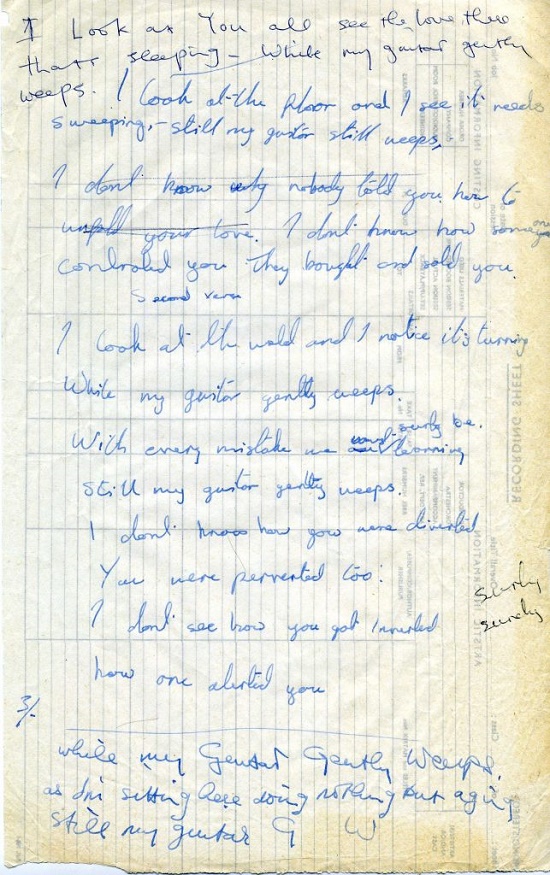
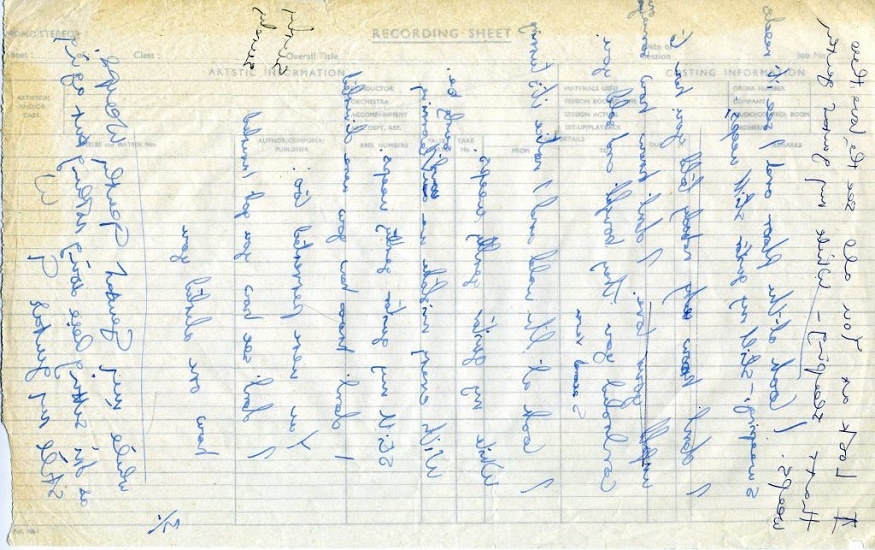
A Song Is Born in the Studio. The earliest draft of “While My Guitar Gently Weeps” is scrawled across the back of a recording sheet (photo 22). The reverse‑side bleed‑through shows the printed header “RECORDING SHEET,” backwards; when flipped (photo 23), the form matches the EMI sheets used in the mid‑1960s. This places the song’s origin inside the studio. It suggests a moment of immediacy: the songwriter reaching for the nearest piece of paper—in frustration, in isolation, in the aftermath of a fight.
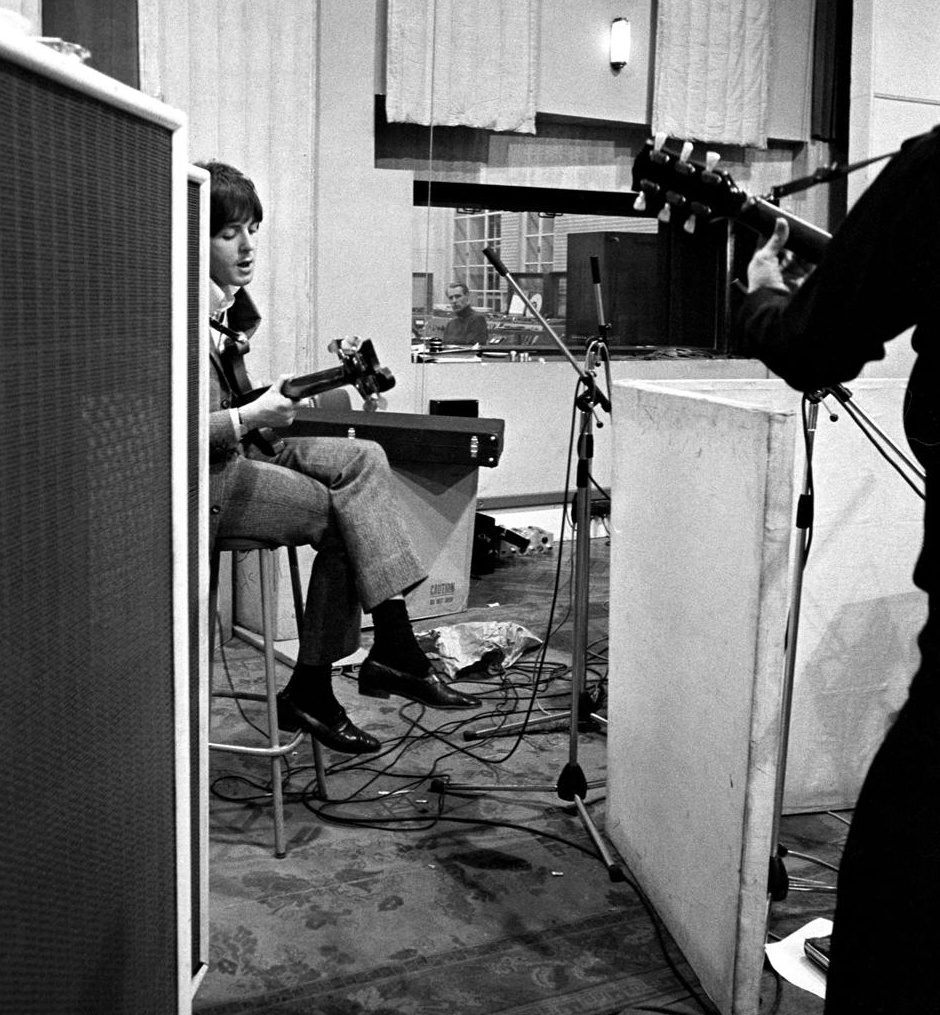
Paul first jotted down: “I look at you all, see the love there that’s sleeping.” Even in his despair, he knew that John, George, and Ringo were his friends—his brothers—despite their cruel words. And apparently, there were papers and cigarette butts strewn about: “I look at the floor, and I see it needs sweeping.” This is not a metaphor. It’s an observation—someone looking down, feeling left out, and writing what he notices. (Photo 24 shows the studio floor in such disarray during the Revolver sessions.)
Paul’s Pity for His Bass. Here’s the scene: As Paul scribbles lyrics, George plays Paul’s guitar—which “gently weeps” under George’s fumbling fingers. George Harrison was a deeply creative and influential lead guitarist. He always gave a Beatles song exactly what it needed. But here he was, trying to write a bass line and play a left-handed guitar—as the guitar’s owner watched, quite possibly sneering. That must have been daunting, or at least extremely uncomfortable. In “While My Guitar Gently Weeps,” Paul notes the imperfections in George’s playing, but with an ultimately generous attitude: “With every mistake, we must surely be learning.”
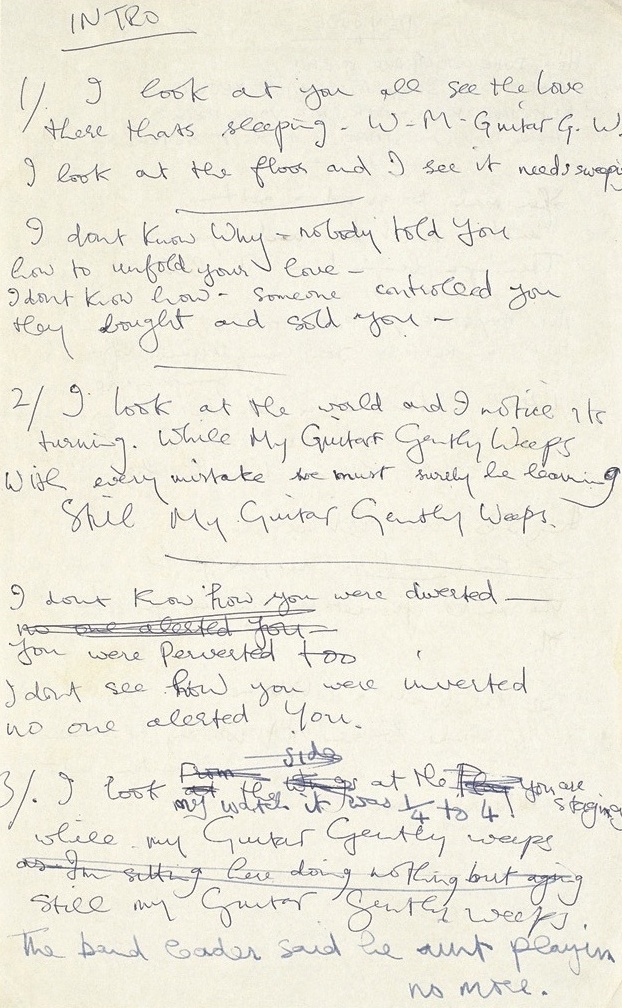
A Later Draft Positively IDs the Session. A subsequent lyric sheet—no longer written on studio paper—contains three lines that anchor the song to the “She Said She Said” session with forensic precision (photo 25). Here is the third verse, which didn’t make it into the recorded song:
I look at my watch it was 1/4 to 4
Still my guitar gently weeps
The band leader said he ain’t playing no more
Still my guitar gently weeps
And a crossed-out line:
I look from the side [or “wings”] at the play you are staging
Let’s take the lines one by one.
- “I look at my watch it was 1/4 to 4”: It is documented that the “She Said She Said” session ended at 3:45 a.m.—a quarter to four (“1/4 to four”). This is not a coincidence. It’s a recollection.
- “The band leader said he ain’t playing no more”: This line is autobiographical. Paul is documenting the moment he refused to play on “She Said She Said.” He’s not dramatizing; he’s remembering. Notice that Paul positions himself as the band’s leader. And as he was the Beatles’ sole songwriter, this claim has merit. The fact that his songs, like the one the band was recording, had garnered the Beatles international fame probably added to his resentment in the moment.
- “I look from the side [or “wings”] at the play you are staging”: In this context, “the side” or “the wings” is a poetic way of indicating the control room. Paul is describing his physical location in the studio.
No one knew that the “She Said She Said” session would be the Beatles’ final opportunity to record a song together—the four of them, with Paul. Maybe if they had known, things would have gone differently.
***
Buckle up, because our timeline is moving from the psychological to the geopolitical. The next movement begins in the Philippines—where the first assassination scenario unfolded.
Manila: Method in Madness
July 3–5, 1966
Kidnapped on Arrival
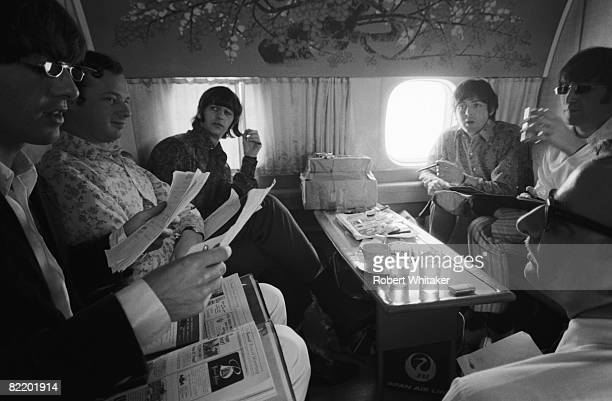
At 4:30 p.m. on July 3, 1966, the Beatles’ commercial flight from Hong Kong touched down at Manila International Airport. The day had already been long: the band had left Tokyo mid-morning, stopped in Hong Kong to switch airlines, spoken with members of the press, and even held what appears to have been an in-flight meeting with Brian Epstein—a moment of relative calm before the storm (photo 26).
What happened next was not a misunderstanding, a cultural mix up, or a case of overzealous security. Before the aircraft door had even fully opened, armed military personnel and men in civilian clothing boarded the plane. They did not wait for a gateway. They did not wait for standard passenger procedures. They moved with purpose—and with a clear target. They went straight for John, Paul, George, and Ringo.
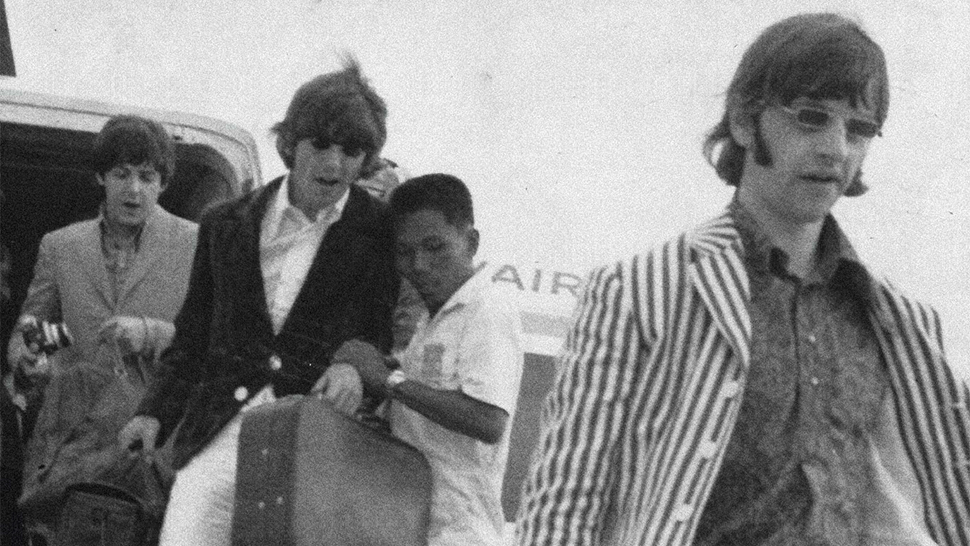
The men grabbed the Beatles physically, pulling and shoving them toward the exit. Brian Epstein and the road crew were ordered to stay behind. On the steps of the aircraft, the chaos intensified. Salvador Mascardo, the airport’s collector of customs, intercepted the Beatles. He demanded their briefcases and bags, shouting profanities as he did so. One photograph from the moment shows a man attempting to seize George’s bag as the band tries to descend the stairs (photo 27).
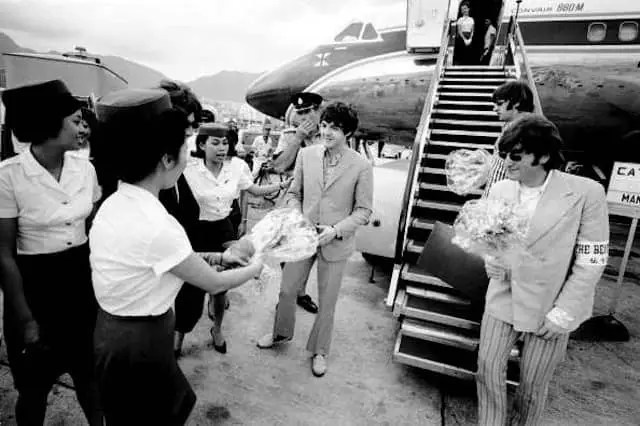
Another image captures the surreal contrast of the scene: the Beatles holding bouquets of flowers—a ceremonial gesture—while surrounded by military personnel (photo 28). The forced smiles and stiff posture tell the real story. The Beatles were then shoved into a waiting vehicle. Meanwhile, Brian and the entourage remained trapped on the plane, frantic and helpless.
There is no softer phrasing for what occurred: the Beatles had been abducted by the state.
The Tense Press Conference
The Beatles were driven to the Philippine Navy Headquarters for an impromptu press conference. Nothing about the scene resembled a normal media event. The band had not been briefed. They had not been told where they were going. They had not been given time to compose themselves. They were simply deposited at a long table, under fluorescent lights, in front of a room full of local reporters and armed personnel.
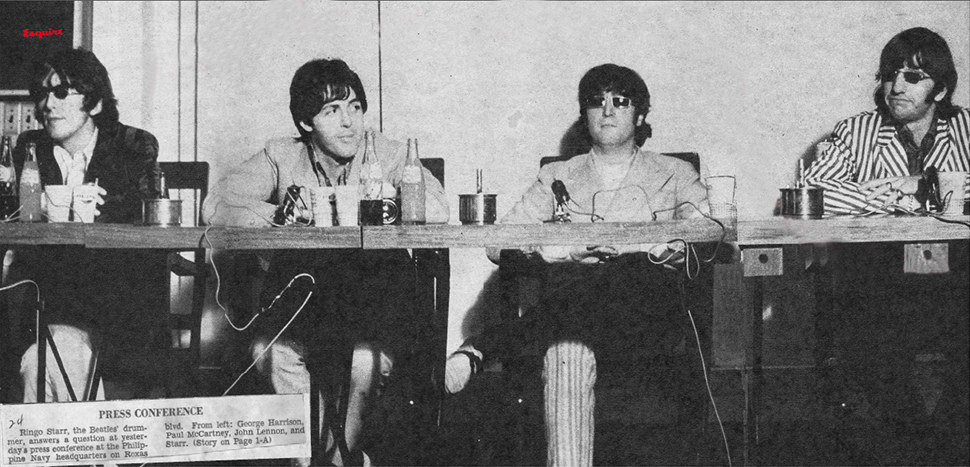
The table was cluttered with unfamiliar local soft drinks, ashtrays, and microphones. The Beatles looked drained, subdued, and visibly shaken. All four smoked constantly—a nervous reflex, a way to steady their hands, a way to buy a moment of control in a situation where they had none. In one of the photographs, John, George, and Ringo wear dark glasses, a shield between themselves and the room (photo 29). Paul, notably, does not. His eyes are exposed, scanning the room, searching for Brian or any member of the entourage who might explain what was happening. His expression is tight, distressed, and alert—the look of someone trying to assess danger without showing fear.
Brian, meanwhile, was trapped at the airport terminal, demanding to know where his clients had been taken. He had been separated from the band without explanation and was being stonewalled by airport officials. The Beatles knew none of this. They only knew that Brian, their ever-present authority figure, was absent—and they were alone.
The press conference itself was tense, hostile, and surreal. Local reporters fired aggressive questions at the band, many framed as accusations rather than inquiries. The Beatles tried to remain polite, but their answers reveal the strain. When a reporter asked whether they felt safe in Manila given the overwhelming military presence, John delivered one of the most famous lines of the entire tour: “We feel safe, yeah… We’ve got our own army with us.” He said it dryly, glancing at the guards flanking the room—a joke with an edge.
Another reporter demanded to know why Brian Epstein wasn’t with them. Paul tried to keep his voice steady: “Our manager is back at the airport. We don’t really know what’s going on, we just get put in the back of cars and driven places.” It was the closest Paul could come to admitting the truth: They were not in control. They were not being protected. They were being handled.
Out to Sea Under Guard
The moment the press conference ended, the Beatles weren’t taken to their hotel, reunited with their manager, or even returned to the airport. Instead, armed guards escorted them out of the building and down a pier in Manila Bay, where a private motor yacht waited under military supervision.
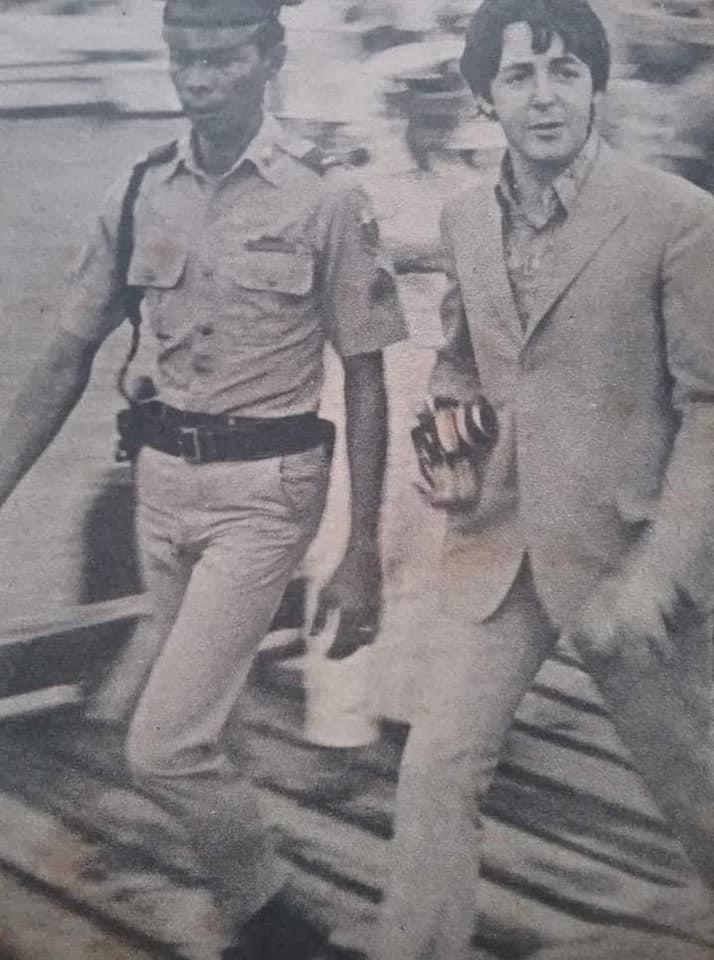
In a haunting image of this moment, Paul walks along the wooden planks of the pier, still wearing the same outfit from earlier, his camera in his hand (photo 30). An armed officer walks beside him, directing him forward. Paul’s expression is unmistakable—eyes wide, mouth tight, on the verge of tears. He is looking toward the yacht, or perhaps the water beyond it, trying to understand what is happening and where he is being taken. Behind him, a blurred figure appears to be maritime personnel or a local official overseeing the departure. The scene is not ceremonial. It is custodial.
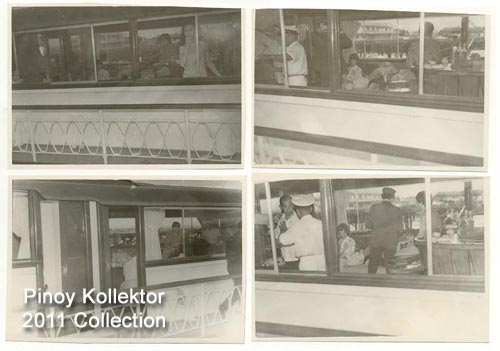
Additional photographs appear to capture the moments before the Beatles were taken offshore. Band members are visible through the windows (photo 31), their postures tense and uncertain.
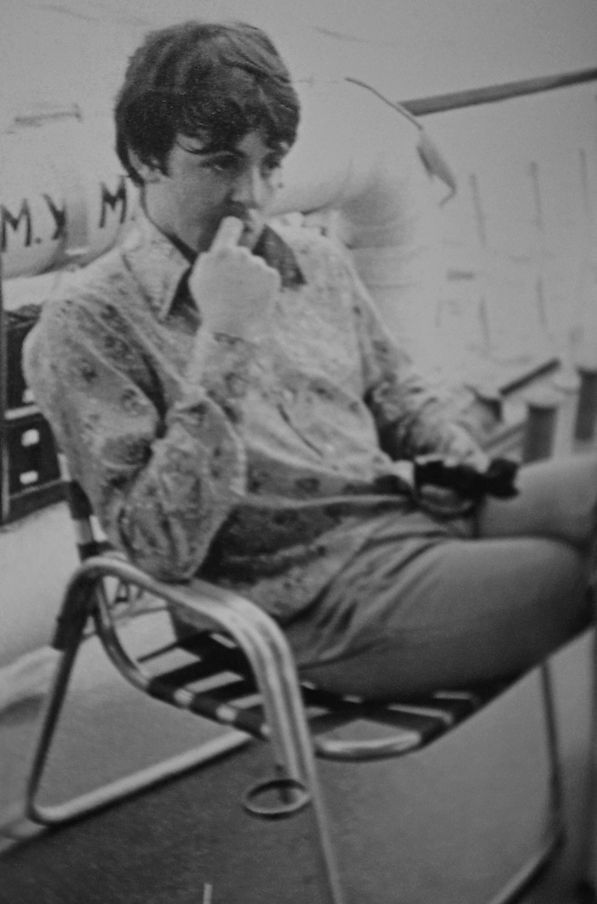
Later, Paul was photographed sitting on a metal chair on the deck, still clutching his camera (photo 32). His suit jacket—worn during deplaning and along the pier—is gone. It isn’t draped over the chair. It’s simply missing. Paul looks grim, overheated, and shut down, staring into the middle distance with the expression of someone who senses real danger.
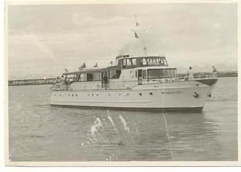
Accounts from the few entourage members who later reconstructed the night confirm that the yacht experience was miserable. The primitive air-conditioning system failed almost immediately after the vessel left the pier (photo 33). The crew attempted to frame the evening as a glamorous VIP welcome party. Local socialites, a few politicians, and a prominent beauty queen were brought aboard. Drinks were poured. Music was suggested. But the Beatles refused to participate. They barricaded themselves inside one of the small, windowless lower cabins, where the tropical heat and humidity became unbearable. Drenched in sweat, terrified, and furious, they would not come up to the main deck. They would not mingle with the guests. They would not accept food or drink from an authoritarian military custody unit. They understood the risk.
Out to sea, under guard, the Beatles spent the night in enforced isolation—the first phase of the Manila operation.
Brian’s Fury
While the Beatles were trapped on the yacht in Manila Bay, Brian Epstein was fighting a battle on land—one driven by panic, rage, and the realization that something had gone terribly wrong. The band was unreachable by any normal means. Brian had no visual confirmation of their condition. He had no assurance of their safety. All he knew was that his clients—four of the most famous young men in the world—had been forcibly taken from him.
Brian and booking agent Vic Lewis finally managed to occupy a communications office at the harbor. Inside that small room, surrounded by outdated equipment, Brian seized the only tool available to him: a high-frequency maritime radio telephone. Through it, he patched directly into the bridge of the yacht, anchored roughly half a mile to a mile offshore.
Archival accounts describe Brian as physically shaking with rage. He did not negotiate. He did not plead. He screamed into the radio, demanding the immediate return of the Beatles. He threatened to cancel the stadium concerts entirely—two shows scheduled for July 4, with a combined audience of 80,000 people. Canceling those concerts would have caused an immediate public riot against the Marcos government.
The threat worked. Orders were relayed to the yacht’s captain. The anchor was raised. The vessel turned back toward shore. After hours of fear, heat, and isolation, the Beatles were delivered to The Manila Hotel—sometime around 3 a.m. (Some accounts say 4 a.m.)
Four Empty Chairs
On the morning of July 4, 1966, after their chaotic reception in Manila and overnight detention on the yacht, the Beatles were exhausted. They had two stadium concerts scheduled that day. They needed sleep. But at 8 a.m., only a few hours after their release, armed presidential guards and government officials arrived at The Manila Hotel demanding to collect the Beatles for a luncheon hosted by Imelda Marcos, the First Lady of the Philippines, at Malacañang Palace.
Everything about this was wrong.
Why the Scenario Didn’t Add Up. First, the timing made no sense. The luncheon didn’t begin until 11 a.m. The palace was only two miles from the hotel—a ten‑minute drive. If the Beatles had gone with the officials at 8 a.m., they would have been forced to sit around the palace for nearly three hours, waiting for the event to begin. No reasonable host would expect this. No reasonable manager would allow it.
Second, Brian had already declined the invitation days earlier. He adhered to a strict “no politics / no palaces” rule to protect the Beatles’ neutral brand. The invitation had come directly from Imelda Marcos via local promoter Ramon Ramos Jr.—not through diplomatic channels like the British Embassy. His refusal should have ended the matter.
Third, the Beatles had just been kidnapped. Brian fought for hours to get them back. How could he possibly allow them to be taken to the palace now? And he didn’t. He confronted the officials and refused to let them wake the band. He stood his ground, protecting the Beatles from further danger—or even just a social engagement that would compromise their readiness for the day’s performances. The officials left, undoubtedly furious.
Paul’s Secret Morning Outing. Here’s a surreal twist: Sometime during the morning, Paul McCartney slipped out of The Manila Hotel in disguise. Accompanied by road manager Mal Evans, he wandered into the Ermita district’s art‑gallery row on A. Mabini Street. This was typical of Paul—on tour, he often explored cities quietly, especially places that felt “exotic” or culturally rich.
During this walk, Paul visited a small gallery and purchased an acrylic-on-canvas painting titled Fishing in Sexmoan, by a young Benedicto Cabrera—later known as BenCab, National Artist for Visual Arts. Paul paid ₱70 (Philippine pesos) for the piece. (BenCab was out of the gallery at the time.) Years later, when BenCab wanted to include the painting in a retrospective book published in London, he contacted “Paul McCartney’s” team. Representatives confirmed that William still owned the painting and even provided a photograph of it for the artist.
The real Paul—wandering Manila with Mal, buying art—had no idea there was quite literally a bounty on his head.
The Luncheon Begins Without the Beatles. At 11 a.m., the palace luncheon started as scheduled. It was a massive, televised banquet for roughly 300 guests—elite children, military families, and Imelda Marcos herself. State television cameras swept across the lavishly decorated tables, broadcasting the event live across the Philippines. And then the cameras focused on the most conspicuous detail in the room: four empty, gilded chairs, labeled for John, Paul, George, and Ringo.
The Beatles were not there. They were resting at The Manila Hotel, recovering from their ordeal. They had concerts to prepare for. Their manager had previously declined the invitation. But to the public, watching live on television, it looked like a profound insult—Western rock stars snubbing the First Lady and the children of the nation.
Manila as an Assassination Scenario
The events of July 3–4, 1966, were chaotic, frightening, and humiliating. But when viewed through the lens of a plot to assassinate and replace Paul McCartney, they take on an eerie logic—a sequence of actions that looks less like diplomatic mismanagement and more like the architecture of a failed operation.
The Kill‑Site: Malacañang Palace. If a rogue American agency enlisted the Marcos regime, Malacañang Palace would have been the ideal location for the murder and switch. It was secure, heavily guarded, isolated from foreign oversight, staffed by loyalists, and shielded from public visibility. It was the one place in Manila where the regime could control every variable.
The Invitation: Get Paul to the Palace. Approximately a week before the Beatles arrived in the Philippines, Imelda Marcos extended a formal invitation for the band to attend a palace luncheon. Brian Epstein immediately declined. Some sources say his response (from Tokyo) was written; others say it was verbal. Either way, his refusal disrupted the plan.
The Workaround: Kidnap the Beatles on Arrival. If the palace was the intended kill-site, and Brian had declined the luncheon invitation, the state would need to gain control of the band immediately upon arrival, hold them overnight, and deliver them to the palace the next day. And that’s almost what happened. When the Beatles landed in Manila, armed military personnel physically seized them, separated them from their handlers, drove them to the Navy Headquarters, and held them offshore on a yacht under the guise of a party. The regime successfully kept the Beatles in custody until Brian secured their release in the middle of the night—again disrupting the plan.
The Back-up Plan: Retrieve the Band from Their Hotel. At 8 a.m. on July 4, armed officials arrived at The Manila Hotel to collect the Beatles for the luncheon. Brian refused. He turned the officials away. For a third time, Brian had obstructed the Marcos regime.
The Last-Ditch Effort: Lure the Beatles to the Palace. When the luncheon began, state television repeatedly showed four empty chairs labeled for John, Paul, George, and Ringo. This was not accidental. The optics were designed to shame, provoke, and pressure the Beatles to respond—to make them come to the palace and “correct” the insult. But the Beatles didn’t take the bait. They stayed at their hotel, preparing for their afternoon concert.
The plot to assassinate and replace Paul McCartney—in Manila—had failed.
The Case of the Gold Suit
In a seamless, on-the-spot replacement, clothing becomes a form of camouflage—a continuity device. As we saw in the San Francisco assassination scenario, Paul and William were attired and accessorized identically: red-and-white-striped shirt, red jacket, dark pants, camera. But in Manila, Brian Epstein wasn’t in on the plot. That meant the Marcos regime was responsible for styling William to resemble Paul. And this aspect of the scheme presented its own challenges.
Paul and William Were Not the Same Size. William states explicitly in The Memoirs of Billy Shears that he was several inches taller than Paul, as well as broader:
During a visit with Jim and Angie McCartney’s family on Monday, 12 September 1966, when they all took me to Paul’s St John’s Wood home for documents…they urged me to try on Paul’s clothes. I objected, telling them that nothing of Paul’s would fit, but put on a shirt and pair of pants to make the point. He was inches shorter and had a smaller chest and waist. The cuffs went up my arms; the open pants stopped much too soon; and undershirts were out of the question. Nothing could button or snap. Paul was smaller than I thought.
The scene is almost certainly invented, given that Paul was photographed the next day at the Melody Maker Awards. Still, William’s description of the fit is revealing. The size difference matters because Paul’s clothing could not simply be removed from his (dead) body and put on William. A matching outfit would have to be custom-made.
The Marcos Regime Needed Time to Replicate Paul’s Outfit. By kidnapping the Beatles, holding them overnight on the yacht, and delivering them straight to the palace (according to the original plan), the state actors would have allowed themselves about eighteen hours to:
- Examine what Paul was wearing
- Photograph or describe the outfit
- Communicate the details to a tailor or seamstress
- Fabricate a matching ensemble for William
Recall that in the image of Paul on the yacht (photo 32), his jacket is missing. It isn’t draped over the chair or visible anywhere. Paul may have removed it, and someone hung it up. Or perhaps it was removed from him and taken ashore to be reproduced for William. The jacket mattered more than the shirt, because the shirt could be concealed almost entirely beneath it.
After Brian forced the return of the band from the yacht, the regime attempted to collect the Beatles at their hotel three hours before the luncheon. This timing makes perfect sense if the state needed those hours to see what Paul was wearing and replicate it for William. Brian refused, making the effort moot.
Paul’s Manila Ensemble Was Unique. When Paul arrived in Manila, he wore a striking outfit:
- A wide‑collared, multi‑colored, floral‑print shirt with puffy sleeves
- A gold‑colored suit
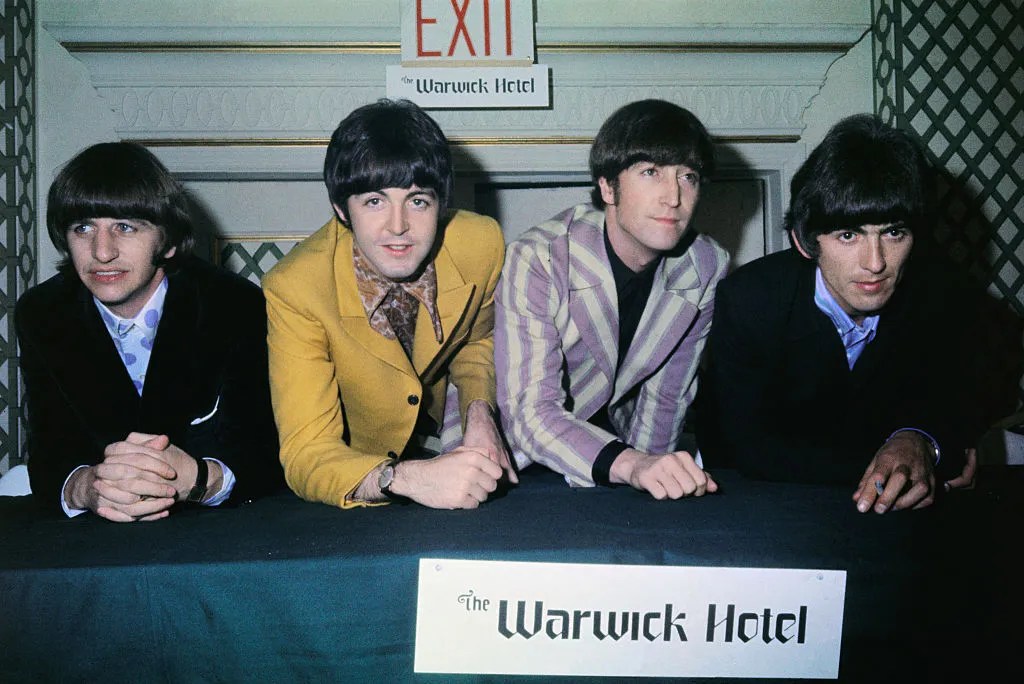
Only black‑and‑white photographs exist from Manila, but Paul wore the same ensemble (substituting dark trousers for the gold pair) the following month at the Beatles’ Warwick hotel press conference in New York City. A black-and-white closeup reveals the shirt’s intricate floral pattern (photo 34). Plentiful color images confirm the shirt’s vibrant tones and the jacket’s gold hue (photo 35).
Paul arrived in Manila wearing a singular, bespoke outfit—a nightmare for the regime to reproduce. As it turned out, they would largely fail on the shirt but succeed on the jacket.
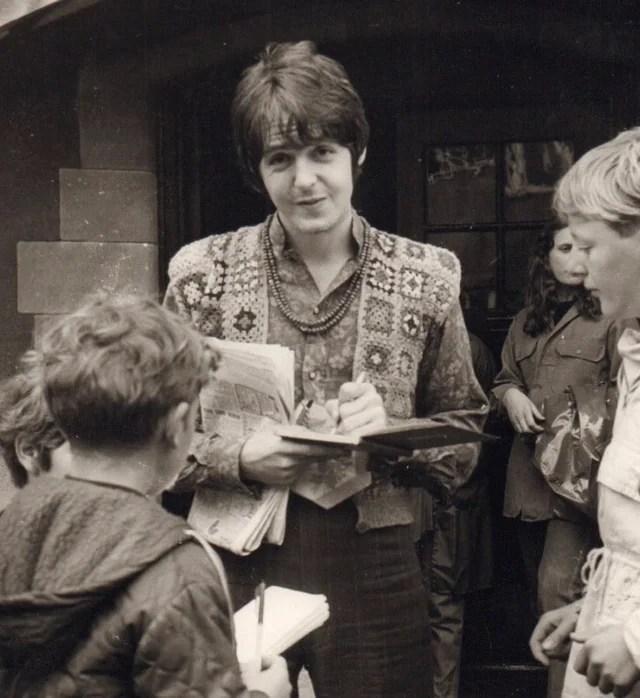
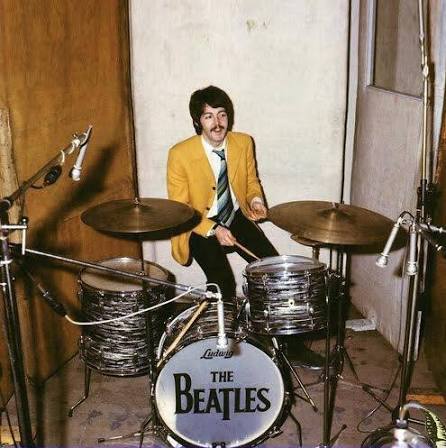
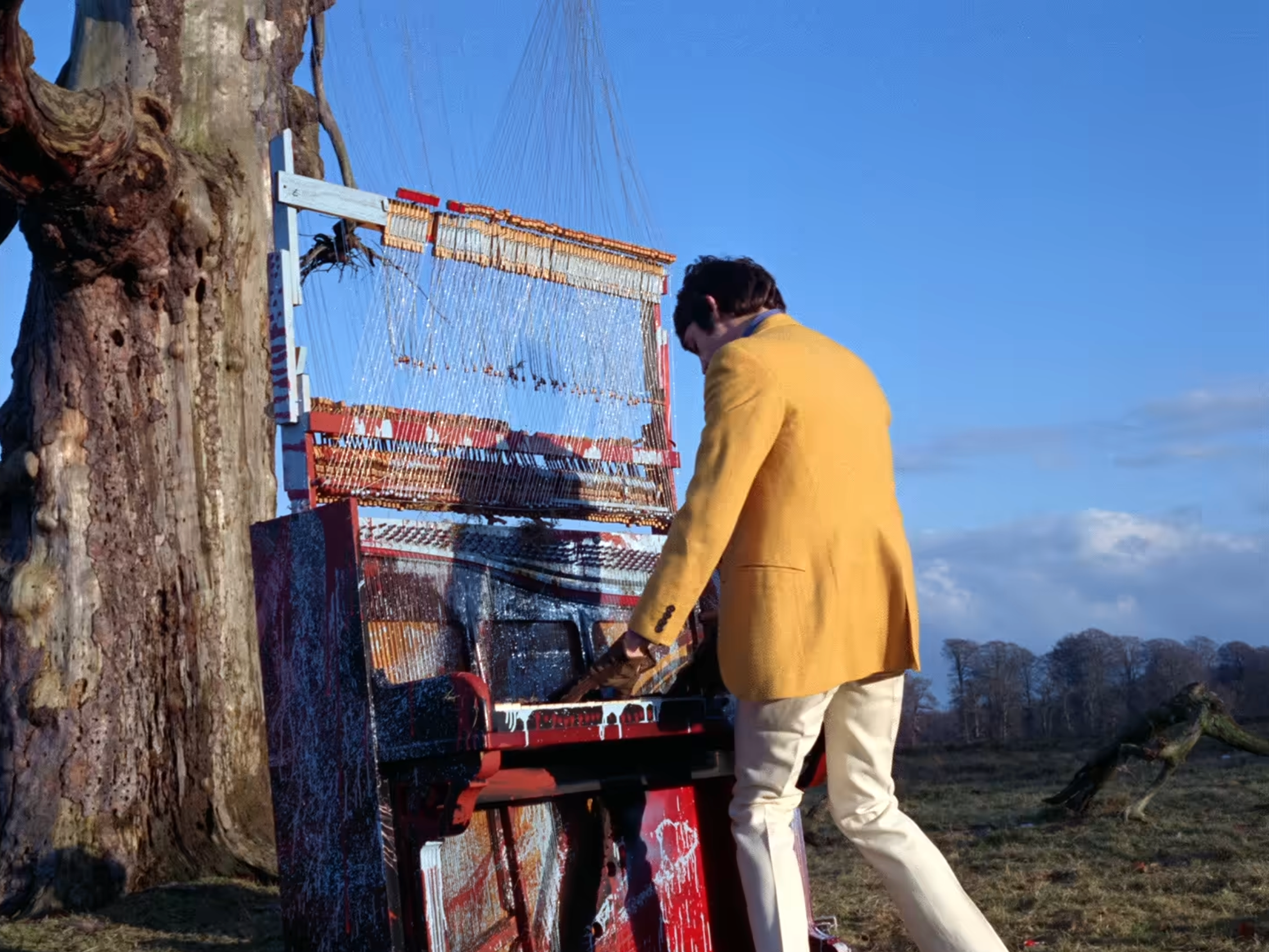
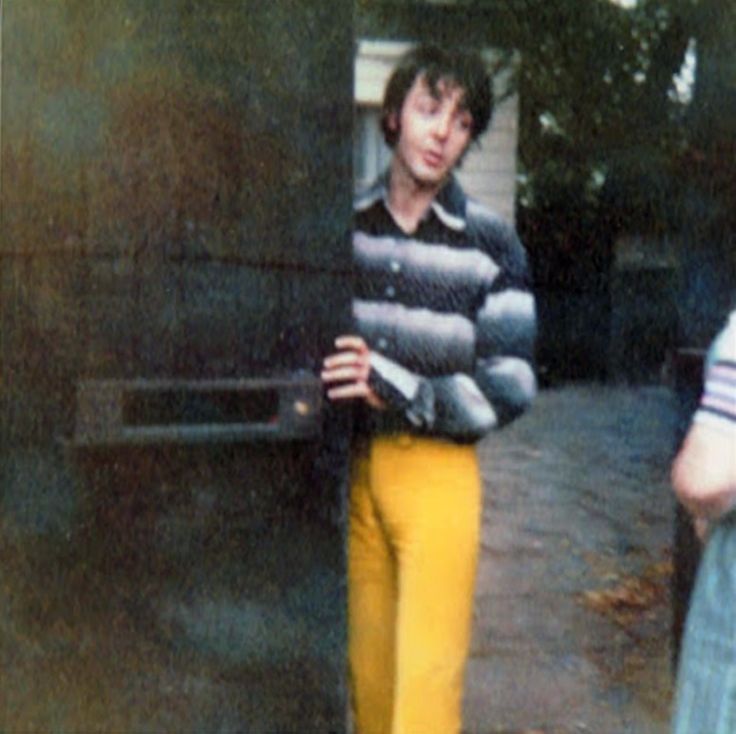
William Later Wore Clothing Matching Paul’s Manila Outfit. After Paul’s death, William was photographed wearing:
- A floral‑print shirt in the exact style of Paul’s Manila shirt. The pattern differs, but the cut, collar, and sleeve shape are the same (photo 36).
- A gold jacket virtually indistinguishable from Paul’s—same color, sheen, and cut. William wore this jacket in the studio (photo 37) as well as in the Beatles’ video for “Strawberry Fields Forever” (photos 38 and 39), filmed in January 1967.
- Gold pants matching the jacket (photo 40).
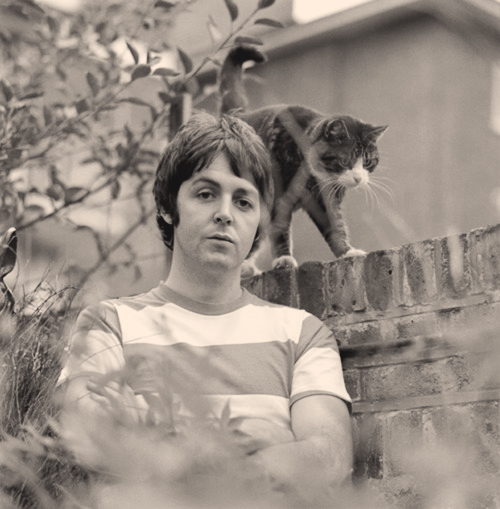
William was also photographed wearing a striped shirt that may have come from the San Francisco assassination scenario (photo 41).
Skeptics will say these are simply photos of Paul McCartney wearing his own clothes. But for those who can distinguish William from Paul—facial structure, posture, proportions—the garments take on a different meaning. Because William was larger than Paul, he could not have worn Paul’s gold suit or red-and-white-striped shirt. He would have required his own versions—procured or tailor-made for him for a most nefarious purpose.
***
The gold suit is a forensic clue—visual evidence of a plot that almost succeeded, a thread connecting the failed assassination scenario in Manila to the later, successful replacement.
Follow the Money
By the afternoon of July 4, it was clear that Paul McCartney wasn’t coming to Malacañang. Brian Epstein had thwarted every attempt to get the Beatles to the palace—the invitation, the kidnapping, the early-morning pick-up, even the televised lure of the four empty chairs. The Marcos regime must have been furious—at the failure of the assassination scenario, and at the humiliation Brian had unwittingly inflicted by outmaneuvering them.
But fury alone doesn’t explain what happened next—the escalating outrage, the physical assaults, the orchestrated delays. Why were the Beatles treated with such hostility after the plot failed? Something deeper was driving the regime’s behavior.
A Failed Operation Is an Expensive Operation. If a rogue American agency had promised the Marcos regime a multi‑million‑dollar payout upon completion of the switch, that money was no longer coming. And an operation of this scale would have required massive funding—to bribe local commanders, fuel naval vessels, pay military personnel, arrange a lavish banquet, coordinate security, stage the media. If the payout evaporated, the regime would have been left with the bill. Perhaps the American agency said: “Get your money from the Beatles.” Or maybe the regime independently decided to recoup their losses through extortion.
Either way, the logic is the same: when the assassination scenario failed, the financial operation began.
The Concerts That Funded the Extortion. On July 4, the Beatles performed two shows at the Rizal Memorial Football Stadium, one at 4:00 p.m. and one at 8:30 p.m. The combined audience was roughly 80,000 people. It was one of the largest crowds the Beatles ever played to.
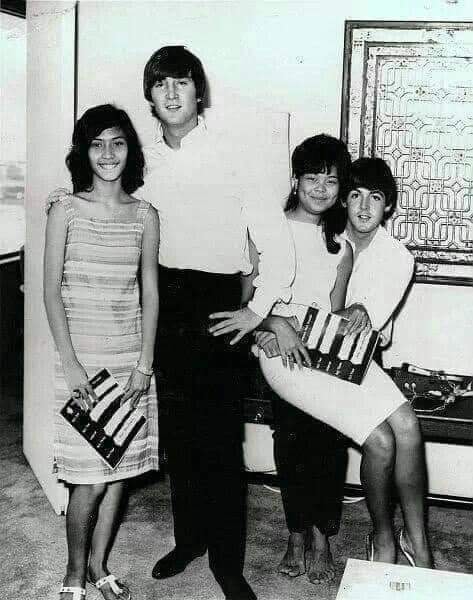
Backstage before the first show, John and Paul were photographed meeting two fans (photo 42). Paul, barefoot and caught mid‑undress, holds a smiling young woman on his lap—a moment of sweetness amid the chaos.
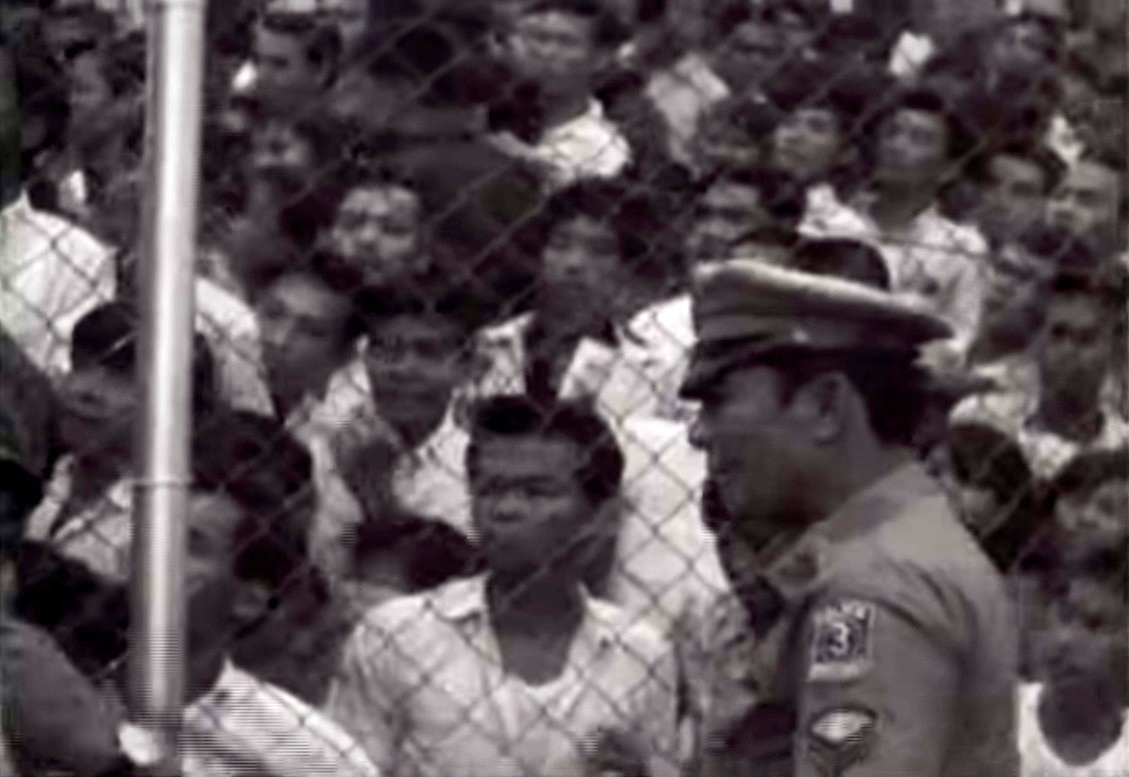
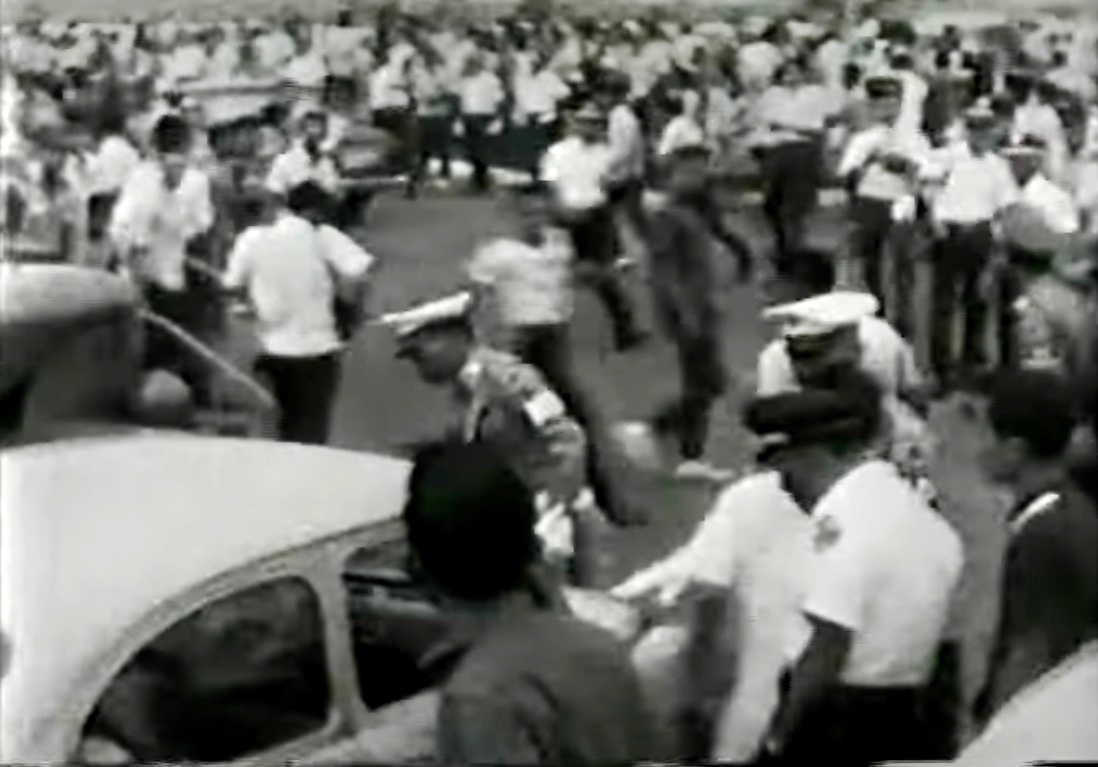
Inside the stadium, the military presence was overwhelming (photo 43). Soldiers lined the field, aisles, entrances, and perimeter. It looked less like crowd control and more like occupation. Outside the stadium, the scene was the same—dense crowds, heavy police presence, and military personnel controlling movement (photo 44).
The regime wanted the concerts to be orderly, safe, successful, and profitable. Because the money from those shows would become the regime’s consolation prize for the failed palace operation.
The Silenced Apology
A political storm was brewing over the Beatles’ “palace snub.” To the Filipino public, it looked as though the band had insulted the First Lady, the nation’s children, and the country itself. As the evening of July 4 came to a close, Brian Epstein realized the situation could spiral into danger. He had to act.
The Midnight Broadcast. Brian arranged for Channel 5 to send cameras directly to The Manila Hotel so he could deliver a live televised apology to the nation. It was a desperate attempt to defuse the anger and protect the band. His statement was carefully drafted, diplomatic, and heartfelt. He emphasized that the Beatles meant no disrespect to the Philippines or its children.
But the Marcos regime had no intention of letting the apology reach the public. They delayed the broadcast until midnight, ensuring that almost no one would see it live. And when Brian began reading his statement, state technicians at the broadcast tower jammed the audio and visual feeds with a wall of artificial static. The camera crew inside the hotel room gave no indication that anything was wrong; the monitors showed a clean signal. Brian believed he was being heard. He wasn’t. The regime muted him, erasing the apology in real time.
Brian went to bed that night believing he had successfully deployed a public‑relations shield around the band. He thought the danger had passed.
Paul’s Plea. Meanwhile, Paul conducted a separate interview for the Manila Times and local radio operators. His remarks were polite, earnest, and edged with quiet pleading. He repeated how much the band loved their Filipino fans. He clarified that they hadn’t received an official directive about the palace luncheon and would never intentionally insult the First Family. (Brian had declined the invitation on the Beatles’ behalf; it doesn’t appear the band had any knowledge of it.)
Paul’s words were sincere, but the regime would control the narrative.
Isolation and Exposure
The events of July 5, 1966, are difficult to reconstruct. Accounts conflict, timelines blur, and memories diverge. But even through the contradictions, one pattern is unmistakable: the Marcos regime spent the morning systematically isolating the Beatles and exposing them to danger—not to kill them, but to break Brian Epstein’s resistance and force a financial surrender.
Waking Up to Isolation. The Beatles awoke at The Manila Hotel to find room service cut off, hotel staff gone, security withdrawn, and telephone lines dead. The band was effectively sealed inside the hotel, unable to contact the British Embassy, international media, or even local authorities. The blackout ensured that Brian Epstein could not report that the Beatles were being held in a compromised situation.
The First Tax Bill. At 8 a.m., a man in a shiny suit carrying a brown briefcase appeared at Brian’s door. He demanded immediate payment of a massive income-tax bill on the Beatles’ concert fees. Brian refused. He explained that:
- The Beatles’ contract made Cavalcade, the local promoter, responsible for all local taxes
- He had not yet received the physical cash payout
- He could not pay a tax on money he did not possess
If Brian had been able to hand over the money right then—and if he had chosen to—the drama that followed might not have happened.
The Negative Press. Positive reviews of the Beatles’ musical showmanship were drowned out by the morning’s political fallout. Newspapers like the Manila Times ran front-page editorials condemning the band’s “arrogant Western behavior” at the palace, accusing the Beatles of intentionally snubbing the First Lady and her children. The country had seemingly turned against the band overnight.
The Cash Delivery. At some point during the morning, promoter Ramon Ramos Jr. of Cavalcade may have delivered a portion of the concert proceeds directly to Brian at The Manila Hotel. If so, the cash was now physically in Brian’s possession—and the regime surely knew it.
The Withdrawal of Secure Transportation. The band’s official police escorts and military security details vanished. This was one of the most chilling moves of the morning. By removing state protection, the regime signaled that the Beatles were now fully exposed—vulnerable to crowds, hostile actors, and whatever chaos might erupt. The psychological message was clear: You are alone. You are unprotected.
The Plea to the British Embassy. Despite the communication blackout, Brian managed to establish contact with the British Embassy—which was already in a state of high alert. Its switchboard had been flooded with bomb threats as well as death threats directed at the Beatles. Brian begged for a diplomatic or military escort to the airport. The ambassador explained that under strict diplomatic protocols, a foreign embassy cannot deploy armed security forces onto another nation’s sovereign soil. Brian was on his own.
The Orchestrated Delay
The journey to Nichols Field—Manila International Airport—became its own operation.
Reliance on Commercial Taxis. With all official government limousines, police escorts, and security vehicles withdrawn, the band was forced to rely on ordinary Manila city taxis. The Beatles and their entourage had to haul amplifiers, guitars, and luggage by hand; scramble into small, unprotected taxis; and travel without security, guidance, or any guarantee of safety.
The Advance Run. To prevent total blindness, press officer Tony Barrow and booking agent Vic Lewis took a separate cab ahead of the band. Their job was to check in the luggage, secure the tickets, confirm the flight, and assess the situation at the terminal. Accounts from the entourage emphasize that the driver of this advance cab was fiercely loyal, determined to help the Beatles escape the city. This advance run was the only part of the Beatles’ departure from Manila that went smoothly.
The Circuitous Route. The drive from The Manila Hotel to Manila International Airport is roughly 7 miles. Under normal 1966 traffic conditions, the trip should have taken 15 to 20 minutes. Instead, the taxis carrying the Beatles pretended to get lost, took bizarre detours, looped through side streets, and circled the airport perimeter. Their stalling tactics appeared engineered to give state operators time to prepare Nichols Field as one big trap for the band.
The Drop‑Off. When the taxis finally completed their deviations, they did not take the Beatles to a secure VIP entrance. Instead, they dropped them at the main commercial terminal, in full public view, with no protection and no buffer. The drivers then sped off immediately, abandoning the band and their aides on the curb—delivering them into the hands of the regime.
The Gauntlet
What happened inside the terminal was not chaos. It was a staged display of state power meant to frighten, punish, and pressure Brian Epstein into surrendering the Beatles’ concert proceeds.
Stopped Escalators. When the Beatles and their entourage rushed into the terminal, they discovered that the main escalators had been shut off. This was not a mechanical failure; it was a deliberate obstruction. The exhausted band and crew were forced to carry hundreds of pounds of VOX amplifiers, guitars, and luggage up a massive flight of concrete stairs. They bypassed the check‑in desk because Tony Barrow and Vic Lewis had already handled the formalities during the advance run.
A Tunnel of Violence. At the top of the dead escalators, the Beatles entered the departure transit lounge—a large, open waiting area. Instead of being ushered into a protective VIP section, they were funneled into a long public corridor lined with plainclothes military personnel, tax agents, and customs officials. The state actors spat on them, kicked them, punched them, and screamed insults. Various assaults and injuries were reported. Road manager Mal Evans was so shaken by blows that he recited the Lord’s Prayer as he was pushed through the crowd—a detail that appears in multiple accounts and conveys the sheer terror of the moment.
At a press conference after landing at Heathrow, Paul described the ambush:
We got to the airport, and our road managers had a lot of trouble trying to get the equipment in because the escalators had been turned off, and things. So, we got there, and we got put into the transit lounge. And we got pushed around from one corner of the lounge to another, you know.
John added:
I saw sort of five in sort of outfits [uniforms] that were doing the actual kicking and booing and shouting.
The attack was executed in full public view to prove that the state possessed total physical immunity—they could assault the world’s most famous band without consequence.
The VIP Lounge. Only after the Beatles and their entourage had been bruised, bloodied, and psychologically shattered were they finally shoved into the VIP lounge. I suspect they were being held there to be offered another opportunity, in private, to satisfy the tax bill—now that Brian had been softened by fear and the spectacle of state aggression. Inside the lounge, they heard the final boarding call for their flight. It was the last possible moment to flee the country. If they missed this window, they would be trapped in Manila with no diplomatic protection. They bolted.
The Escape. The group surged out of the lounge doors in a panicked dash, using other passengers as human shields as they sprinted across the tarmac toward the waiting KLM Douglas DC-8. According to press officer Tony Barrow, the harassment continued as they crossed the tarmac. Behind the Beatles, road managers Mal Evans and Neil Aspinall dragged the heaviest gear toward the baggage chutes. The airport handlers refused to touch it. Mal and Neil were forced to lift the crates themselves while being jeered at and shoved.
The Beatles reached the aircraft, climbed the stairs, and entered the cabin.
They thought they were safe.
Band on the Run: A Song of Two Cities
Sweating through his jacket and laboring to catch his breath, Paul McCartney collapsed into his seat—thoroughly shaken by the rough treatment the band and their entourage had received in the terminal. But they were on the plane. At last. He had never felt such relief. How long do you think it took for him to muse, “I need to write a song about this—a rock band literally running for their lives from an authoritarian regime”? My guess is about twenty seconds.
“Band on the Run” would be released in 1974 as a single from the Wings album of the same name. I wonder if William ever guessed the origin of the song, which he had “inherited” from Paul. The lyrics contain fascinating references to the Beatles’ back-to-back experiences in Tokyo and Manila, the emotional seed being that sprint to safety across Nichols Field.
Tokyo: The Gilded Cage. Paul’s experience of Tokyo began with severe weather. The band’s flight from London was diverted to Anchorage because Typhoon Kit—soon dubbed “The Beatles Typhoon”—was hammering Japan with catastrophic winds and record rainfall. They waited out the storm for hours before finally landing at 3:40 a.m. on June 29, 1966, just as the skies cleared.
Paul encoded that moment directly into “Band on the Run”:
Well, the rain exploded with a mighty crash
As we fell into the sun
The “rain exploding” is a description of the typhoon that delayed their arrival. “Fell into the sun” is a poetic reference to landing in Japan—the Land of the Rising Sun. These lines anchor the song unmistakably in the Asian sequence of the 1966 world tour.
In Tokyo, credible assassination threats had been issued against the Beatles for their five-show residency at the Nippon Budokan, a sacred arena traditionally reserved for martial arts. Horrified by the prospect of an international tragedy, the Japanese government placed the Beatles under suffocating lockdown at the Tokyo Hilton—let out only to perform their concerts. Armed guards lined the hallways. The band’s movements were monitored. Their windows were watched.
Paul captured the claustrophobia of that confinement in a pair of languid, listless lines:
Stuck inside these four walls
Sent inside forever
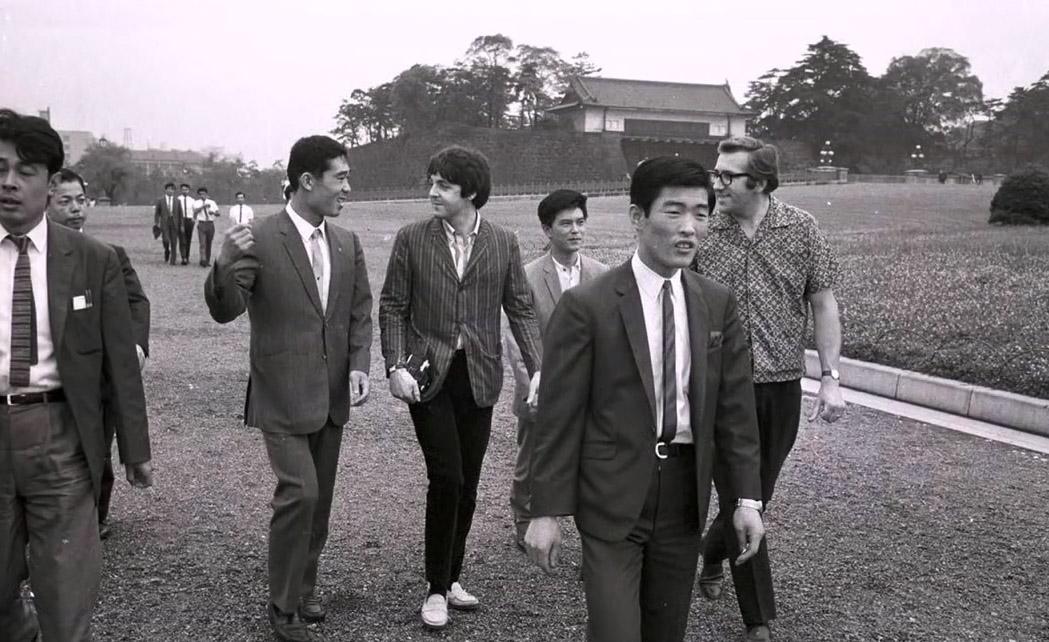
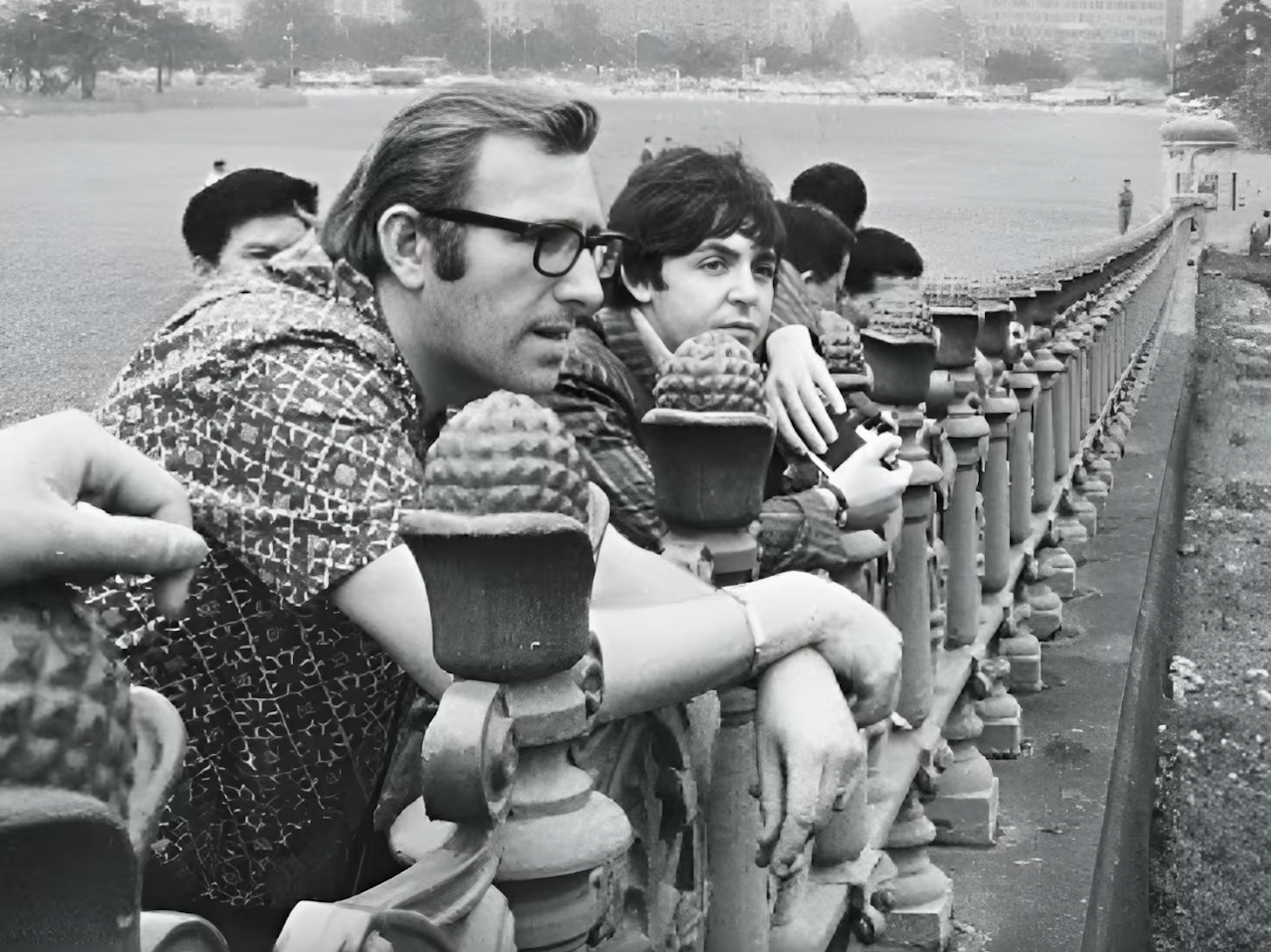
And yet Paul, restless and curious, managed to slip out with road manager Mal Evans to stroll the grounds of the Imperial Palace (photos 45 and 46). Press officer Tony Barrow later noted that Paul took several photos of the palace gates and managed to purchase a few souvenirs. The freedom didn’t last long, however; local security forces quickly realized a Beatle was missing, tracked down Paul and Mal, and escorted them back to the hotel prison.
Manila: Open Hunting Ground. Where the Japanese government had overprotected the Beatles out of a profound concern for their safety, the Philippine government alternately confined and abandoned them—for selfish purposes. In “Band on the Run,” Paul’s resignation to constant surveillance in Tokyo gives way to a sense of pursuit and persecution in Manila.
Of course, the oft-repeated titular line “Band on the run / Band on the run” refers to the Beatles’ dash across the tarmac after breaking free from the terminal, where the state had exerted a brief reign of terror over them.
The song’s cast of characters also maps cleanly onto Manila:
- “The jailer man” is Ferdinand Marcos, leader of the regime that detained the Beatles on the yacht and later in the VIP lounge.
- “Sailor Sam” is the yacht’s captain, who physically held the Beatles offshore under military supervision.
- “The county judge, who held a grudge” is likely Imelda Marcos, positioned as having taken the Beatles’ palace “snub” most personally as the luncheon’s hostess.
Recall that Paul was photographed sitting in a metal chair on the yacht, appearing deeply troubled by his circumstances (photo 32). A particular set of lines from “Band on the Run” seems to suit this uncertain moment, with Paul surrounded by the aggressive and heavily armed personnel of a foreign country:
Never seeing no one nice again
Like you
Mama, you
Mama, you
Paul’s mother, Mary, died when he was fourteen. He never recovered from her loss. And on that deck—terrified, isolated, and longing for comfort—he needed her (especially since the Beatles’ authority figure, Brian Epstein, wasn’t there to provide guidance or reassurance). Paul expresses a similar sentiment in “Let It Be”: his mother comes to him in times of trouble, in his hour of darkness.
Later, barricaded in a sweltering lower cabin with the other Beatles, Paul turns to a sort of mental bargaining. His celebrity has landed him in this situation; it’s doubtful he’d be incarcerated on a yacht in Manila Bay as an English teacher. If he could somehow escape, he’d give up the riches of fame in exchange for a modest, inconspicuous life:
If I ever get out of here
Thought of giving it all away
To a registered charity
All I need is a pint a day
If I ever get out of here
If we ever get out of here
The “pint a day” reads differently when you imagine four young men drenched in sweat, dehydrated, and afraid to accept refreshments from an authoritarian custody unit.
***
The Beatles and their entourage had made the flight, but the Marcos regime wasn’t finished with them. As the plane sat on the tarmac, the cabin doors remained open. The air conditioning was shut off. Clearance for takeoff was denied. What happened next is one of the most heavily mythologized episodes in Beatles history.
Extortion on the Tarmac
Rather than attempting to present a single “official” story of how Brian was made to hand over the money, I’ll present a sampling of accounts. The contradictions themselves reveal how chaotic, opaque, and frightening the incident was.
Version 1: The Bond for 74,450 Pesos. In one widely circulated telling, armed officials boarded the aircraft and confronted Brian Epstein directly in the cabin. They demanded that he sign a bond for 74,450 Philippine pesos—roughly £6,800 or $18,000 at the time (about $185,000 today). This was framed as a “tax levy”—not the full amount of the Beatles’ concert earnings, but enough to ensure that NEMS Enterprises (Brian’s music management company) suffered a definitive financial loss for the trip. Brian, exhausted and terrified, signed the bond under duress. The officials then disembarked. In this version, the extortion is bureaucratic, formal, and conducted entirely on board the aircraft.
Version 2: The 24,000‑Peso Cash Payment. Another account describes a more visceral confrontation. Armed immigration and tax officials boarded the plane and ordered Brian Epstein, Mal Evans, and assistant Peter Brown to step off the aircraft. The men refused, terrified they would be arrested or disappeared if they returned to Philippine soil. To avoid being dragged off by force, Epstein settled the dispute inside the cabin itself. He handed over 24,000 Philippine pesos in cash (approximately $6,150 at the time, or $63,400 today)—money he had frantically secured from promoter Ramon Ramos Jr. earlier that morning. The officials accepted the cash and left. In this version, the extortion is immediate, physical, and resolved through a direct cash handover rather than formal paperwork.
Version 3: Epstein and Evans Forced Off the Plane. A third account is the most dramatic. In this telling, armed military personnel boarded the aircraft and announced over the intercom that the plane would not be cleared for takeoff unless the Beatles paid a massive, surprise exit tax. Because the band did not have the required cash on hand, Brian Epstein and Mal Evans were ordered off the plane by armed guards. As Evans walked off, he turned to the band and said, “Please tell my wife I love her,” genuinely fearing he was being taken to jail—or worse.
Epstein and Evans were escorted back into the hostile terminal to settle the payment. At some point—either before they stepped off the aircraft or as they were being escorted—the pilot warned Epstein that due to strict international scheduling rules and the growing unrest outside, the plane might have to depart without them if they took too long. Epstein begged the pilot to wait.
Epstein filed a bond for 74,450 Philippine pesos (again, roughly £6,800 or $18,000 at the time, or $185,000 today), satisfying the tax bureau. He and Evans rushed back aboard; the pilot had held the plane for them. In this version, the extortion is a terrifying blend of financial coercion, physical threat, and the possibility of being left behind in a country where they had no protection.
Version 4: Passport Irregularities. In this account, an announcement called Brian Epstein off the plane to finalize an unpaid tax demand. Mal Evans and press officer Tony Barrow were also told to disembark. After some “passport irregularities” were sorted out, they re‑boarded and the plane was cleared for departure. Booking agent Vic Lewis then argued with Epstein about the concert takings, prompting Epstein to admonish him for focusing on money after the ordeal they had just endured. It is unclear how much money was extracted, but some apparently was, because Lewis was displeased about it. In this version, the extortion is disguised as bureaucratic confusion rather than overt coercion.
My interpretation of the “passport irregularities” is that Epstein and Evans had not been properly checked in because their passports were not included in the advance run handled by Barrow and Lewis.
***
Despite the conflicting accounts, one detail is consistent: the plane finally took off at 4:45 p.m., forty‑four minutes behind schedule. This moment marks the end of the Manila movement, except for a brief exploration of a question that really nagged at me as I researched this turbulent chapter in the Beatles’ history.
Was the Outrage Real?
The central claim of the Marcos regime was that the Filipino public rose up in fury against the Beatles for “snubbing” the First Lady. But the evidence contradicts this assertion at every turn.
The Fans Loved the Beatles. On July 4, just hours before the supposed eruption of public anger, 80,000 fans packed the Rizal Memorial Football Stadium for two sold‑out concerts. These were ordinary Manila residents—students, workers, families—who spent their hard‑earned money to see the band. They were peaceful, ecstatic, and deeply devoted. It makes no sense to suggest that this same population transformed overnight into a violent mob over a missed luncheon. There is no credible evidence of widespread civilian hostility, spontaneous riots, or mass anger from the general public. The only “outrage” visible in the historical record came from the state.
The Threats Could Have Come from the Regime. The British Embassy received bomb threats and death threats on the morning of July 5, but nothing about these calls proves they came from ordinary citizens. Given the Marcos regime’s control over media, security, and communications, it is entirely plausible—and consistent with their other actions—that these threats were state‑generated. They served a clear purpose: to terrify Brian Epstein, isolate the Beatles, justify the withdrawal of protection, and create the illusion of a public backlash. The threats fit seamlessly into the regime’s strategy of psychological pressure, not into any organic groundswell of public anger.
The Violence Was State‑Led, Not Civilian. The most decisive evidence comes from the airport. John Lennon specifically noted that the men doing the kicking and shouting were in “outfits”—uniforms. These were not random civilians. They were terminal employees, customs officials, military personnel, nationalist agitators, and plainclothes intelligence operatives. All were acting under direct orders. And critically, the violence seemed to occur only within the airport. If this had been a genuine public riot, the violence would have been chaotic, widespread, and civilian‑led. Instead, it was targeted, organized, and choreographed—a staged humiliation carried out by state actors.
The Real Youth of Manila Were Locked Out. Meanwhile, the actual youth of Manila—the same fans who had packed the stadium the day before—were kept outside the airport perimeter. They watched in confusion as the Beatles were forced to flee. They were not angry or violent. They were not part of the operation. They were spectators to a state‑manufactured spectacle. The regime needed the appearance of a “people’s protest,” but it did not trust the real people of Manila to deliver one. So, it created one.
Marcos’s Immediate Damage Control. Perhaps the most revealing detail came after the Beatles’ departure. Almost immediately after the plane lifted off for New Delhi, where the band would have a two-day stopover before returning to London, President Ferdinand Marcos issued a statement clarifying that the Beatles had no malicious intent and had not meant to insult the First Lady. Historians interpret this as classic diplomatic damage control: a rapid attempt to protect the Philippines’ international tourism image after the regime had already extracted the tax revenue.
Marcos’s statement is the final proof that the “public fury” was a state-manufactured narrative, deployed for political optics and financial gain, and then quietly abandoned once the money was secured.
***
The Beatles’ concerts in Manila on July 4 concluded the first leg of their 1966 world tour, which had included Germany as well as Japan and the Philippines. The band returned to the UK, where they spent a month resting, regrouping, and trying to shake off the trauma of Manila. On August 11, they arrived in Chicago to begin the North American leg of the tour.
The rogue agency hadn’t given up. And this time, they didn’t need to work through a foreign government.
Paul McCartney was on American soil.
New York City: The Photo That Shouldn’t Exist
August 22–23, 1966
Pre-Echoes of San Francisco
The New York City movement begins with a strange sense of reverse déjà vu: a set of parallels between the Beatles’ arrival in New York City on August 22, 1966, and their arrival in San Francisco a week later, on August 29 (a moment we have already examined). These parallels are subtle but worth exploring. They suggest that Paul McCartney may have been subjected to multiple assassination attempts surrounding the Beatles’ visit to New York City, as well as earlier poisonings during the 1966 North American tour.
Too Much of a Coincidence? During the Beatles’ press conference at the Warwick hotel, a reporter asked Paul about becoming ill after landing at LaGuardia Airport:
REPORTER: Paul, according to wire reports, you became a little ill after you got off the plane last night. What happened? Air sickness?
PAUL: Yeah, something. You know, I haven’t been too well on the tour. I just felt a bit ill, that’s all, and I was sick.
Another question about the arrival is pertinent:
REPORTER: When you arrived at the airport and there were only nine girls waiting to meet you, were you disappointed, and do you think that’s a reflection of a loss of popularity in this country?
JOHN: Yeah, we’re real brought down by it.
PAUL: Really disappointed! Three o’clock in the morning they expected millions.
With this information in mind, the parallels between New York City and San Francisco become difficult to ignore:
- Paul was sick upon arrival in both cities. In New York City, Paul confirmed he was sick—suggesting vomiting—after deplaning. In San Francisco, William deplaned in Paul’s place, so Paul’s sickness on the plane must be inferred.
- Few witnessed either arrival. In New York City, the Beatles landed at 3:50 a.m., greeted by “nine girls.” In San Francisco, they landed at a remote, defunct terminal.
- William was photographed near Paul in both cities. In New York City, William was photographed on a boat with Paul, either the day the Beatles arrived or the following day. In San Francisco, William was photographed on the Beatles’ plane, possibly their bus, and backstage at Candlestick Park.
To recap: two cities, two unwitnessed arrivals, two sick Pauls, two photographed Williams.
Pick Your Poison. Was Paul poisoned on the flight from St. Louis to New York City, leading to his throwing up immediately after deplaning—just as he may have been on the flight from Los Angeles to San Francisco?
The timeline during this part of the tour was brutal. On August 20, the band’s Cincinnati concert was rained out. On August 21, they performed a rescheduled noon show and then flew to St. Louis for an evening concert in another downpour. After the show, they were hauled away in a cold, steel‑lined equipment van and driven directly to the airport. They boarded their private flight to New York City and landed at 3:50 a.m., as we have already seen.
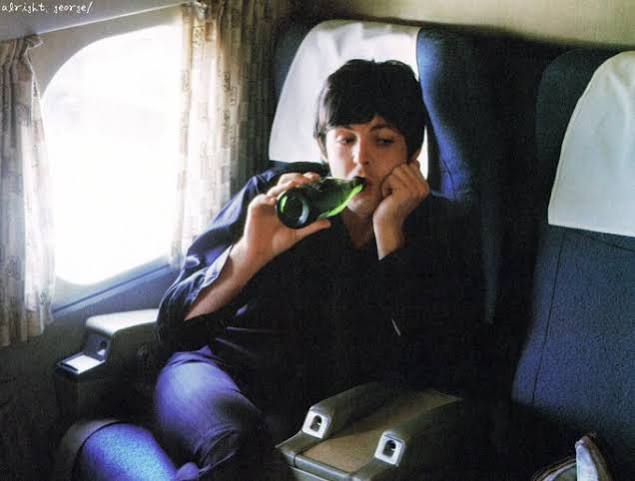
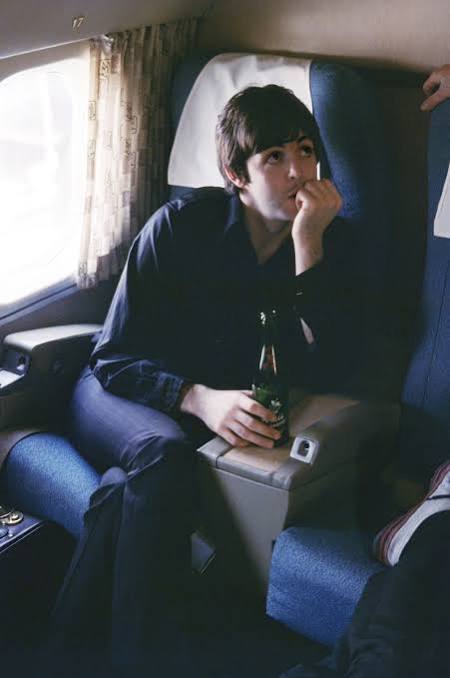
On the flight from Cincinnati to St. Louis, Paul was photographed drinking from a green bottle (photos 47 and 48)—relaxed, unwinding, unaware. These images don’t prove anything, but they visually set the stage for the idea that Paul might have ingested something toxic on the next flight—or on any flight where someone had sinister intentions for him.
A Question of Decoys. Two days after the New York City press conference, in Los Angeles, a reporter asked whether the Beatles had ever used doubles or decoys:
REPORTER: Have you ever used or trained Beatle doubles as decoys on a…
RINGO: No.
JOHN: No.
PAUL: We tried to get Brian Epstein to do it…he wouldn’t do it.
(laughter)
The laughter suggests the band didn’t take the question seriously. But the inquiry itself is intriguing. Why did a reporter ask it at all? Why did it surface at this moment—between New York and San Francisco, two cities where William, Paul’s double, was photographed? Had someone noticed the taller, broader guy dressed to match Paul McCartney among the Beatles’ entourage?
The Beatles “didn’t use doubles”—but one would deplane in Paul’s stead five days later, in San Francisco.
Two Pauls on a Boat
The New York City movement pivots on a single photograph—a moment so improbable, so visually dissonant, that it becomes one of the most astonishing artifacts in the entire Paul Is Dead narrative. It is a photo that should not exist: Paul McCartney and the man who would replace him, William Shepherd, together on a boat in New York City, dressed alike, at the same time, in the same frame.
No official Beatles chronicle mentions a boat trip during the band’s 1966 visit to New York City. The Beatles arrived at 3:50 a.m. on August 22, stayed at the Warwick hotel, held two press events, and prepared for their Shea Stadium concert the next day. Yet somewhere in that narrow window—likely August 23, based on Paul’s wardrobe—an excursion on a Chinese junk called the Mon Lei occurred. And someone was there with a camera.
The Impossible Image. In the 1966 photo on the Mon Lei (photo 49), Paul stands at the left side of the frame, leaning casually against the railing, smiling, relaxed, holding a beverage. His posture is loose, his expression open. He looks like Paul McCartney.
At the center of the boat sits William—the man who would soon replace Paul—grinning broadly, almost giddily, as if caught mid‑guffaw. He looks like Paul McCartney.
Both men wear:
- The same dark, structured blazer
- The same light collared shirt
- The same dark tie
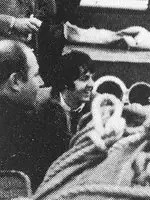
The visual shock of the photo is immediate. You can look at Paul’s isolated image (photo 50) and say, “That’s Paul McCartney.” You can look at William’s isolated image (photo 51) and say, “That’s Paul McCartney.” One is the real Paul. The other is the man who would become the world’s concept of Paul McCartney for the next sixty years and counting.
The Collective Memory Problem. Today, in 2026, the man known as Sir Paul McCartney has been performing as Paul for six decades. His face, voice, posture, and mannerisms have become the cultural baseline for the name Paul McCartney. The original Paul—the young man from Liverpool who lived in the public eye for less than four years—has been eclipsed by the longevity of his replacement.
Our brains retroactively project the familiar face backward in time. We smooth over discrepancies. We see what we expect to see. This is retrospective bias—a form of cultural conditioning in which the long‑dominant image overwrites the earlier one. William’s sixty‑year career becomes a kind of camouflage, altering collective memory of what the original Paul actually looked like.
And there is a second layer: contextual priming. When a person stands near John, George, and Ringo—three instantly recognizable figures—the brain takes a cognitive shortcut. It assumes the fourth man must be Paul. The group’s silhouette becomes a whole perceived before its parts. The Beatles are the Beatles; therefore, the fourth man is Paul. This is how William “passed.” Not only because he resembled Paul, but because he stood beside the other three.
The Missing Beatles. The second anomaly of the 1966 boat photo is the absence of John, George, and Ringo. During a U.S. tour, the Beatles were almost never separated during public or promotional outings. Yet in this photo, only Paul is visible on the deck. A strong silhouette at the far right of the frame may belong to a Beatle, possibly John or Ringo (photo 52). But the fact remains that Paul is physically separated from his bandmates.
A Scene That Feels Like a Setup. In a sense, the Mon Lei became a floating stage, mirroring the Manila yacht—isolated, jurisdictionally ambiguous, ideal for covert action. This single image is the moment where the conspiracy becomes visible—undeniable. Paul is isolated from the others, engaged in conversation, totally oblivious he’s in a trap. William is six feet away, dressed like Paul, smiling like a man on the brink of transformation.
Another Successful Paul McCartney Lookalike
I’d like to pause to acknowledge a remarkable historical footnote—one that proves, beyond theory or speculation, that Paul McCartney lookalikes did exist, and one of them became a rock star in his own right.
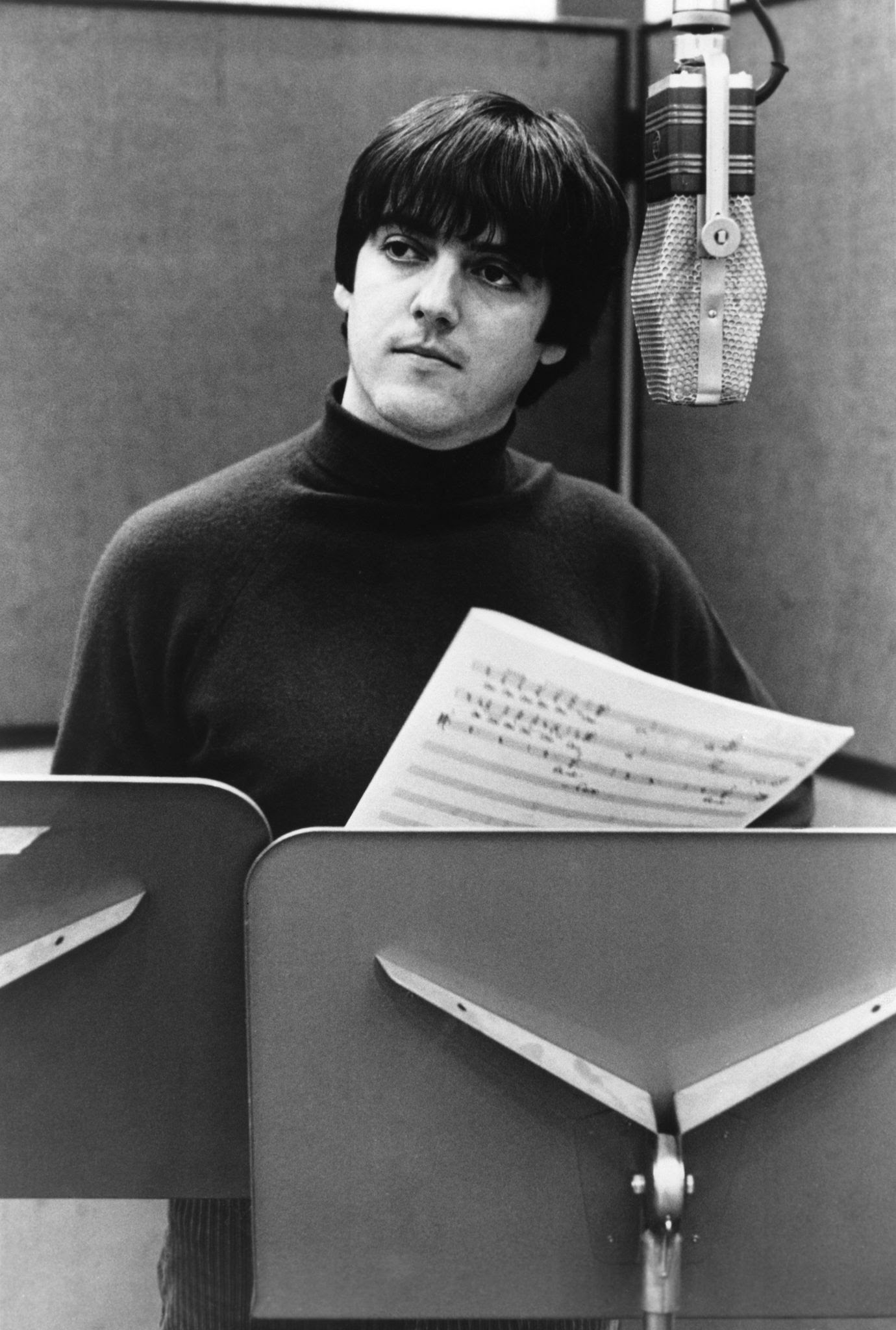
In late 1965, a Paul McCartney lookalike contest was co‑sponsored by The Beatles’ management, the teen magazine Tiger Beat, and television host Dick Clark. The winner was Keith Allison, a young musician from Texas whose resemblance to Paul McCartney (photo 53) was so uncanny that he was mobbed by fans, photographed in magazines, and quickly absorbed into the American entertainment industry. Allison became a regular performer on Dick Clark’s television show and later joined the prominent rock band Paul Revere & the Raiders—a career trajectory that demonstrates, unequivocally, that a Paul McCartney double could be musically talented, charismatic, and capable of achieving and sustaining rock‑star visibility.
Allison’s story matters here because it directly addresses some common objections:
- No one could look enough like Paul McCartney to replace him.
- Even if someone looked like Paul McCartney, he couldn’t also be a skilled musician.
But someone did look enough like Paul McCartney to be mistaken for him in public, and he forged a successful career in popular music.
Then comes the conspiratorial hinge: some theorists argue that William Shepherd entered the very same contest. If true, it would explain how he came to the attention of the American government agency looking to replace Paul McCartney. It would also mean that William Shepherd—the man who would become the world’s concept of Paul McCartney—may have lost a Paul McCartney lookalike contest. The irony is sharp: perhaps he couldn’t pull off the mop‑top aesthetic, which may help explain why the Beatles abandoned their iconic Beatlemania look instantaneously after Paul’s death.
The Mon Lei Problem
The Mon Lei is one of the strangest recurring objects in the Paul Is Dead narrative—a physical location that appears twice, two years apart, in two different contexts, with two different Pauls. The boat itself becomes a kind of visual trapdoor: step onto it in 1966, and you see a moment that should not exist; step onto it again in 1968, and you see the replacement fully integrated into the Beatles’ machinery.
It is essential—yet surprisingly tricky—not to conflate the two eras.
Two Eras, Two Trips, One Boat. Members of the Beatles boarded the Mon Lei twice:
- 1966: a transition moment, with Paul and William together
- 1968: an Apple Corps publicity cruise, with John and William
These two events are entirely separate. Different outfits. Different passengers. Different purposes. Different rivers. The 1966 cruise appears to have taken place on the East River, with its distinctive bridges. The 1968 cruise sailed the Hudson River, circling the Statue of Liberty. Yet the photographs from these two trips have been repeatedly confused—and in one case, deliberately merged.
The 1968 Apple Corps Cruise. On May 12, 1968, John and William spent five hours aboard the Mon Lei during a high‑profile business meeting and publicity blitz. Apple Corps was being launched in the United States, and the boat provided a private, photogenic refuge from the media frenzy on land. The corporation was founded as an umbrella for the Beatles’ various business and creative interests. In William’s memoir, he offers the following reading of the name Apple Corps: “A Paul Corpse.” Whether this was truly the origin of the name or simply a “happy” accident remains unclear.
The passenger list reads like a who’s who of Beatles infrastructure:
- John Lennon
- William Shepherd (Paul McCartney’s replacement)
- Ron Kass, newly appointed U.S. Apple director
- Neil Aspinall, chief executive officer and managing director
- Mal Evans, executive assistant
- Derek Taylor, chief press officer
- “Magic” Alex Mardas, head of Apple Electronics
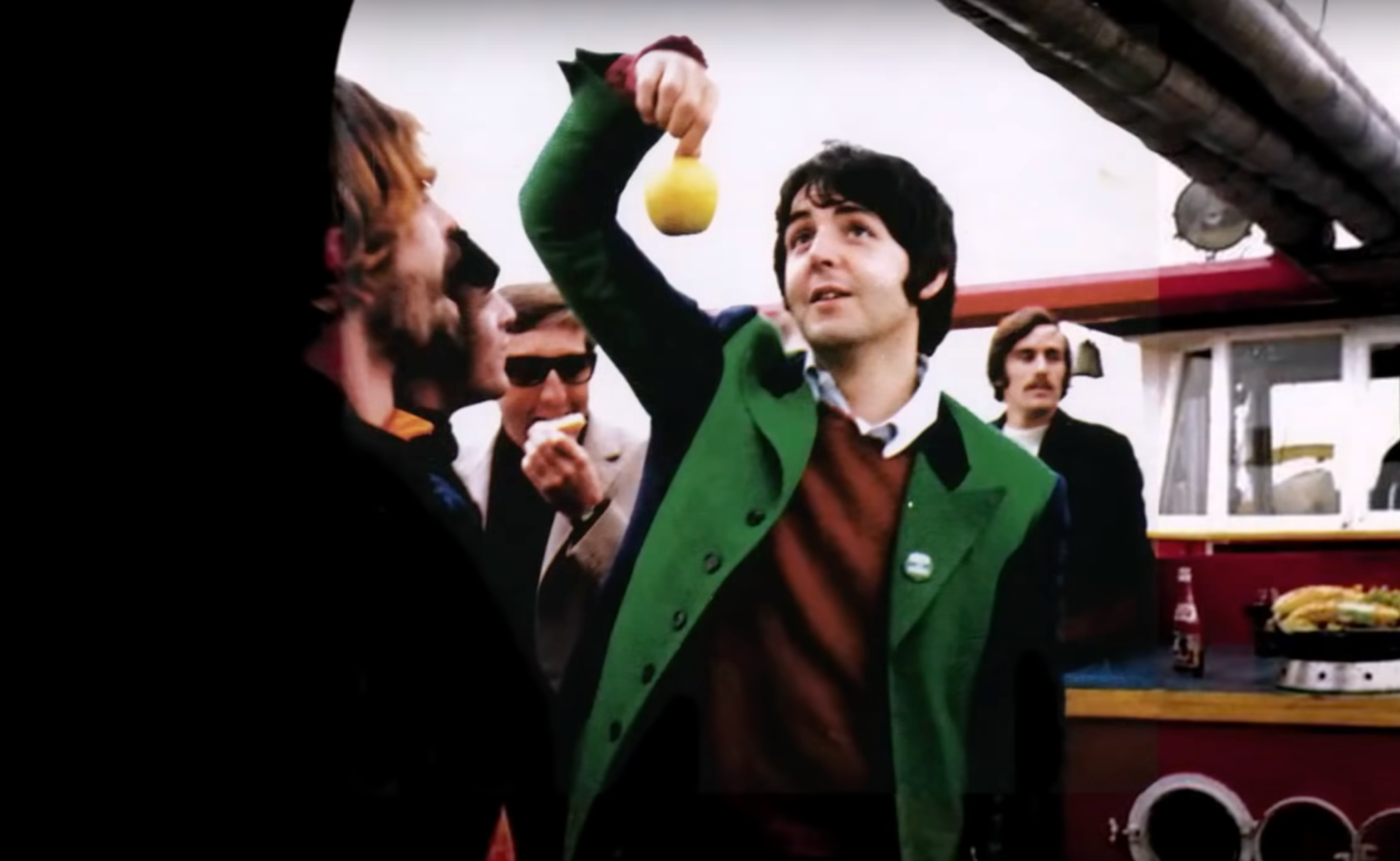
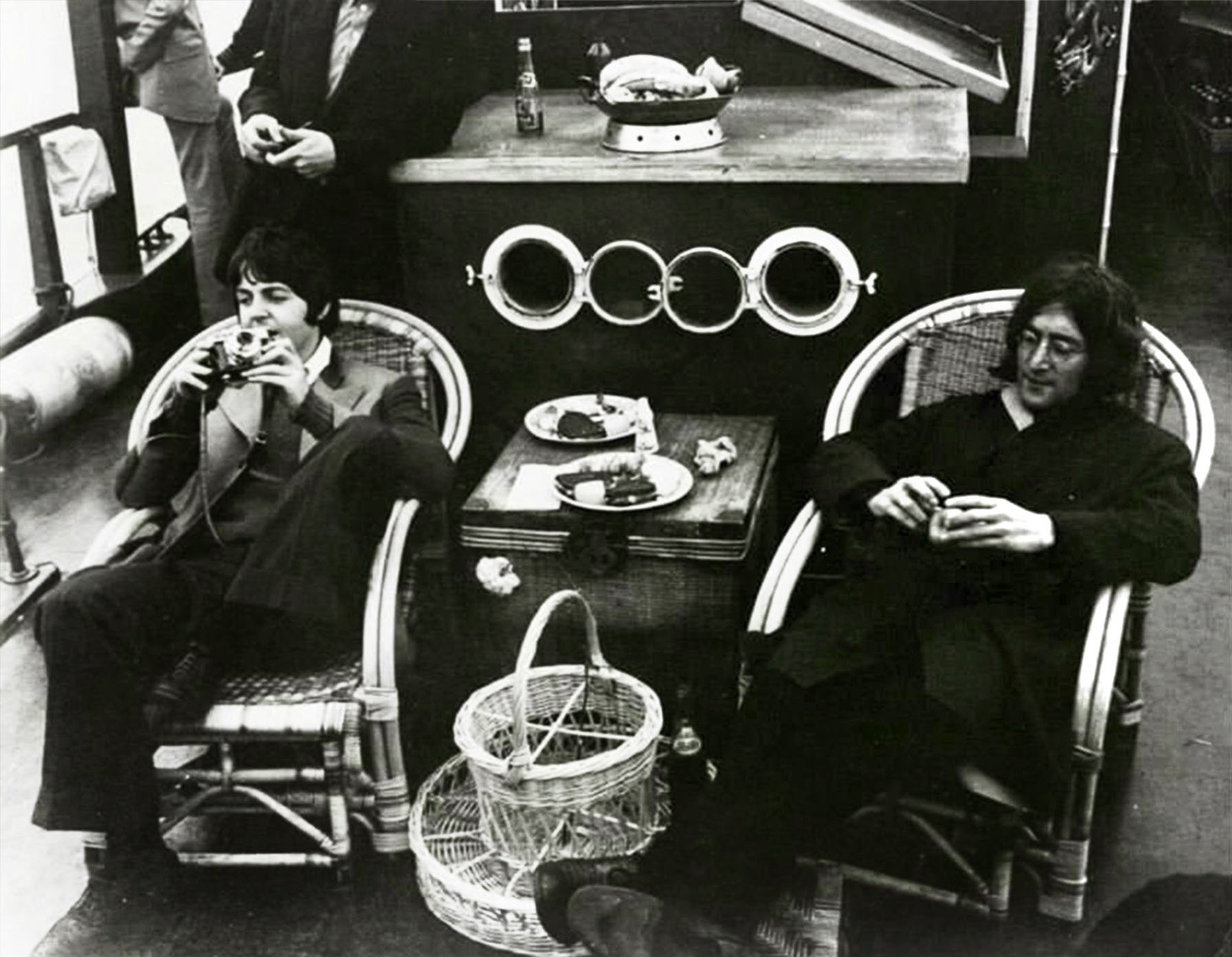
The 1968 photos are plentiful, often colorful. William wears a vibrant green jacket over a rust‑colored sweater and a white collared shirt—a bold, confident outfit (photo 54). John appears relaxed, seated in a wicker chair, entirely at ease beside William (photo 55). The images offer visual proof that by 1968, the transition was complete: John isn’t separated from the “asset”; he is partnering with him, launching a multimillion‑dollar venture.
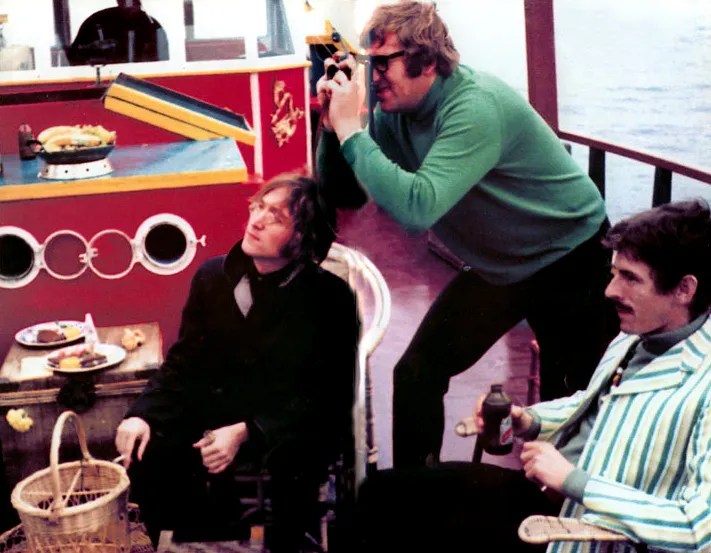
The Striped Jacket Anomaly. One of the strangest details linking the 1966 and 1968 Mon Lei photos is the presence of a Beatles associate—likely Derek Taylor—wearing the same striped jacket in both eras (photo 56). Not only is the jacket identical, but the man wearing it is seated in the exact same spot on the boat in both sets of photos. When I first compared the images, I was genuinely confounded. Did Derek Taylor have a boat jacket?
But maybe it wasn’t a casual coincidence. Maybe it was a visual anchor so that if the two eras were ever mixed up—intentionally or accidentally—the identical jacket and identical seating position would create a false continuity. A researcher might be convinced that the 1966 photo was simply another angle from the 1968 Apple cruise. Yet I couldn’t positively identify any passengers from the 1966 photo in the 1968 photos (or vice versa), except for William and the man in the striped jacket.
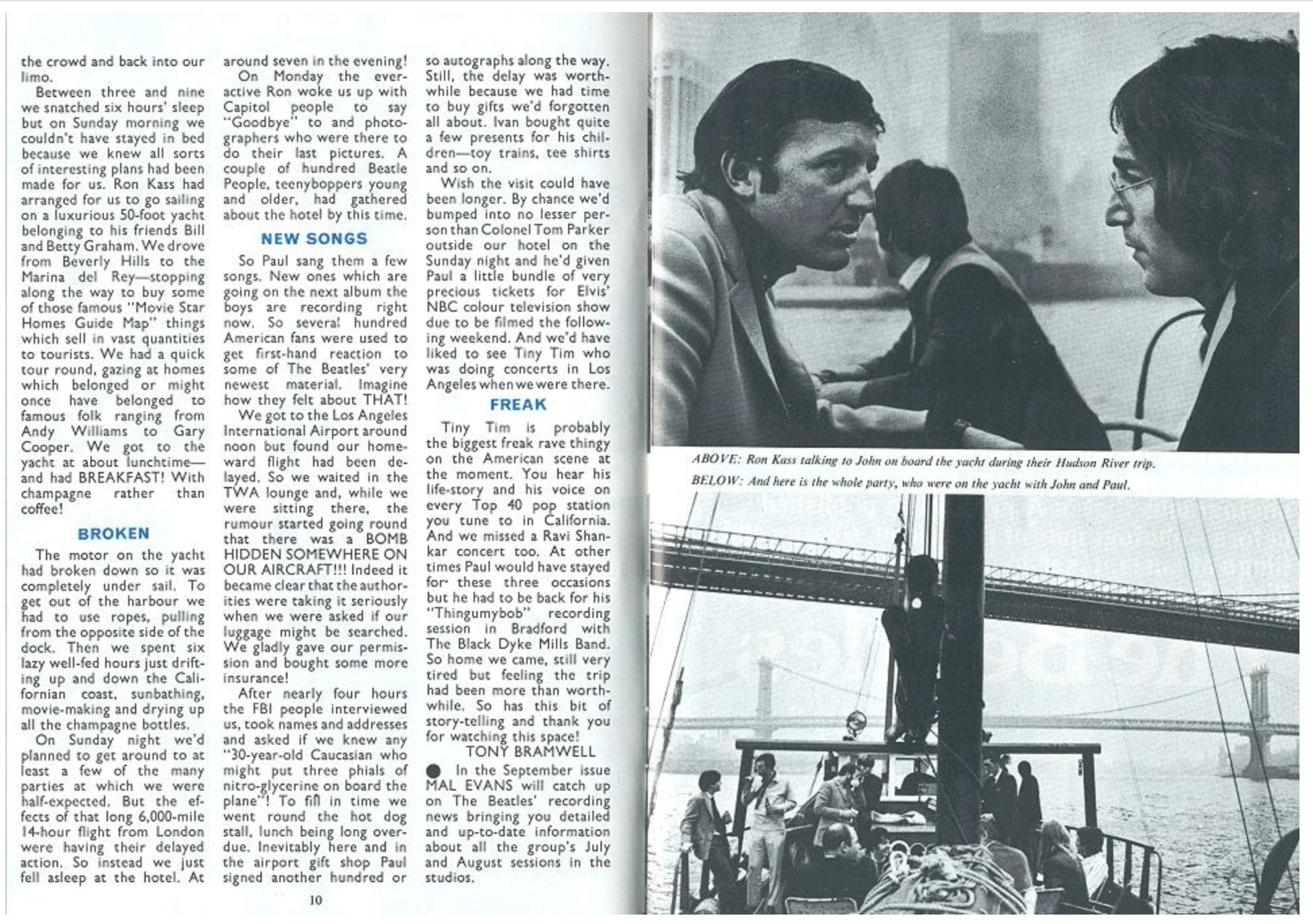
The Publication That Merged the Eras. In The Beatles Book, issue No. 62 (September 1968), photos from the two eras were printed side by side—one above, one below—with a caption implying that both images were taken during the 1968 Apple excursion (photo 57). But the bottom photo shows the original Paul McCartney, alive, smiling, and standing on the Mon Lei two years earlier. Both photos were credited to Mal Evans. When Mal slipped the 1966 image into the 1968 layout, he preserved a critical Paul Is Dead clue—a visual hinge that captures the conspiracy in a single glance.
The Loose Linchpin
The 1966 Mon Lei photo raises the central question of the New York City movement: Why didn’t the switch happen on the boat? Paul and William were dressed alike. Paul was separated from the other Beatles. The environment was controlled and isolated. The timeline was narrow. The opportunity was real. And yet, Paul walked off the boat alive.
I suspect the answer isn’t logistical but human.
The Photograph Problem. One possible explanation is that Mal Evans was photographing the scene. In the 1966 photo, a dark‑haired, dark‑bearded man stands behind William, speaking surreptitiously to a taller, lighter‑haired man beside him (photo 58). The dark‑haired man conceals his mouth with his wrist—a gesture that suggests covert communication. If these were operatives, he may have been alerting the other that Mal was taking a photo of the entire party, capturing both Paul and William in the same frame.
Mal’s photo might have complicated the operation. But it probably wouldn’t have derailed it. The operatives could have confiscated Mal’s camera, demanded the film, or destroyed the evidence later. The photograph problem alone doesn’t explain the failure.
Brian’s Interference. The stronger explanation—the one supported by highly unusual events that followed—is that Brian Epstein was on the Mon Lei, and he intervened. That day, Brian was responsible for dressing Paul to match William. He knew the plan. He understood the stakes. But at some point after the boat left the dock, Brian’s role shifted from reluctant participant to protector.
Brian’s Protective Instinct Was Ferocious. Shielding the Beatles from danger was part of Brian’s job description. When the Beatles were kidnapped by the Marcos regime, Brian didn’t behave like a cautious manager. He behaved like a man possessed. He berated and threatened an armed foreign government in order to protect his clients. So, would he stand quietly on a boat while an assassination squad closed in on one of them? He would have stepped between Paul and the operatives. He would have disrupted the choreography. He would have blocked the execution window.
Brian Needed Paul’s Creativity. Brian understood something the operatives probably did not: Paul was the sole writer of the Beatles’ original songs. To kill Paul was to kill the band’s creative pipeline. Paul had a backlog of songs the Beatles hadn’t recorded yet, but replacing him meant running on borrowed time—even if William was a workable substitute as a singer and musician. Brian knew the Beatles’ future depended on Paul’s survival; their global success rested, in part, on his songwriting. William could never replicate Paul’s creative force, because it was unique. Brian fought to keep Paul alive because he knew a lookalike could replace a face—but not a mind, and not a heart.
Brian’s Financial Survival Depended on Paul. Brian’s empire—NEMS Enterprises—relied on the Beatles. Touring was the band’s primary cash-flow driver. Replacing Paul with an unproven lookalike threatened the financial stability of the entire operation. And Brian was already under immense monetary strain. His gambling habit had created significant debts. His overhead was enormous. His anxiety was mounting. If Paul died, Brian’s financial world might collapse. On the Mon Lei, Brian wasn’t just protecting Paul. He was protecting his livelihood. His company. His future.
Brian’s Defiance Forced the Agency to Escalate. The 1966 Mon Lei trip was an active assassination script. All the pieces were in place, but the switch failed—because of Brian. The American government agency realized they could plan all they wanted, but Brian was a human variable they didn’t fully control. So, they conscripted John “Dizz” Gillespie to steal Brian’s monogrammed briefcase from the Beverly Hills Hotel, after planting devastating—ruinous—photos and letters inside it. If the items were leaked to the press, Brian would not just lose his career; he would face literal imprisonment under British law.
The blackmail broke Brian’s will; he had no choice but to comply. On August 29, 1966, the day of the Beatles’ show at Candlestick Park, he would dress Paul like William. Then he would not interfere. In fact, he would stay behind from San Francisco altogether—a move unheard-of in the history of Brian’s management of the band.
It is hard to overstate the mental anguish Brian must have suffered as the boys left for LAX—and his bewildered relief when Paul survived (by my count) three distinct assassination attempts in twelve hours.
The Aftermath
Immediate and Forever
Brian’s Breakdown, Paul’s Passing
In the weeks after the Beatles returned to England, the machinery that had held the band together through Manila, New York City, and San Francisco finally buckled. The pressure that had been building around Brian Epstein—the clash with the Marcos regime, the failed Mon Lei operation, the Beverly Hills blackmail—finally took its toll.
Brian’s Collapse. It is a matter of historical record that Brian Epstein was admitted to the Priory clinic in London on September 26, 1966, for a severe barbiturate overdose. Brian’s overdose was not a random crisis. It was the breaking point of a man who had spent the summer fighting a battle to protect the Beatles’ creative center. He had been blackmailed, cornered, and forced to comply with a transition he did not believe in.
At this time, the individual Beatles were scattered globally, with John filming a movie in Spain, and George studying sitar in India. Newspapers described the Beatles’ future as “uncertain,” “fractured,” and “in doubt.” Rumors circulated that the band was splitting up, or that Paul McCartney was quitting the music industry altogether. On October 3, Brian emerged from the clinic and held an emergency press conference. He fiercely denied that the Beatles were breaking up, that Paul was leaving the band, or that anything was wrong.
But the plot to murder and replace Paul McCartney was about to take a most unexpected turn.
Paul’s Death. Paul McCartney was not assassinated. But he did die. And he was replaced. In earlier posts, I made a case for when, how, and where Paul died: On the evening of October 9, 1966—John Lennon’s twenty‑sixth birthday—Paul McCartney suffered a fatal accident in his London home. He struck his head, lost consciousness, and drowned in his bathtub. It was sudden, silent, and private—except for the presence of his puppy, Knickers. There was no car crash or staged wreck, as is commonly postulated in the Paul Is Dead narrative. Just a tragic household misstep that ended the life of a twenty‑four‑year‑old man with so much music—and love—left in him.
Paul was buried on October 18, 1966, at 7 Cavendish Avenue, beneath the window of the bathroom where he died.
***
The rumors that Brian continued to deny throughout October 1966 were not random press speculation. They were the first tremors of a world sensing that something had changed. Something had broken. Something had ended.
Bringing William On Board
In the weeks after Paul’s death, Brian Epstein faced the most delicate task of his career: preparing William to assume Paul McCartney’s identity in every facet of his life. The transition had already been set in motion during the summer’s assassination scenarios, but now the stakes were absolute. Paul was gone. If the Beatles were to continue, they could do so only with William. Moreover, the American agency would have required that William be set up to take Paul’s place. And Brian, newly discharged from the Priory clinic, had to oversee the transformation personally.
The Transatlantic Briefing Trip. The historical record shows that shortly after Brian’s emergency press conference on October 3, he quietly crossed the Atlantic. He likely departed almost immediately after Paul’s death, on October 9. Officially, Brian traveled to the United States to “manage business affairs for NEMS” and check on American promotion for his other acts, including Cyrkle. But Brian wasn’t talent‑spotting. He was briefing William, who was American. And the only way to prepare him for Paul’s life—his voice, mannerisms, relationships, media obligations—was to meet face‑to‑face.
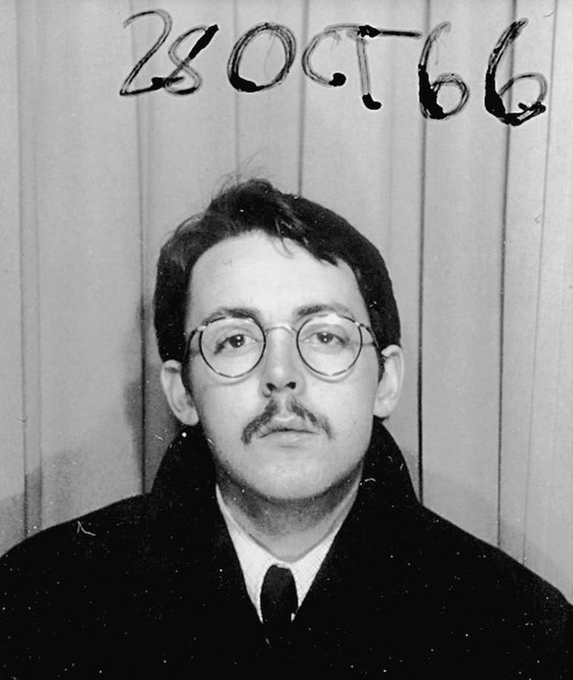
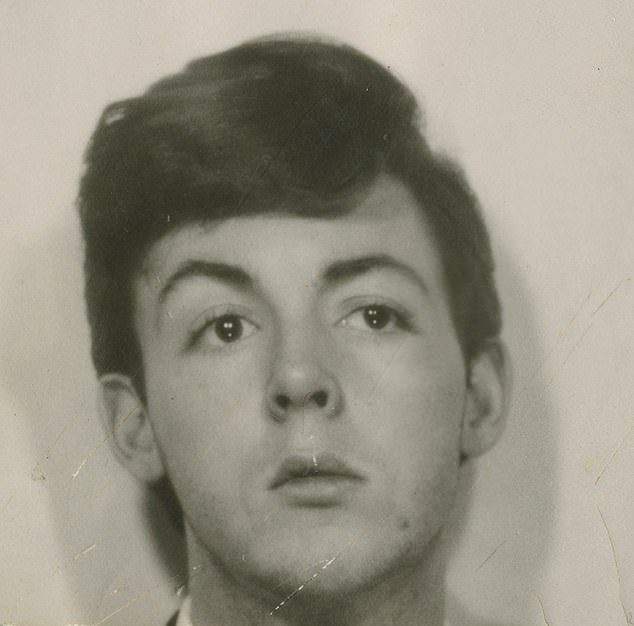
The Passport Photo Problems. The most striking artifact from this period is the passport‑like photo of William, hand‑dated “28 OCT 66” (photo 59). Nineteen days after Paul’s death, William appears to have been officially documented as Paul McCartney. The date is written in British format (day‑month‑year), not American. This is a crucial detail. The British notation strongly suggests that the person overseeing the paperwork was British—pointing directly to Brian. The photo itself appears to be a recreation of Paul’s earlier passport photo from the 1950s (photo 60). The resemblance is intentional: mirroring Paul’s boyhood image created a false baseline of continuity, smoothing the transition between the two men’s facial structures.
But the differences remain:
- The hair part: Paul’s hair parts naturally on the left. William’s hair parts naturally on the right. Even with styling, training, and effort, natural growth patterns persist. The directional part becomes an indelible physical marker—a subtle but permanent sign that a different man had stepped into the frame by late October.
- The eyeglasses: William wears corrective glasses in the photo. Paul never did—at least not in public. The glasses feel like a transitional prop, a way to obscure the differences while the new identity was being established. William would not wear glasses again during the Beatles years.
- The mustache: And then there’s the mustache. Could this look more like a disguise? Paul never wore a mustache with the Beatles, except for fake ones in both A Hard Day’s Night and Help!. Perhaps the idea was that having William wear a mustache would help dispel skepticism about his identity: “This photo doesn’t really look like Paul McCartney, but then I’m not used to seeing him with a mustache.”
***
In the aftermath of Paul’s death, Brian’s movements were erratic, urgent. He had to stabilize the band’s public image, deny rumors, prepare William, oversee documentation, coordinate with the American agency, and return to London with the new “Paul McCartney.” In her 2005 biography John, Cynthia Lennon described Paul as “refreshed.” Within the framework of the original Paul’s replacement, postmortem, by a lookalike, that single word becomes chilling.
The Charity “Snub”
On October 21, 1966, the United Kingdom was struck by one of the worst civilian tragedies of the decade: the Aberfan mining disaster. A collapsing coal tip buried a primary school, killing 116 children and 28 adults. The nation entered a period of mourning so profound that public figures across Britain mobilized to support the families.
In early November, organizers planned a star‑studded charity television special to raise relief funds. They invited the Beatles—the most famous band in the world—to appear. Their presence would have electrified the broadcast and drawn millions of viewers. Brian Epstein declined the request.
The Curious Refusal. On November 5, Brian sent a telegram turning down the invitation. His letter read:
Sincere admiration for your efforts, but I know without consulting them, the boys would feel unable to make an appearance of this sort for too many reasons to enumerate.
Instead of performing, Brian pledged a donation: £200 from each Beatle, plus £200 from himself, totaling £1,000.
To the public, the refusal seemed cold, strange, even callous. The Beatles had always supported charitable causes. Why would they decline a solemn national broadcast for grieving families—especially when other major artists (including the Rolling Stones) were expected to participate?
The Smoking Gun: Brian Was in America. Archival newsprints confirm that Brian sent the cable from the United States. He was not in London. He was not with the Beatles. He was not managing a routine business trip. He was across the Atlantic, in the same window when William was being briefed to assume Paul’s identity.
A live television appearance in early November would have required Paul McCartney to stand in front of cameras and perform Beatles classics with John, George, and Ringo. But Paul was dead, and William was not yet ready. A premature appearance would have blown the transition wide open. Brian’s refusal was not a snub. It was a necessity. He couldn’t risk unveiling the understudy on a live broadcast.
Why the Beatles Never Performed Live Onstage Again
In the wake of Paul’s death, the Beatles’ touring career ended—abruptly, permanently, and without public explanation. “Official” reasons have been offered over the years: they couldn’t hear themselves play, security was impossible, the strain of travel was overwhelming, the crowds were too chaotic. These explanations have been repeated so often that they’ve become accepted history. But none of them touches the truth. The Beatles stopped touring because Paul McCartney was dead.
Why Not William? If Paul’s death had been acknowledged, the band would have stopped touring immediately—unless they chose to replace Paul with another bassist, a nearly impossible task given Paul’s charisma, musicianship, and centrality to the band’s sound. Paul was replaced by William, and the band stopped touring anyway. Not because William lacked talent, but because the difference in the band’s appearance—particularly onstage—would have been too glaring.
William was taller than Paul. Broader. He moved differently. He played differently. The indelible image of the four Beatles onstage—the silhouette that defined Beatlemania—would have looked wrong with William in Paul’s place. The illusion could survive interviews, photographs, choreographed videos, and controlled public appearances. It could not survive a live concert.
The Press Conferences That Prove It. Just one week before Candlestick Park, during the August 22, 1966, press conference at the Warwick hotel, the Beatles were asked whether they ever grew tired of touring:
REPORTER: Do any of you ever get tired of all this hocus-pocus—the press conferences, the screaming girls, the crowds—and decide that you would like to just sit back on your fat wallets and forget the whole thing?
PAUL: (laughs)
JOHN: Well, when we feel like that, we take a fat holiday on our fat wallets…
(laughter)
JOHN: …and then you get fed up with that and you feel like coming out and doing this.
There was no hint of retirement. No suggestion of stopping. No foreshadowing of an ending.
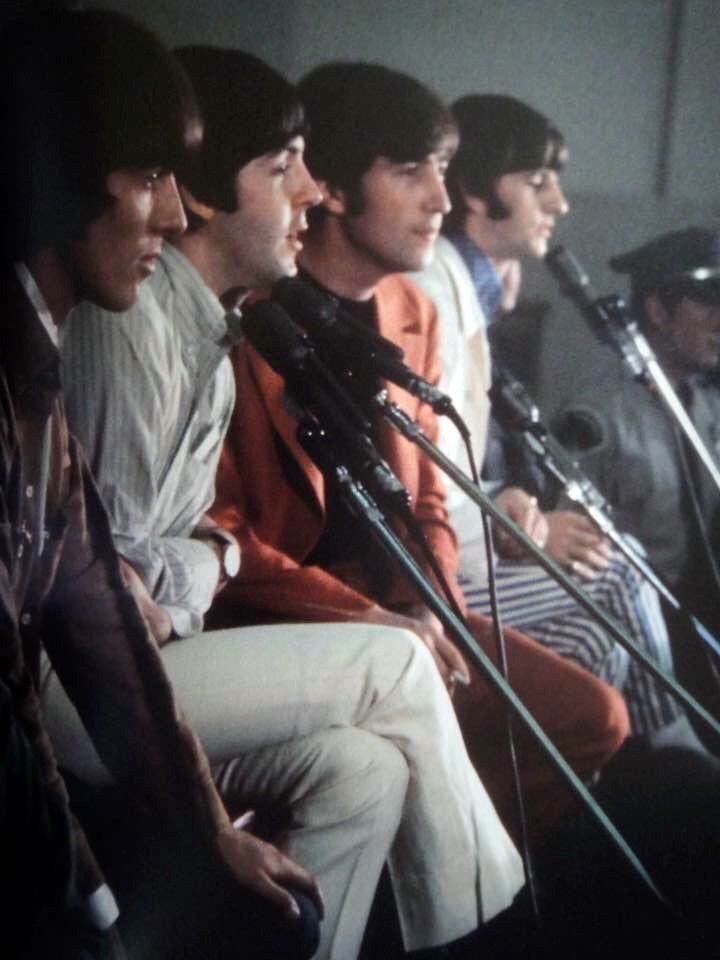
At the August 24, 1966, press conference in Los Angeles (photo 61), just five days before Candlestick, the Beatles entertained the possibility of touring again in 1967:
REPORTER: Do you think we’ll have another tour again next year?
JOHN: Ask Brian. Could be.
PAUL: Could be, Fred. Brian does all that.
If Paul McCartney had lived, the Beatles might have returned to the United States in 1967—their image evolving with the times, their sound expanding, their momentum continuing. The possibility was real. The desire was real. The future was open.

