
When I was in the fifth grade, one of our regular assignments was to find an unusual word in the dictionary and turn it into a multiple-choice question for the class. We were to provide four possible definitions for the word: the actual one and three fabrications. I remember feeling an impish sense of satisfaction when a schoolmate would select one of my made-up meanings. So in the spirit of Miss Brown’s vocabulary-building exercise, I offer the following MCQ:
What does the word nanowrimo mean?
a. A punctuation mark, proposed by English printer Henry Denham in 1580 and used until the early 1600s, indicating a rhetorical question
b. Any of several large, thick-skinned, odd-toed mammals of Africa and India, having one or two upright horns on the snout
c. One billionth of a wrimo
d. Thirty days and nights of literary abandon
If you answered a, b, or c, I applaud you as a very decent human being who graciously took my inane quiz. (If you recognized b as a rhinoceros, extra credit!) The correct response is d. But I sort of tricked you. The proper presentation of the word is NaNoWriMo. The acronym stands for National Novel Writing Month. NaNoWriMo describes itself as a “fun, seat-of-your-pants approach to novel writing.” The program began with 21 budding authors in 1999; in 2011, it tracked the progress of over a quarter million “WriMos.”
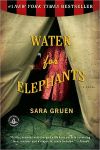
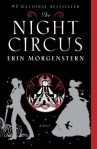 Participants start writing on November 1, with the aim of completing a 50,000-word novel (equal to 175 printed pages) by November 30. And it works. National Novel Writing Month has yielded a long list of published novelists. Bestsellers penned during NaNoWriMo include Water for Elephants, by Sara Gruen; and The Night Circus, by Erin Morgenstern. The former was released as a motion picture last year; the latter is in development.
I have considered participating in NaNoWriMo for several Novembers, going so far as to create an account (where years’ worth of unread NaNoMail is waiting for me). Because I finally have a concrete idea for a novel, this year’s event seems perfectly timed. However, there’s an  issue. NaNoWriMo values quantity over quality, “enthusiasm over painstaking craft.” The goal is to produce a crappy first draft, “to forgo the endless tweaking and editing and just create.”
Maybe therapy could help, but I am inherently incapable of writing without editing. I have been writing and editing, editing and writing, for over 20 years. The two activities are hopelessly intertwined for me, and my projects rarely involve one without the other.
To compensate for my quirk, I am proposing a scaled-down version of NaNoWriMo. Specifically, a 1:10 scale. My reasoning is that for every ten steps my writing takes me forward, my editing takes me nine steps back. So instead of generating an average of 1,667 hastily chosen words per day, I would shoot for 167 somewhat polished ones. By the end of next month, I would have 5,000 words, the length of a respectable short story.
Does anyone want to do NaShStWriMo with me? The name is catchy, you have to admit.

 Novel-Gazing