My Year, According to Social Media

I think many would agree that 2012 went very fast. Some may have enjoyed the ride, while others are glad that a new year is just around the bend. In an attempt to recap this blur for myself, I turned to my posts on Facebook, Twitter, and Foursquare. This exercise made me wonder how fully and accurately the images portrayed by social media reflect our lives—and if the content we share with virtual communities somehow has the reverse effect of informing our experiences.

I will try to address these ideas after presenting sample highlights from my online existence this year:

January: On the 6th, I made a New Year’s resolution not to procrastinate. On the 6th.Brownies

February: On Valentine’s Day, I baked gluten-free double-chocolate walnut brownies for my husband.

March: It rained on my birthday, the 31st; I celebrated with champagne and the best burger in town.

April: I began avoiding chocolate, wine, and fried foods (i.e., all the things that make life worth living), due to a GI issue.

Dogs YawningMay: On the 7th, I photographed two of my dogs yawning at the same time. On the 8th, I received my first writing assignment from my coach, due the next day (the metaphorical equivalent of walking over hot coals).

June: On the 23rd, I attended the annual Solstice Parade in Santa Barbara. (There were mimosas.)

July: My husband grilled on the 1st, a Sunday, which pleased me. On the 15th, I attended a wedding out of town. I must have caught a cold on the trip, because I fed it with Chinese food on the 20th.

August: On the 21st, I announced that I was considering starting a blog about writing a novel, which struck me as the perfect way to avoid actually writing the novel.

September: On the morning of the 19th, I accidentally wrote a haiku: “Shiver me timbers! / It’s Talk Like a Pirate Day. / Too early for rum?” I got bangs on the 20th, and made a big deal out of that.Novel-Gazing
October: This blog went live on the 2nd!

November: Between the 1st and the 30th, I wrote the first 5,000 words of my novel. (I wrote just about as many words regarding the process.)

December: On the 20th, I had a pumpkin spice latte (with whipped cream), in case the Mayans were right and it was my last day on Earth.

These mundane things really happened, which is not hard to believe. What may be hard to believe is that, in some cases, I snazzed up the events for public consumption. For example, on December 20, I was meeting a friend for coffee and would have had a pumpkin spice latte anyway. Still, I enjoyed the beverage a little bit more due to the backstory I had created for it in a Facebook post. So maybe the effort to make a moment sharable with a network of friends actually enhances it.

On the other hand, there are times when my dogs are doing something cute, and they’ll stop if I make a move toward a camera; so the moment becomes even sweeter, because I know it is only mine to enjoy.

Please Have Snow and Mistletoe

Let me start by saying that I observe December 25 with Chinese food and a movie. But that doesn’t mean I am immune to the Christmas spirit. In fact, I seem to be quite susceptible to it lately. One reason may be that I bake cupcakes, and the cupcake community promotes seasonal offerings. For "Candy cane" cupcakesexample, I made mini “candy cane” cupcakes this year. Another way I have succumbed to the most wonderful time of the year is by really noticing, for the first time, its omnipresent music.

Although I know the season’s songs are often as maligned as its fruitcake, I find myself getting pulled into the idyllic scenes they draw. For example, I want to take a sleigh ride together with you and then rock around the Christmas tree, have the corn you’ve brought for poppin’, and conspire as we dream by the fire. Our troubles will be miles away! (Although I have a terrible feeling that Frosty the Snowman will not be back again someday. The sun was hot that day . . .)

I am on the outside of Christmas, and maybe that’s the best distance from which to enjoy its soundtrack. I have read enough Dear Prudence to know that the actual celebration of the holiday is frequently far from perfect. In fact, according to the National Institutes of Health, the incidence of depression is greatest at Christmastime. I can’t help but wonder if these sentimental ballads foster expectations for festivity straight out of a Norman Rockwell painting, which can never be met—resulting in inevitable disappointment.

On the other hand, perhaps they are simply love songs, wooing the perfect Christmas—which remains sweetly out of reach. And I feel swept up in the romance. In that vein, the holidays represent ideals—such as brotherhood, home, peace, love, and joy—to which we aspire. I think I respond emotionally to the depiction of these themes. I can’t hear (Bing Crosby’s rendition of) “I’ll Be Home for Christmas,” written from the point of view of an overseas soldier during World War II, without getting a tear in my eye. Its melancholy twist (“If only in my dreams”) highlights our separation from cherished ideals.

Or maybe I just have Christmas envy. Fa la la la la, la la la la.

Dear Prudence: Time Waster or Idea Machine?

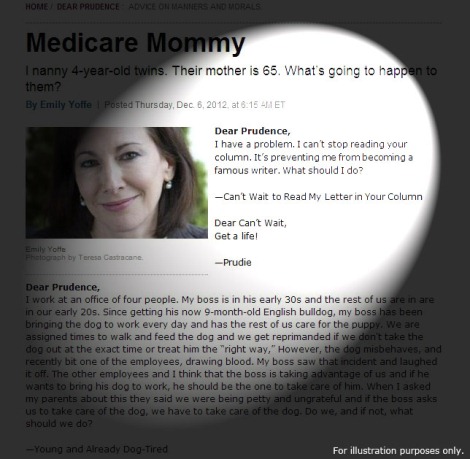
In my first session with my writing coach, she asked me to identify things I was doing that were wasting time; eliminating these productivity killers could free me up to do some writing. Two of my distracting behaviors were being on Facebook and looking out the window. (Damn, I just stared at the trees for half a minute.) I was a bit embarrassed to reveal a third habit: reading the advice column Dear Prudence. In addition to devouring the semiweekly installments, I had been delving into the Dear Prudencearchives all the way back to 2007. At one point, I even considered writing to Prudie herself for guidance on how to overcome my obsession.

Prudence (Emily Yoffe) fields queries regarding social etiquette, relationships, family, and the workplace. So what was it about the column’s questions and answers that merited hours of my time? For one thing, I enjoyed comparing my own reactions against Prudie’s. Often, we were in agreement. Yes, a man who asks his girlfriend to get a nose job and then wants to dump her when she is disfigured by the procedure is kind of a jerk. Yes, it is bad form for a bride to ask the groom’s mother not to wear a dress with spaghetti straps because she finds the look age-inappropriate. In other cases, I was enlightened by Prudie’s point of view.

I also saw a distinct benefit to reading the column, one with a direct application to my writing: The situations people described were fantastic fodder for fiction! For example, here are some story ideas based on actual letters:

  • Relationship drama: A husband and wife are having trouble conceiving when she finds out he is having an affair with her sister. After a traumatic confrontation, the couple moves away to make a fresh start. A few weeks later, the sister announces her pregnancy.
  • Psychological: A school bully becomes a young mother. When her daughter experiences some minor bullying, she is prompted to track down and make amends to the classmates she once tormented. She finds out that one girl, who switched schools because of her, committed suicide.
  • Thriller: A couple moves to the town where the husband’s bachelor brother lives. The husband, who travels frequently, encourages his brother to watch out for his wife. She catches the guy peering in through the bedroom window. Then he lets himself into the house while she is showering.
  • Romantic comedy: A woman discovers that she and her daughter are dating a father and son. Both couples have been talking about marriage.
  • Legal: A man who works at a small company finds out there is a plot to oust the controversial CEO with a false claim of sexual harassment. The human resources department is in on it. Should the employee warn his boss? Or just hope that truth will prevail?

If you are a writer, feel free to use these scenarios as prompts! After the exercise with my coach, I decided to limit my reading of Dear Prudence to just the new ones. I have successfully stayed out of the archives, except to research this post.

Now if you’ll excuse me, I have to check Facebook.

Ten Random Things about My Novel

Well, I met my goal to write 5,000 words of my novel in the month of November. It feels pretty good to open up the file and see a word count of 5,078. My husband asked if the words were good ones, which is a fair question. I believe a sampling—portal, secrets, it, gold, sauerkraut, grammar, taxi, her, the, marveled, apricot, stretch, chimney—shows a range from banal to mildly intriguing.

In the spirit of randomness, here are some additional observations about the experience of starting my novel:

  1. I wrote the second chapter first.
  2. There is a sex scene in the very first chapter. Who saw that coming?
  3. I kept misspelling the heroine’s name (not a good sign). Then I stumbled upon the perfect name, the meaning of which is virtually the working title of the novel. (Home˃Replace)
  4. Dark and StormyI had a general outline in mind, but I didn’t know what I was going to write from one paragraph to the next or even from one sentence to the next. I often thought, “Okay, now what?”
  5. Because I was writing for volume, there was the temptation to be wordy. I admit to using the word very eight times (though not in a row).
  6. On a related note, I avoided editing, because editing almost always shortens.
  7. I discovered that you can research the small things as you go.
  8. Okay, now what?
  9. I am very, very, very pleased with my novel so far.
  10. Publicly stating my goal motivated me to achieve it. (Humiliation is one of the five basic fears.)

The big question is, “Okay, now what?” I should probably call my writing coach. She’s the last person who would think I’d ever write something.

Confessions of a First-Time Novelist

Confession

Having written the first 4,000 words of a novel, I will boldly (if grossly prematurely) call myself a first-time novelist. Making such an assertion, however, brings up insecurities about certain embarrassing qualities I possess—ones that would seriously seem to undermine the success of a budding author. If I contritely confess these shadowy aspects of my nature, perhaps I will be released from their consequences . . .

Confession #1: I don’t like to read fiction.

I usually can’t even make it past the first few words of the back cover copy. “On a warm summer morning in North Carthage, Missouri . . .” “Joe Rickman, head of CIA clandestine . . .” “It’s Christmas Eve . . .” Maybe my aversion to reading for pleasure stems from the fact that I read for a living. (I would venture to guess there are plenty of baristas who don’t drink coffee at home.) This is not to say I haven’t amassed a library of books I suspect would be entertaining (judging from their covers). I am not well-read past the Renaissance.

Confession #2: I don’t want to be a beginner.

That’s right, I vainly want to skip novice, apprentice, and journeyman, and go straight to master. I have been writing educational, nonfiction, and marketing materials for over 20 years, so undertaking a novel is like starting over. This idea extends to other areas of my life. For example, I started playing the guitar and rollerblading at the beach, but I didn’t get very far because being a beginner felt so yucky. (And the guitar was dangerously wide for the bike path.)

Confession #3: I am a procrastinator.

My procrastinating is directly related to my perfectionism. If I delay starting something that requires my immediate attention, I can’t do it imperfectly. Problem solved! To put the perfectionism in perspective, I fact-check my Facebook posts—against three sources. As a professional editor and proofreader, I get paid for rejecting anything less than perfect—so this tendency is constantly being reinforced. One thing I don’t procrastinate about is my perfectionism.

Any of these shameful character traits should rightly disqualify or prevent me from being a first-time novelist. On the other hand, Camus said, “A work of art is a confession,” so perhaps a little guilt is a good thing for a writer.

Home on the Range

Range Riding Cowboys

“Going home” is a theme for people with dementia. “I want to go home” is the most common thing Alzheimer’s patients say, according to a nationally recognized expert on Alzheimer’s care. These individuals may express the desire to go home even when they are in the house where they have lived independently for many years. So what does “home” represent in such cases? Childhood? A state of feeling taken care of? A plane of existence beyond this one?

My father, who has advanced dementia, has been in an assisted living facility for almost four weeks. During that time, he declined from being able to walk slowly with assistance, to relying entirely on a wheelchair, to being bedridden. For several days recently, he ran a fever, slept a lot, and wasn’t talking. One morning, because he could not be roused at all, my mother thought for sure he was about to die. (I have asked her to notify me immediately, in the future, should she have this impression again.)

To Mom’s surprise, after the morning passed, Dad woke up and ate his lunch. He even “wolfed down” the tiramisu that was fed to him for dessert (following scallops and pesto pasta; I can only imagine how they topped that menu for dinner). We suspect my father had a negative reaction to a drug that should not be given to individuals with Lewy Body Dementia. He was actually able to join the other residents in the dining room a few days later (although his condition continues to fluctuate).

Something that happened while my father appeared to be in a deep sleep made an impression on me: he began singing “Home on the Range.” You know, where the deer and the antelope play? I wasn’t in the room, but in my mind, I can hear him articulating the cowboy ballad in his pitch-perfect baritone (even though I know the disease has weakened his voice almost to a whisper). As Dad vocalized the verses, Mom joined in. When asked later about his little concert, he had no recollection of it.

Dad has always been a fan of Westerns, so his choice of ditty tells me he is still in there, despite the strange things he sometimes sees and says. And if he temporarily slipped off to another realm and was remarking on the scene, even if just in a dream or a hallucination . . . I am happy to know it was a place that felt like home, an idyllic setting where seldom is heard a discouraging word, and the skies are not cloudy all day.

A hospice worker who dresses with a Western flair happened to visit shortly after the incident. My father was easily able to maintain a lucid conversation with him about the glorious cowboys of yore.

NaShStWriMo Update

As I mentioned in an earlier post, I decided to participate in National Novel Writing Month this year—but with a twist. Instead of writing a 50,000-word novel, I would attempt a 5,000-word short story. You might think of it this way: if NaNoWriMo were a traditional marathon, NaShStWriMo would be a breezy, 2.6-mile jog. I discovered that I wasn’t the only person proposing a more achievable alternative to drafting a novel in 30 days:

NaShStWriMo tweet

I can proudly report that so far, I have met (nay, modestly exceeded!) my average daily quota of 167 words. Of course, I have had incredible support at home. When I excitedly relayed the news of my early success to my husband, he said, “Okay.” I coached him that a more fitting response would have been, “Good job!” He caught on immediately and flashed me an approving thumbs-up.

Unfortunately, the pacing of my story is off, and I am actually writing the first 5,000 words of a 50,000-word novel. In other words, my ShSt is all beginning, with no middle and end. Still, completing the first tenth of a novel is good, just as running the first tenth of a marathon is good (I have to imagine, as the only running I do is for a bag when my semi-incontinent dog starts to go in the house).

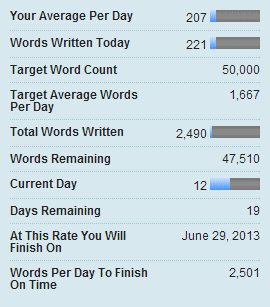
The lesson I have learned in all this is that meeting one’s expectations for oneself feels great, so go ahead and set those expectations low. Despite a little guilt that I would bring down the overall numbers, I felt compelled to record my progress in the NaNoWriMo system. When I entered my word count at the site, various pieces of data related to my effort were conveniently calculated for me:

NaNoWriMo statistics

Of course, most of these figures would be thoroughly disheartening to someone who was doing NaNoWriMo according to the rules. For example, I would have to (quit my job to) write 2,501 words per day in order to finish on time. But the reverse statistic is actually encouraging: at my current rate, I will complete my novel on June 29, 2013.

I am marking my calendar!

Character: Sum of the Parts or Greater Whole?

Here is where you are going to think I am totally mad or a genius, or possibly the entertaining hybrid mad genius. As I mentioned in an earlier post, I needed help developing characters. So I dug up a handout from the writer’s boot camp I attended several years ago. It included an “emotional development profile,” which called for the following information about a character: name, overall goal, obstacles, what he or she stands to lose, flaw, strength, hates, loves, fears, dream, and secret.

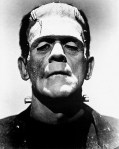
Frankenstein's monsterIntellectually, it made sense that a character would be the composite of, well, characteristics. But even if I was able to contrive a character from different traits, would I end up with a well-rounded figure—or Frankenstein’s monster? Is a character constructed from analyzed parts similar to a creature built in a laboratory? After breathing life into my precious creation, would I accept it as pleasingly human—or disavow it in horror, like the mad genius Victor Frankenstein?

To avoid such a terrible scene, I wondered if there might be a more holistic approach to character development, one that started with the whole rather than the parts. Over the last few years, I have been exposed to various systems for understanding myself and others. I am open-minded about these systems; if they work, I don’t necessarily question how or why. Here are some of my favorite tools for gaining insight into people’s personalities and motivations:

  • Archetypes. In Jungian psychology, archetypes are unconscious ideas or thought patterns that are inherited collectively and present in individual psyches.
  • NumerologyNumerology. According to numerology, a person’s name and birthdate possess specific vibrations that directly influence his or her individuality and life purpose.
  • Enneagram. The enneagram (from the Greek ennea, meaning “nine”) outlines nine basic personality types and their complex interrelationships.
  • Astrology. Unless you’re from another planet, you are already familiar with the study of how heavenly bodies influence human affairs.
  • Face reading. Chinese face reading teaches that your facial features carry messages about your true nature.
  • Ayurveda. This system of traditional medicine from India stresses a balance of elemental energies or humors, which define a person’s temperament and qualities.

If I applied these constructs to my characters, I would know their reactions to any situation, thereby creating further situations—which, I think, makes a plot!

For example, how would someone with the Bully archetype deal with rejection? How would a person with a 5 life path, the Adventurer, react to being imprisoned? What would the enneagram’s Loyalist do upon discovering a horrible secret about her spouse? Would an Aries and a Cancer have a successful romantic relationship? How would an individual with twinkling eyes, peaked eyebrows, dimples, and freckles (the fiery Fun Lover) respond to a structured routine? How would someone with the Kapha dosha function in cold, damp weather? Really, it’s almost cheating.

Of course, the challenge will be figuring out what the Trickster-Teacher-Peacemaker-Pisces-Perfectionist-Pitta would do . . .

My Writing Guides, in Form and Spirit

Earlier this year, I was experiencing a digestive disturbance. After several visits to my acupuncturist, it occurred to me to wonder what this rather common malady might be telling me about my life (besides not to consume spicy food, chocolate, wine, and everything good). I arrived at the conclusion that I was failing to express myself and follow my purpose (as simultaneously trite and momentous as those things sound). I knew I was supposed to be writing, and it was time to get down to business.

SorceressI found a local life coach specializing in creative empowerment. In my complimentary phone session with her, I received what seemed like a staggering challenge: to create a table of contents for my book . . . within 24 hours. Pieces of the story had been floating around in my head for a while, and by the deadline, I was able to come up with 17 rough titles—which the coach correctly assessed as “more than rough” when she saw them. Exactly who was this sorceress who had beguiled me into action?

For my first in-person meeting with Ziva, I made sure to wear a collared shirt and freshly laundered jeans. She had looked rather professional in the photo on her Web site, and I wanted to appear to be taking my creative empowerment seriously. I felt immediately overdressed, however, as Ziva met me outside of her building sans footwear. I made a mental note to wear a T-shirt and tennis shoes next time (when, as it turned out, she went business casual).

IncenseI shouldn’t have been surprised by what I found inside Ziva’s condo, given that one of her titles is “intuitive coach.” As she opened the front door, I could smell incense burning. Ogling the extensive collection of mind/body/spirit books, I almost bumped into a draped reiki/massage table. Devotional art hung on the walls. Now, I wouldn’t call myself the New Age type; I am not “love and light” (at least not both at the same time). But the décor told me I was in the right place to develop a novel that had a metaphysical bent.

“How can I adjust my schedule to have more time to write?” “Should this material be presented in one, two, or three books?” “How much research do I have left to do?” A writer and her coach might tackle such questions analytically, discussing them at length and using up much of a 75-minute session. Or the coach could close her eyes, tune in to her guides, and share her psychic hit—informed by her extensive experience shepherding would-be authors. The latter system was working for me.

Spirit guideNear the end of our third in-person meeting, I noticed that Ziva was staring above and behind me. “You have a friend,” she stated. Glancing over my left shoulder, I saw an image of Jesus on the wall. I turned back to Ziva, bemused, and realized she was gazing not at the painting but at a being I could not see. Ziva said she perceived immense love coming from this smiling entity. “The being with you feels to be someone you knew, so a deceased loved one,” she explained. A warmth spread around my heart.

Ziva conveyed a message to me from my spirit friend: “Create characters as human beings.” The advice was apropos, as I had recently been struggling with the idea of portraying a Nazi officer as a real, sympathetic person. Ziva also sensed that angels and other guides were prompting me to tell my story. In fact, a popular intuitive had once told me that a group of guides, called “The Council,” was helping me with my writing.

Now that sounds like an audience for which you’d want to wear a collared shirt.

Caution: Genre Crossing

In a previous post, I loftily announced that I wanted to write literary, as opposed to mainstream or genre, fiction. But doesn’t all fiction, ultimately, have a genre—even if it is simply “realistic,” as opposed to, say, mystery, humor, or horror? Ray Bradbury wrote works of science fiction and fantasy, but they were also, unarguably, literature. (How else could they have ended up on so many syllabi?) Pride and Prejudice is a comedy of manners. Wuthering Heights is a gothic novel (though my husband would dispute its literary merit). To Kill a Mockingbird is a Bildungsroman (word-of-the-day alert!), as is Great Expectations. Catch-22 is a war novel and satire. Around the World in Eighty Days is a classic adventure novel. I could go on and on, but I haven’t read that many books.

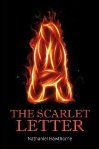
The Scarlet LetterAfter finishing The Scarlet Letter in college, I remember feeling raw, copious admiration for Nathaniel Hawthorne. And jealousy. “This is the book I wish I had written,” was my strange thought—as if my chance to write had come and gone, or what I wanted to write had already been written. If you haven’t read the novel, or if you have seen the Demi Moore movie, The Scarlet Letter is a love story set in Puritan Boston in the seventeenth century, two hundred years before the author’s time. Not until I started writing this blog post did I realize that my seemingly random decision to pen a historical romance (I prefer romantic comedy) might have been a subconscious response to my Hawthorne envy.

At first, I wondered if a romance set during the Holocaust would be considered taboo. A search on Amazon for Holocaust romances in the category of historical fiction yielded 27 results. One such novel tells the story of a young girl in the Polish underground who develops feelings for a Nazi officer. Another portrays the love between a captured British captain and a Jewish housewife from Dresden, both sent to the same concentration camp. Perhaps the most salacious story line follows the relationship between a camp commandant and the Jewish inmate he takes as his mistress. So Holocaust romance is not uncharted territory; at the same time, the market hardly seems glutted.

Caution: Genre CrossingBut I haven’t mentioned that my plot has a twist, a metaphysical one. By “metaphysical” I mean concerned with an ethereal world beyond the material. Metaphysical fiction is its own genre, with prominent examples including The Alchemist, The Celestine Prophecy, What Dreams May Come, The Five People You Meet in Heaven, and Cloud Atlas (being released this Friday as a movie starring Tom Hanks and Halle Berry). Which brings me back to Hawthorne. Metaphysical elements recur in his works, including the “ghastly miracle” revealed at the climax of The Scarlet Letter: a red “A” (speaking of taboo) seared into Reverend Dimmesdale’s chest by a higher power. So with a metaphysical historical romance, I am still copycatting Hawthorne.

However, an Amazon search for metaphysical historical romances about the Holocaust revealed zero results. Let’s chart this territory!