Category Archives: Writing

NaShStWriMo Update

As I mentioned in an earlier post, I decided to participate in National Novel Writing Month this year—but with a twist. Instead of writing a 50,000-word novel, I would attempt a 5,000-word short story. You might think of it this way: if NaNoWriMo were a traditional marathon, NaShStWriMo would be a breezy, 2.6-mile jog. I discovered that I wasn’t the only person proposing a more achievable alternative to drafting a novel in 30 days:

NaShStWriMo tweet

I can proudly report that so far, I have met (nay, modestly exceeded!) my average daily quota of 167 words. Of course, I have had incredible support at home. When I excitedly relayed the news of my early success to my husband, he said, “Okay.” I coached him that a more fitting response would have been, “Good job!” He caught on immediately and flashed me an approving thumbs-up.

Unfortunately, the pacing of my story is off, and I am actually writing the first 5,000 words of a 50,000-word novel. In other words, my ShSt is all beginning, with no middle and end. Still, completing the first tenth of a novel is good, just as running the first tenth of a marathon is good (I have to imagine, as the only running I do is for a bag when my semi-incontinent dog starts to go in the house).

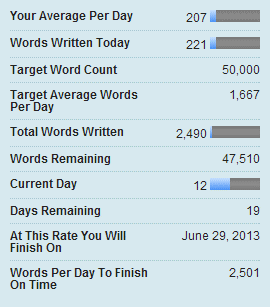
The lesson I have learned in all this is that meeting one’s expectations for oneself feels great, so go ahead and set those expectations low. Despite a little guilt that I would bring down the overall numbers, I felt compelled to record my progress in the NaNoWriMo system. When I entered my word count at the site, various pieces of data related to my effort were conveniently calculated for me:
NaNoWriMo statistics

Of course, most of these figures would be thoroughly disheartening to someone who was doing NaNoWriMo according to the rules. For example, I would have to (quit my job to) write 2,501 words per day in order to finish on time. But the reverse statistic is actually encouraging: at my current rate, I will complete my novel on June 29, 2013.

I am marking my calendar!
What the Heck Is a Nanowrimo?

When I was in the fifth grade, one of our regular assignments was to find an unusual word in the dictionary and turn it into a multiple-choice question for the class. We were to provide four possible definitions for the word: the actual one and three fabrications. I remember feeling an impish sense of satisfaction when a schoolmate would select one of my made-up meanings. So in the spirit of Miss Brown’s vocabulary-building exercise, I offer the following MCQ:

What does the word nanowrimo mean?

a. A punctuation mark, proposed by English printer Henry Denham in 1580 and used until the early 1600s, indicating a rhetorical question

b. Any of several large, thick-skinned, odd-toed mammals of Africa and India, having one or two upright horns on the snout

c. One billionth of a wrimo

d. Thirty days and nights of literary abandon

If you answered a, b, or c, I applaud you as a very decent human being who graciously took my inane quiz. (If you recognized b as a rhinoceros, extra credit!) The correct response is d. But I sort of tricked you. The proper presentation of the word is NaNoWriMo. The acronym stands for National Novel Writing Month. NaNoWriMo describes itself as a “fun, seat-of-your-pants approach to novel writing.” The program began with 21 budding authors in 1999; in 2011, it tracked the progress of over a quarter million “WriMos.”

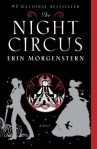
The Night CircusParticipants start writing on November 1, with the aim of completing a 50,000-word novel (equal to 175 printed pages) by November 30. And it works. National Novel Writing Month has yielded a long list of published novelists. Bestsellers penned during NaNoWriMo include Water for Elephants, by Sara Gruen; and The Night Circus, by Erin Morgenstern. The former was released as a motion picture last year; the latter is in development.

I have considered participating in NaNoWriMo for several Novembers, going so far as to create an account (where years’ worth of unread NaNoMail is waiting for me). Because I finally have a concrete idea for a novel, this year’s event seems perfectly timed. However, there’s an NaNoWriMo logoissue. NaNoWriMo values quantity over quality, “enthusiasm over painstaking craft.” The goal is to produce a crappy first draft, “to forgo the endless tweaking and editing and just create.”

Maybe therapy could help, but I am inherently incapable of writing without editing. I have been writing and editing, editing and writing, for over 20 years. The two activities are hopelessly intertwined for me, and my projects rarely involve one without the other.

To compensate for my quirk, I am proposing a scaled-down version of NaNoWriMo. Specifically, a 1:10 scale. My reasoning is that for every ten steps my writing takes me forward, my editing takes me nine steps back. So instead of generating an average of 1,667 hastily chosen words per day, I would shoot for 167 somewhat polished ones. By the end of next month, I would have 5,000 words, the length of a respectable short story.

Does anyone want to do NaShStWriMo with me? The name is catchy, you have to admit.

Not the Most Novel Idea

I am researching a novel set during the Holocaust. I had never intended to write about the Holocaust, or about anything historical for that matter. History was never my favorite subject. I even liked math better. All I can say is that the subject chose me. Then it quickly overwhelmed me. The volume of information available about the Holocaust is, conservatively, infinite. I am reading five books on the topic right now.

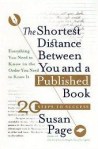
The Shortest Distance Between You and a Published BookMy writing coach, in our first session, added another resource to the mix: The Shortest Distance Between You and a Published Book, by Susan Page. As a would-be writer, I was excited to learn how to ditch the “would-be.” I was especially intrigued by the author’s presentation of the three main categories of fiction: literary, mainstream, and genre. As a former English major, of course I wanted to write something of literary merit! But could I remotely hope to pull it off?

Literary fiction does not rely heavily on plot for its appeal, but instead on the strength and power of the writing. Characters tend to be complex and filled with nuance. Literary novels are read not so much for action as for superb writing, rich character development, and originality of vision.

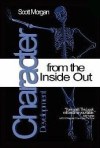
Character Development from the Inside OutI believed I could convey a unique viewpoint using decent grammar. But I didn’t know the first thing about creating psychologically rounded characters. I needed help. Three-quarters of the way through Scott Morgan’s Character Development from the Inside Out, I found myself reading about character clichés. Examples included “the rogue,” “the flaky genius,” and “the tortured artist.” Of course I would avoid these trite, stereotyped figures in my own writing! Then I arrived at the section’s final entry:

Nazis. Please, if there is nothing else you take from this book, let it be this: Don’t write about Nazis. Seriously. You can’t add anything new. Seriously. Stop writing about Nazis. A more interesting idea: Not Nazis.

AriesThe author’s strongly worded advice/plea/mandate touched on my own insecurities about the subject matter. But instead of throwing cold water in my face, it lit a fire under me. Maybe because I have so much Aries in my chart. Aries is my sun sign; I have an Aries rising; and Saturn, my north node, and my ascendant are in Aries. I don’t know what all that means, except that it’s a lot of Aries.

And Aries is a sign that welcomes a challenge.

Take a Chance on Me

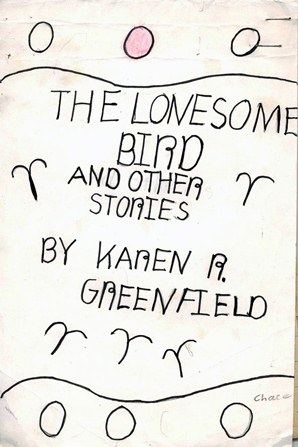
The Lonesome Bird and Other Stories

Kindergarten anthology

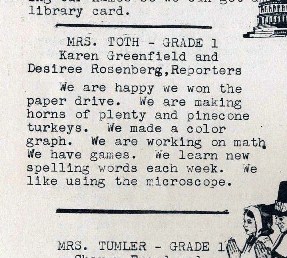
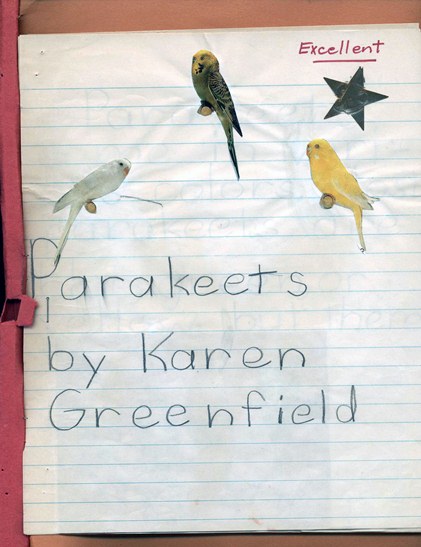
When I was in the first grade, the teacher asked us what we wanted to be when we grew up. I wrote down “writer.” (The girl next to me answered “editor.” I remember thinking that was a very sophisticated response.) The question was a no-brainer for me, coming hot on the heels of my kindergarten anthology The Lonesome Bird and Other Stories, a shared byline in the school newspaper, and a well-received report on parakeets.

HES-BEE

Article in the school paper

I did become a writer (and editor), but not the kind I imagined when I was six. I had intended to enthrall readers with heartfelt tales that did nothing short of examine the human condition, elucidate universal truths, and elevate the planet. (Is there a word for projecting adult insights onto a child version of oneself?) Instead, I grew up to prepare educational, self-help, and marketing content. I have also edited other people’s fiction.

Parakeets

First-grade report

Not that I haven’t had ideas for stories, novels, and screenplays over the years. But they have lived and died in my head. (So at least I’ve been entertained.) This blog is about coaxing one of those ideas out of my brain and onto the page. My theory is that if I can put together at least a few paragraphs devoted to it on a regular basis, my idea will start to have faith in me. Through this blog, I am saying to my idea (à la ABBA), “Gonna do my very best, baby can’t you see; gotta put me to the test, take a chance on me.” (Watch the linked video; it will make you happy.)

Ba ba ba ba baa, ba ba ba ba baa. Honey, I’m still free . . .