
SPOILER ALERT: There are new sonnets, below, in honor of William Shakespeare’s birthday!
The actor and producer William Shakespeare was born four hundred and sixty years ago today, on April 23, 1564, in Stratford-upon-Avon, England. William’s father, John Shakespeare, was a glove-maker and wool dealer who also had a number of other occupations. William’s mother, Mary Arden, was the daughter of a gentleman farmer.
Less than three months after John and Mary welcomed baby William, Stratford-upon-Avon received a most unwelcome visitor: the bubonic plague. That year, over two hundred townspeople, representing one seventh of the population, would succumb to the devastating bacterial infection.
In November 1582, eighteen-year-old William Shakespeare married Anne Hathaway, a woman who lived in a village about a mile outside of town. Anne, born Agnes, came from a family of successful sheep farmers. William and Anne were best friends who wanted to create a family together. Theirs was the “marriage of true minds” the poet wrote about in Sonnet 116. Indeed, the two would remain wed for almost thirty-four years, until William’s passing, in 1616.
A daughter, Susanna, was born six months into their union. Hamnet and Judith arrived twenty months later. The twins were named after Hamnet and Judith Sadler, a couple with whom William and Anne were friends. The Sadlers would go on to name a son after William.
Undoubtedly, the greatest tragedy faced by the young Shakespeare family was the crushing loss of their Hamnet, in 1596, due to plague. He was just eleven years old.
In Elizabethan England, 30 to 40 percent of children died before their first birthday, and only three in five survived past the age of ten. Given these statistics, you might think the sudden death of a child would have been almost expected—and, therefore, met with a certain degree of detachment or resignation. You would be wrong.
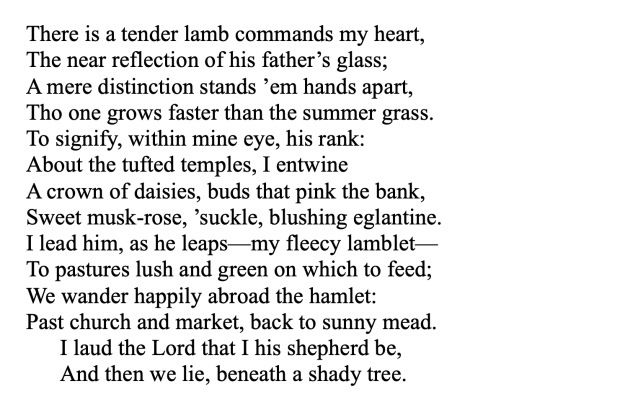
Today I am sharing two sonnets that might have been written about Hamnet Shakespeare: the first while the poet’s son was still alive; and the second after young Hamnet had been buried in the yard at Holy Trinity Church, in Stratford-upon-Avon.
While Hamnet, the poet’s son, lived:
And after Hamnet died:
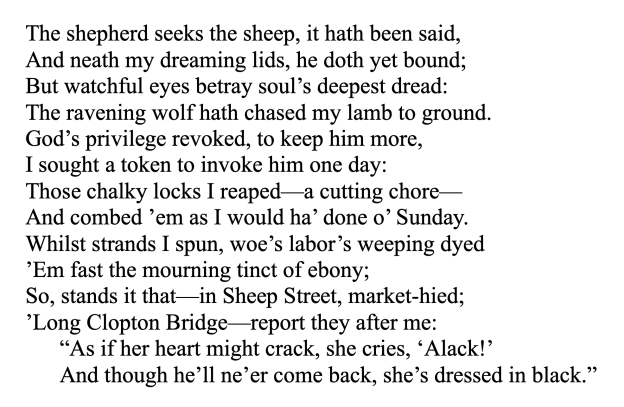
You might notice something unusual about these two sonnets as well as the last three I posted: They conclude with lyrics from the Beatles. The poems in this post, for example, borrow from “Good Day Sunshine” and “Baby’s in Black.” If you’d like, take a moment to observe how neatly the song lyrics fit into the rhythm of the poetry.
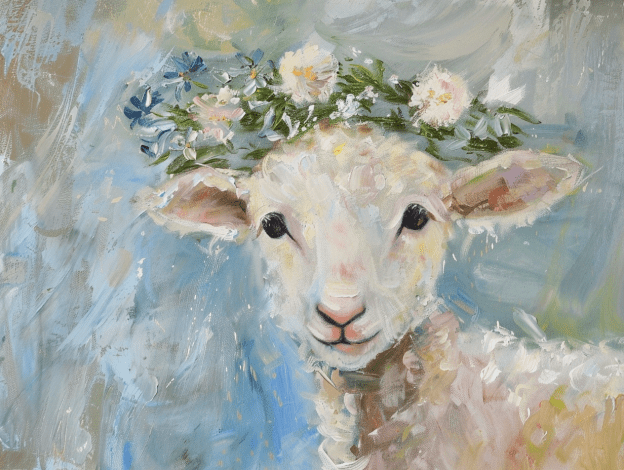
CREDITS: The image of a lamb was generated by Jay Schwartz. Information about John Shakespeare and Mary Arden came from Wikipedia. Statistics regarding the bubonic plague came from the Shakespeare Birthplace Trust and this site. Information about Hamnet and Judith Sadler came from this site. Statistics regarding child mortality in Elizabethan England came from this site.
 The poem I am sharing today strongly suggests the identity of the person who wrote the works attributed to William Shakespeare. That’s right: the pesky “authorship question” has finally been solved!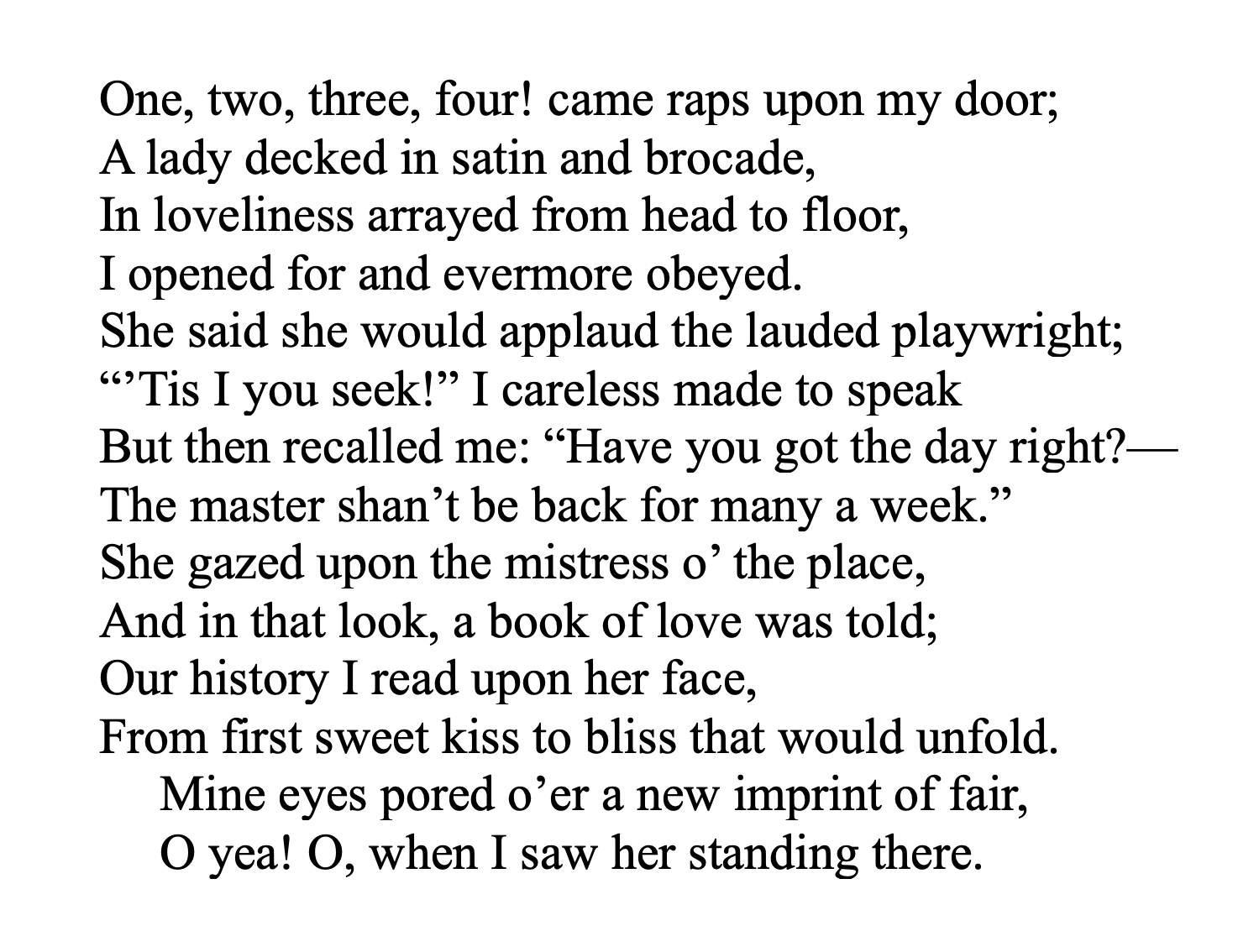
 Novel-Gazing