Category Archives: Movies

Highly Quotable Films

Monty Pythin

Several weeks ago, my husband and I had an at-home date night. Dinner was gluten-free pesto pizza, and the movie was Night Shift, a 1982 comedy directed by Ron Howard and starring Henry Winkler and Michael Keaton as city morgue attendants who decide to become pimps. I was thrilled to see that the film was available on cable, because I had been regularly quoting from a particular scene and wanted to show my hubby the original (which I couldn’t find on YouTube). I first saw Night Shift in the theater when I was 14, because my mother, sister, and I were tired from shopping at the Sherman Oaks Galleria. (Shopping continues to exhaust me.) Though I saw the film again numerous times in my youth, I was amazed at how many of the lines I still remembered. I was also surprised at my restraint: I said only about half of them out loud.

Princess BrideTo me, Night Shift represents an HQF (highly quotable film). It offers not just the occasional piece of marvelous dialogue but a continuous succession of amusing utterances. I conducted an informal survey of online lists Airplaneof “most quotable movies.” The film cited most often was . . . Monty Python and the Holy Grail. (Interject your favorite line here; try to stop at one.) The following movies were also regularly identified: The Princess Bride, The Godfather, The AnchormanBig Lebowski, Napoleon Dynamite, and Anchorman: The Legend of Ron Burgundy. Other popular quotable films included The Wizard of Oz, Airplane!, Pulp Fiction, Mean Girls, Ghostbusters, Forrest Gump, Casablanca, Star Wars, Office Space, Caddyshack, and Young Frankenstein.

I was at a dinner party on New Year’s Eve, and one of the guests suggested playing the game of identifying movies by their quotes. I figured I would be pretty good at this pastime but found myself stumped by the first one: “And we’re walking, and we’re walking.” The line sounded familiar, but I couldn’t place it in the 1993 film Dave, in which Kevin Kline portrays a presidential look-alike. That was pretty much the end of the game. However, I ask you to play it with me now! The following quotes are from my personal HQFs. (The answers appear at the end of this post.) If you guess five or more of the corresponding movies correctly, well-done! If you get eight to ten right, you are probably my sister.

  1. “Watch out for that first step—it’s a doozy!”
  2. “Where’s the rest of this moose?”
  3. “Eight o’clock? I don’t know. That’s when I rearrange my sock drawer.”
  4. “You make someone a bridesmaid, and they shit all over you.”
  5. “LOVE BROKERS!”
  6. “I think that the problem may have been that there was a Stonehenge monument on the stage that was in danger of being crushed by a dwarf.”
  7. “Yes, Mrs. Mandelbaum, this one I’ll meet.”
  8. “Oh, that Dorothy. The hair, the teeth, and the smell. That Dorothy.”
  9. “Do you know what he was planning for next Friday night’s poker game, as a change of pace? Do you have any idea? A luau. A Hawaiian luau. Roast pork, fried rice, spare ribs—they don’t play poker like that in Honolulu!”
  10. “This land is not for sale. Someday I hope to build on it!”

The American Film Institute undertook the challenge of identifying the 100 greatest movie quotes of all time. Of the most quotable films mentioned earlier, seven have entries on AFI’s list. (Casablanca has six!) Jean Picker Firstenberg, president emerita of AFI, asserts, “Great movie quotes become part of our cultural vocabulary.” Indeed, we use them in our own lives and circumstances, for various purposes: To make a point. To sound clever. To entertain. To start a conversation. To bond with others. To recall the satisfaction evoked by watching the movie.

Ultimately, a memorable quote, from a movie, play, book, television show, or even commercial, is one that resonates with us. It might express an idea to which we would never be able to put words ourselves, witness a fundamental aspect of our character, or educate us about something meaningful. I am reminded of the double-blind-date scene from one of my own HQFs, When Harry Met Sally . . ., in which Marie (Carrie Fisher) quotes Jess (Bruno Kirby) to himself:

JESS: I think restaurants have become too important.

MARIE: I agree. “Restaurants are to people in the 80s what theater was to people in the 60s.” I read that in a magazine.

JESS: I wrote that.

Marie goes on to say, “That piece had a real impact on me.” Jess replies, “It spoke to you, and that pleases me.” Being spoken to can be a profound experience.

In fact, Jess and Marie leap into a cab together at the first opportunity.

Answers: 1. Groundhog Day, 2. Arthur, 3. The Sure Thing, 4. Sixteen Candles, 5. Night Shift, 6. This Is Spinal Tap, 7. Crossing Delancey, 8. Gregory’s Girl, 9. The Odd Couple, 10. Love and Death.

Should Authors Also Be Writers?

Last year, I received an assignment to edit a self-help book. The goal was to prepare the manuscript for acceptance by the publisher that had contracted with the first-time author to write it—although the expectation was that it would come back for further revision. The job included both developmental editing and copyediting. Developmental editing involves modifying a book’s structure and content; copyediting consists of fixing punctuation, spelling, grammar, and style. I introduced extensive changes at both levels, making the organization more reader-friendly and rewriting virtually every sentence.

After the manuscript was submitted to the publisher, I awaited word of its reception. Five months later, having heard nothing, I checked Amazon: the book would be coming out in November 2014. I took satisfaction in the fact that the manuscript had apparently been accepted. I checked back this month and was able to preview parts of the book (which had received all five-star reviews); I was gratified to see that my changes were intact, from the table of contents to the section heads to the text. Not to overinflate my role, but I made the author seem like a capable writer. Ironically, she never knew my name or that I, as a ghost editor, even existed.

Jane AustenThe situation brought to mind some news that emerged in 2010 about Jane Austen—that the words of the revered novelist did not, in fact, come “finished from her pen,” as her brother Henry asserted in 1818. As NPR reported, she “may have simply had a very good editor.” According to Austen authority Kathryn Sutherland, of Oxford University, “The English that she is known for is this polished, printed Johnsonian prose. And it’s not there in the manuscript.” (“Johnsonian” refers to the literary style of distinguished English writer and critic Samuel Johnson, best known for his influential Dictionary of the English Language.)

If Austen was a “sloppy writer” whose books were “heavily edited for publication,” does that mean authors—even beloved ones—don’t have to know how to write well? And it’s the editor’s job, if necessary, to create that illusion? Consider the portrayals of writers in film and literature. They typically experience writer’s block or some other setback related to their writing, become inspired by the struggles in their lives, and triumphantly complete their manuscript. As they type “THE END,” do we think, “Now it’s off to a good editor!”? Rather, we think it’s the end of the story.

We don’t really want to know how the sausage is made.

Taking Leave of the Senses

Perfect Sense

A few weeks ago, I made an observation about a movie I was watching. Then I made the rash decision to turn that little act of noticing into an entire blog post—and I really don’t know if it is going to work. The movie was Perfect Sense, a 2011 apocalyptic romance (pandemic love story?) starring Eva Green and Ewan McGregor. I gave it five cupcakes out of five, although I suspect it’s the kind of film that people will find either pretentious or earnest, empty or meaningful, based on their personal outlook. (IMDB rates it 7.1.)

spoiler alertI will be giving away the ending of Perfect Sense here, but I recommend seeing it anyway. It’s quite affecting. Plus, it contains “good” nudity, as my husband would say, as well as the occasional expletive to keep things colorful.

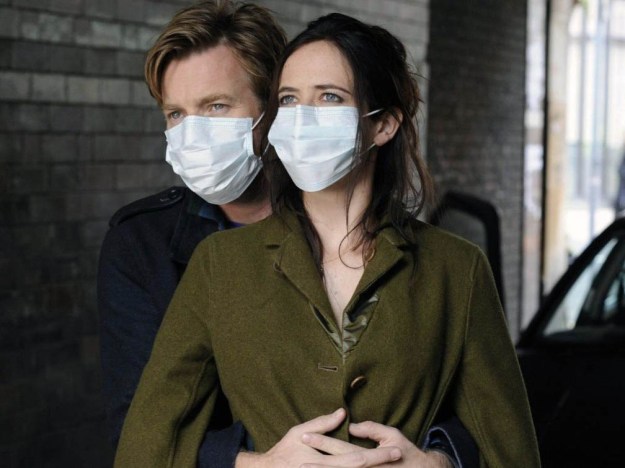
Set in Glasgow, Perfect Sense centers on Susan and Michael. She is an epidemiologist, he a chef. Their occupations are a plot convenience, as the film is about a globe-trotting disease (“Somebody call an epidemiologist!”) that affects the senses (all of which enter into the acts of cooking and eating). Susan lives across the street from the upscale restaurant where Michael works, and they meet just in time to become consorts on the front lines of both infectious disease research and sensory stimulation. I didn’t mind this contrivance because it worked, I probably would have written it the same way, and the actors are ridiculously attractive (even in surgical masks).

The affliction, which is not obviously contagious and has no identifiable source, takes away the senses one by one, starting with smell. The loss of each sense is preceded by an outburst of emotion: smell by grief, taste by terror, hearing by rage, and sight by love. The entire world goes through the stages of the disease roughly simultaneously, causing periods of pandemonium and civil unrest. Between losses, however, society adjusts to the new normal. For example, after the sense of smell is gone, “The food becomes spicier, saltier, more sweet, more sour. You get used to it.”

The last sense to disappear in the movie is sight. “Fade to black” in a screenplay was never meant so literally! We do not witness the loss of touch. The audience is left to imagine what deprivation of that fifth and final sense would be like: People are no longer able to perceive the world or communicate with each other in any way. They cannot feel, see, hear, taste, or smell anything. This disturbing prospect led to my aforementioned observation, spelled out here: “No wonder we find it so hard to believe that we are not a body!”

“Whoa!” you might be thinking. “Who said anything about not being a body?” Some of the manuscripts I edit are in the mind-body-spirit category; I also read books and listen to podcasts in this area. In these materials, I have come across three basic options for the essential nature of who we are:

  1. We are a body.
  2. We are a body and we are spirit.
  3. We are spirit.

One of these theories may sound most plausible to you (and it’s probably one of the first two). Materialists, who maintain that the fundamental substance of nature is matter, would likely say that we are a body only. I have heard many New Age/spirituality authors, on the other hand, posit that we are spiritual beings having physical experiences (or something along those lines). Finally, one text I have encountered goes so far as to say that we are spirit only, and that the body and the rest of the physical world are illusions.

five sensesOur identity is wrapped up in the body, in large part due to the sensory input we receive. Even if we begin to think of ourselves as incorporeal—as momentarily separate from the body—a sensation (stubbed toe, loud noise, the smell of baked goods) will bring us right back into the physical. In other words, on an intellectual level, accepting that we may not be a body is doable. But when something happens that impacts the body in a major or even minor way (we receive a cancer diagnosis, come down with a cold, have a deep-tissue massage), conceiving of the body as illusory seems absurd.

The spiritual text mentioned earlier concurs regarding the body: “It is almost impossible to deny its existence in this world.” It follows up, “Yet if you are spirit, then the body must be meaningless to your reality.” A famous teacher of this work observed, “That is why [this text] is such a threat: it teaches the nonexistence of our very self.”

If we were to lose our bodily senses, as in Perfect Sense, we would no longer be aware of our body, other bodies, and the rest of the physical world—everything that appears to constitute reality. This idea is inherently frightening. In fact, on the movie’s IMDB message board, viewers have used the following words to describe its ending: “Terrifying.” “Maddening.” “Devastating.” “Depressing.” “This movie left me curled up in a fetal position bawling my eyes out.”

Within the context of a curriculum for spiritual transformation, denying the information provided by our senses is similarly distressing. It requires a huge leap of faith—a rejection of all that seems most real. But how many of us would attempt the shift from body-identification to spirit-identification, if doing so resulted in healing and lasting peace?

Why Do We Watch Scary Movies?

The Exorcist

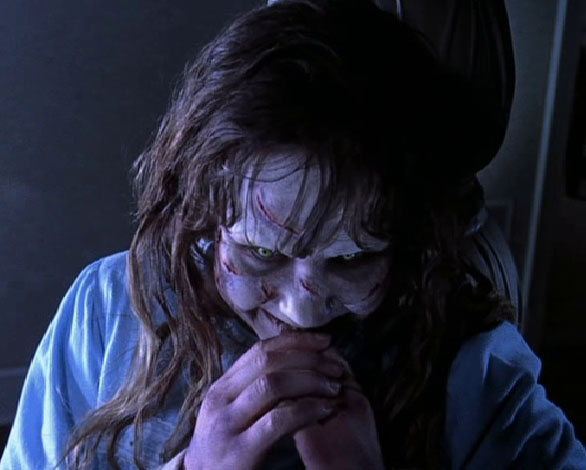
I am not a big fan of horror movies. The Exorcist, which turned 40 this year, scared the Andersen’s pea soup (the actual brand used in that iconic projectile-vomiting scene) out of me when I was a little girl. Each time I approached my room, I was sure I would find Linda Blair on my bed, head spinning around. Ironically, when I do watch a scary movie, I tend to go for one about exorcism. Of all the horror ghouls, zombies frighten me the most; even the comedy Shaun of the Dead was too much for me. (Okay, even Michael Jackson’s “Thriller” video gave me chills.) And I will not watch a home-invasion movie, especially if the bad guys are in masks. One relatively recent film I found deliciously chilling was The Fourth Kind, about alien abduction. I wish I had the courage to see it again (although most viewers would prefer to have their 98 minutes back).

Many filmgoers regularly put themselves in the position to be shocked by the gore, violence, and supernatural activity characteristic of the horror genre. (Of course, some don’t, and they are less likely to sleep with a night light.) Here are some of the more popular theories as to why horror movies appeal to us:

  1. They demystify the unknown.
  2. They distract us from our everyday concerns.
  3. They give us the opportunity to prove that we can master something threatening.
  4. They have fantastic visual effects.
  5. They induce catharsis.
  6. They allow us to face our greatest fear, the knowledge that we are all doomed.
  7. They provide an adrenaline rush in a safe environment.
  8. They satisfy our desire to feel intense emotions.
  9. They show us things we don’t see in our daily lives.
  10. They take us on a psychological ride.

I am intrigued by two additional theories, which are based on diametrically opposed views of our normal mental state (sane or crazy):

  • Horror movies reaffirm that we are healthy and well-adjusted.
  • We are all mentally ill, and horror movies appease our insanity, keeping it in check.

I tend to favor the second explanation, especially considering its source: horror master Stephen King. I figure he should know.