
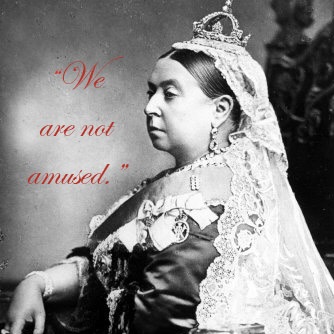
The British daily newspaper The Guardian has called it “the most common rhetorical device you’ve never heard of.” I propose that even if you’ve heard of it, you have no idea how to pronounce it (unless you’re a 13-year-old in the National Spelling Bee). Litotes is a form of understatement. Despite the “s” at the end, “litotes” is singular; that is, you wouldn’t call an instance of it “a litote.” Another surprise is that the word litotes has three syllables, as you can hear here.
Litotes is usually discussed in the context of hyperbole (extravagant exaggeration). Hyperbole and litotes are presented as opposites, or at least as contrary companions. Perhaps it is not shocking that every single person in the world recognizes blustery hyperbole, whereas quiet litotes goes largely unnoticed. (In the previous sentence, “every single person in the world” is hyperbole; “not shocking” is litotes.)
Greek for “plain” or “simple,” litotes has a dizzying definition: “the assertion of an affirmative by negating its contrary” (M. H. Abrams, A Glossary of Literary Terms). To understand litotes, consider these simple steps for creating it:
- Identify your point. Example: “This restaurant is expensive.”
- Form the opposite. Example: “This restaurant is cheap.”
- Make it negative. Example: “This restaurant is not cheap.”
“This restaurant is not cheap” is an understated way of saying “This restaurant is expensive.”
Here are additional examples of litotes and their meanings:
| Example | Meaning |
| The drive wasn’t bad. | The drive was good. |
| I don’t disagree with you. | I agree with you. |
| She is not unlike her sister. | She is like her sister. |
| He’s not the sharpest knife in the drawer. | He’s dumb. |
| A thousand dollars is no small amount. | A thousand dollars is a lot. |
| You won’t want to leave. | You’ll want to stay. |
| Are you also aware that Ferris does not have what we consider an exemplary attendance record? | Ferris has a poor attendance record. |
Note that the “meanings” are much bolder than their understatements. They declare what is rather than contradict what is not.
Litotes can serve multiple purposes. If you’re a Texas hold ’em pro but want to downplay your skills out of modesty, you might say, “I am not an inexperienced poker player.” If you are trying to console a friend who totally screwed up, you might say, out of empathy, “You were not completely successful.” If you are a political candidate who wants to call your adversary a liar without causing an uproar, you might say, passive aggressively, “My opponent is not innocent of misstating the facts.” Other functions of litotes include euphemism, irony, and comedy.
But my favorite is probably poetry: “The course of true love never did run smooth” (A Midsummer Night’s Dream).

 Novel-Gazing