Category Archives: Face Reading

Heavily Metallic

The twinge of guilt lasted as long as it took the Kindle edition to download to my tablet. “Yet another book I will never find time to read,” I thought.  But I was pleased that the knowledge I desired was now safely in my library, if not yet in my brain. Besides, it was an important resource for my novel.

I had heard Jean Haner speak several times about her expertise in Chinese face reading, an ancient branch of Chinese medicine. Based on an issue of her excellent newsletter, I knew that my facial features indicated the personality type of Metal—the Perfectionist. The other four types are Water (the Dreamer), Wood (the Pioneer), Fire (the Fun-Lover), and Earth (the Nurturer).
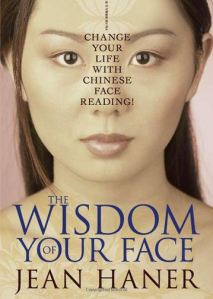
The Wisdom of Your FaceHaner’s The Wisdom of Your Face remained unread for about a day. I went straight to the Metal chapter and was amazed to discover that I possessed all eight of the defining qualities presented for that element. Haner says, “If you have all of these characteristics, which is rare, you’ll know that you’re a very Metallic person!” These features included

  • Large nose
  • Prominent upper cheeks
  • Fine bone structure, small wrists and ankles
  • Pale complexion for racial heritage

If you don’t know how accurate these descriptors are, check out my photo on the About page.

Sample observations of Metal that resonated for me:

  • “Your precision and care also create success in professions such as surgeon, software designer, accountant, editor, and artist.” (I am an editor.)
  • “The worst thing someone can do to you is to offer some ‘constructive criticism.’ You’re already so tough on yourself that knowing someone else noticed when you did something wrong can be too much to bear.” (Excruciatingly true.)
  • “Metal is more affected by visual clutter than any other Element, but this doesn’t mean that you’re a total neat freak. Open any drawer or closet, and you may find a chaos of confusion.” (It’s like she has a camera in my house!)

The book goes into depth about the meanings of various facial features. For example, the major indicator of Metal on the face is the nose, which represents the capacity for power. Furthermore, the larger your nose, the more you’ll feel driven to achieve in your 40s—and the more powerful a decade it will be!

What a great spin on having a big schnoz.
Character: Sum of the Parts or Greater Whole?

Here is where you are going to think I am totally mad or a genius, or possibly the entertaining hybrid mad genius. As I mentioned in an earlier post, I needed help developing characters. So I dug up a handout from the writer’s boot camp I attended several years ago. It included an “emotional development profile,” which called for the following information about a character: name, overall goal, obstacles, what he or she stands to lose, flaw, strength, hates, loves, fears, dream, and secret.

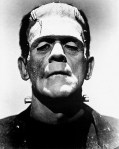
Frankenstein's monsterIntellectually, it made sense that a character would be the composite of, well, characteristics. But even if I was able to contrive a character from different traits, would I end up with a well-rounded figure—or Frankenstein’s monster? Is a character constructed from analyzed parts similar to a creature built in a laboratory? After breathing life into my precious creation, would I accept it as pleasingly human—or disavow it in horror, like the mad genius Victor Frankenstein?

To avoid such a terrible scene, I wondered if there might be a more holistic approach to character development, one that started with the whole rather than the parts. Over the last few years, I have been exposed to various systems for understanding myself and others. I am open-minded about these systems; if they work, I don’t necessarily question how or why. Here are some of my favorite tools for gaining insight into people’s personalities and motivations:

  • Archetypes. In Jungian psychology, archetypes are unconscious ideas or thought patterns that are inherited collectively and present in individual psyches.
  • NumerologyNumerology. According to numerology, a person’s name and birthdate possess specific vibrations that directly influence his or her individuality and life purpose.
  • Enneagram. The enneagram (from the Greek ennea, meaning “nine”) outlines nine basic personality types and their complex interrelationships.
  • Astrology. Unless you’re from another planet, you are already familiar with the study of how heavenly bodies influence human affairs.
  • Face reading. Chinese face reading teaches that your facial features carry messages about your true nature.
  • Ayurveda. This system of traditional medicine from India stresses a balance of elemental energies or humors, which define a person’s temperament and qualities.

If I applied these constructs to my characters, I would know their reactions to any situation, thereby creating further situations—which, I think, makes a plot!

For example, how would someone with the Bully archetype deal with rejection? How would a person with a 5 life path, the Adventurer, react to being imprisoned? What would the enneagram’s Loyalist do upon discovering a horrible secret about her spouse? Would an Aries and a Cancer have a successful romantic relationship? How would an individual with twinkling eyes, peaked eyebrows, dimples, and freckles (the fiery Fun Lover) respond to a structured routine? How would someone with the Kapha dosha function in cold, damp weather? Really, it’s almost cheating.

Of course, the challenge will be figuring out what the Trickster-Teacher-Peacemaker-Pisces-Perfectionist-Pitta would do . . .