Category Archives: Determined to Be Visible

Damsel, Wizard, Knight: Discovering Your Archetypes

My recently published book appears to be a collection of blog posts but is actually a devious plot to expose people to the idea of archetypes. Determined to Be Visible reveals the twelve “psychological patterns” that govern my  existence, inspiring my every thought and action. These mental motivators are derived from “historical roles in life” (to quote modern-day expert Caroline Myss). My unique combination of archetypes includes the Artist, Clown, Daydreamer, Student, and Teacher.

I know what you’re thinking: “How can I find out what my archetypes are?” What you should do is read Caroline Myss’s New York Times best seller Sacred Contracts. But since you’re (still somehow) reading this post, I’m happy to share my unofficial approach to determining the dozen spiritual energies that rule your life. Regardless of who you are, I already know four of them: Child, Prostitute, Saboteur, and Victim. (We all share these survival-related archetypes.) That leaves eight for you to identify, by following these steps.

  1. Agree to see yourself honestly. Prepare to dig deep.
  2. Review the accompanying list of archetypes. Yes, the one on the blue background there.
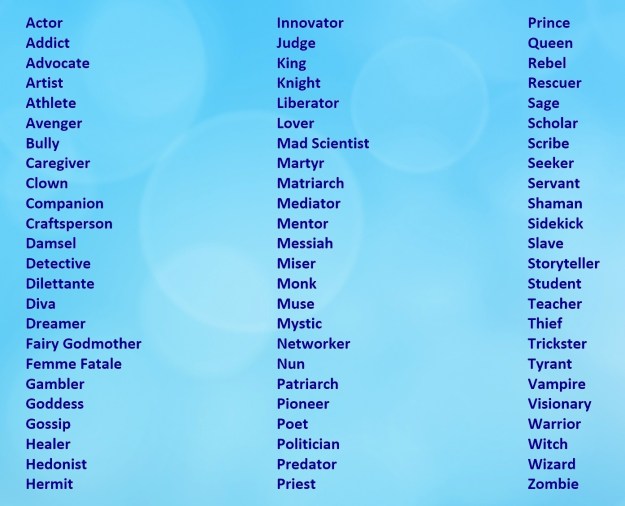
  3. Try each archetype on for size. Does it fit? Does it fit a little? Keep in mind that archetypes may be lifelong forces, occupational identifiers, or other influences.
  4. Think beyond the options presented here. For example, if you have always viewed yourself as a daredevil (or a philosopher or a counselor), consider that a possible archetype.
  5. Make a list of the archetypes that fit well or fit a little. Now is not the time for editing.
  6. Narrow down the list to the eight archetypes that fit best. Now is the time for editing. In the paring-down process, be wary of wishful thinking and of avoiding archetypes that seem negative. Some of us are martyrs, not mystics—and that’s okay! There are light and shadow aspects to every archetype.
  7. Ask a few friends for feedback. Sometimes (and by “sometimes,” I mean most of the time), others can be more objective about us than we can.
  8. Play with your final lineup until it feels right. Getting authentic with yourself, you might let go of an archetype that truly doesn’t suit you. Or upon reflection, you might bring back an archetype you eliminated earlier.

So, how did you do? Are you ready to embrace the wisdom of your Goddess, Hermit, or Vampire?

Feeling the Love

I self-published Determined to Be Visible—containing thirty-six of my blog posts tenuously held together by new material—as an exercise. In fact, I continue to see it more as a project than a publication, typically referring to it as “the blog book” rather than by its title. When my creative coach, Ziva, gave me the assignment, she warned me that once the paperback was available, she would ask me to promote it to my acquaintances—which I also saw as an exercise. I never expected anyone to buy it.

My mother purchased six copies, to give to residents at her retirement community. (Imagine the kvelling involved in that scene.) My sister ordered three; I envision her juggling them, because I don’t know what else she would do with so many. My aunt and uncle bought one, the same number I did. Which leaves exactly thirty copies (to date) acquired by people who do not share DNA with me. Who are these individuals? Friends! Wonderful friends!

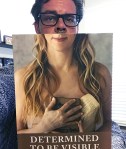
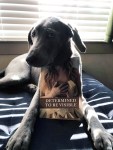
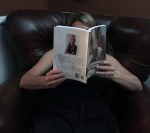
The most meaningful aspect of this whole endeavor has been the support of family and friends. It feels incredible! On top of knowing that Determined to Be Visible has been actively printed on demand by Amazon, I have enjoyed receiving texts and being tagged in social media posts containing images showing “the blog book” in homes, offices, and hands—even on faces! I invite you to peruse this selection.


And I welcome additional photos for my collection!

Who Wants to Buy My Book?

In the fourth grade, there were two girls in my class named Karen. To avoid confusion, Mrs. Davenport asked if she could call me Carrie (Kerry? Kari?). Taken aback, I agreed. I like to think I marched in there the next day and demanded to be addressed by the same combination of phonemes I had been responding to for almost a decade. I vaguely recall doing so, but as I wasn’t a troublemaker, it’s hard to say whether this memory is accurate.

In that class, we did what seemed to be a unique kind of book report. Granted, I had been delivering oral summaries of works of literature for only two years at that point, so my frame of reference was limited. We would stand before our peers and recite a synopsis of our chosen Nancy Drew mystery (in my case). As we reached the climax, we would look up from the paper and ask, “Who wants to buy my book?” No money was exchanged, of course, but the volume found its way into one of the raised hands. I like to think I really hooked them.

BookCoverImageFast-forward forty-one years, and I finally have a book of my own! (God forbid a student should ever have to write a report on it.) Determined to Be Visible features thirty-six of my blog posts, as well as some new material tying everything together. I considered using a pseudonym, since there is already an established author with my first and last names and middle initial. But instead of becoming Carrie, Kerry, or Kari, I chose to stick with the moniker by which I am known. I’ll do my best to stand out from the other Karen R. Greenfield.

The most amazing thing about my book is that it resembles, well, an actual book! The cover was designed by a graphic artist (Jay Schwartz) and features photographs taken by a professional (Lucia Kiel Portraits). There’s a testimonial on the back from a wonderful, accomplished author (Julie C. Gardner). And there’s a copyright page at the front, implying someone might actually want to steal the contents. (By the way, my copyright statement is possibly the only one with a joke in it.) Plus, you can “look inside” Determined to Be Visible on Amazon!

So, who wants to buy my book? Besides my mother, I mean.

Judging a Book by Its Interior

It would be grossly premature to add “book designer” to my LinkedIn profile, but I appear to have successfully defined the styles for all the elements in my upcoming collection of blog posts. My husband, a graphic designer who is “acutely aware of typography in use across all media” (his words), suggested two typefaces for me to use—one text and one display—and gave me a crash course in InDesign in an airport lounge. I took it from there!

I was not completely unfamiliar with the components of book design—margins, font sizes, line spacing, indents, page numbers, chapter openers. In my role as an in-house editor for a publishing company almost half a lifetime ago, one of my tasks was to create “design memos” identifying and describing the items in a manuscript that needed to be prettified (by a hired professional) for publication. I don’t mean to brag, but one designer said my design memo was the best she had ever received.

Still, during the process of laying out Determined to Be Visible, I experienced both pros and cons, presented below (with the cons listed first, since I’m a bad-news-first kind of person):
Con: I didn’t really know what I was doing.
Pro: I had the power to make all the mistakes I wanted.

Con: I lacked a working knowledge of InDesign.
Pro: I had the satisfaction of struggling clumsily and then figuring it out.

Con: I wasn’t aware of best practices in book design.
Pro: I had the freedom to try things that didn’t work.

Con: I couldn’t draw on prior experience.
Pro: My next design will be much better.

Con: I had to study already published books to see what looked good.
Pro: This is a totally legit thing to do.

The biggest pro about book designing? It isn’t writing!

Determined to Be Visible

This month’s post is about a sign from the universe—or a remarkable coincidence, depending on your philosophy. Either way, it’s the story of how the title of my upcoming book came to be.

When I try to explain the organizing principle of my collection of blog posts, I expect to be received like someone speaking Mycenaean Greek. But people seem to “get” it, and almost immediately. First, I tell them I had to come up with a way to group my posts into chapters. Then I ask, “Have you ever heard of archetypes?”

Carl Jung, the founder of analytical psychology, introduced archetypes to the modern world (though the idea dates to Plato). I think of archetypes as characters, which can be found in movies, plays, novels, religions, and myths. Examples include the Goddess, Hermit, King, Rebel, and Warrior. Present-day authority Caroline Myss (pronounced “Mace”) defines archetypes as “psychological patterns derived from historical roles in life.”

According to Myss, twelve archetypes make up who we are. We all share four universal archetypes (Child, Victim, Prostitute, and Saboteur), but the other eight vary from person to person. I decided to figure out my dozen archetypes and use them to categorize my writings. I reasoned that if I truly embodied these “fundamental forces,” my blog posts, which are expressions of me, should reflect them. (With me so far?)

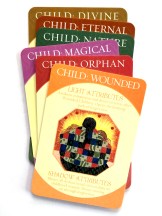
Caroline Myss’s Archetype Cards

As I mentioned, everyone has the Child archetype. But in her written materials, Myss identifies variations:

  • Wounded (suffers a traumatic upbringing)
  • Orphan (is excluded from the family circle)
  • Magical (sees beauty in all things)
  • Nature (bonds with natural forces, befriends animals)
  • Eternal (remains young forever)
  • Divine (is united with spirit)
  • Dependent (is needy, self-focused)

Unfortunately, I didn’t identify with any of them.

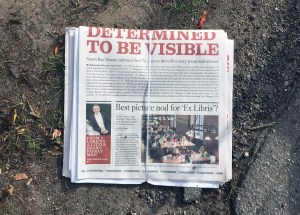
A neighbor’s newspaper

As I walked my dog one morning, however, I listened to Myss’s archived podcast (she used to have a radio show) about the Invisible Child. When the program ended, I felt I had found my Child archetype. Within seconds of making this observation, I encountered a newspaper at my feet. Just below the fold was a headline in big red letters: “DETERMINED TO BE VISIBLE.” I had never received a more obvious sign—or experienced a more stunning coincidence. (If you’re curious, the article was about Leonard Nimoy’s widow, Susan Bay Nimoy, whose short film was about to debut at Sundance against enormous odds.)

Myss states the following regarding the Invisible Child:

There’s nothing comfortable or pleasant about feeling that, as a child, you were invisible. . . . The positive end of the Invisible Child is that it can bring out in a person the opportunity to create an extraordinary journey toward visibility. Because developed in you is a yearning to become a visible person. And the option is that you can become a visible person through creativity, through clever, clever paths of using your imagination.

I could see that my book was a step in my journey toward visibility. Naturally, I appropriated the newspaper headline for its title.