
 The poem I am sharing today strongly suggests the identity of the person who wrote the works attributed to William Shakespeare. That’s right: the pesky “authorship question” has finally been solved!
If you’ve never heard of the authorship question, it’s the controversial theory that William Shakespeare, due to his humble upbringing, was not capable of writing the poems and plays credited to him. Therefore, someone else must have written them—but who?
If you’re wondering whether William Shakespeare was even a real person:
- William Shakespeare’s baptism was recorded at Holy Trinity Church in Stratford-upon-Avon, England, on April 26, 1564.
- According to surviving documents, William Shakespeare married Anne Hathaway in November 1582. William was eighteen; Anne was twenty-six, and pregnant with their first child.
- William Shakespeare’s legally validated will was signed on March 25, 1616, four weeks before his death.
If you’re curious how long the authorship question has been around, it originated during William Shakespeare’s lifetime.
As a Shakespeare fan since I was thirteen, an English Literature major in college, and a devoted theatergoer, I never had much time for the authorship question. To me, the works were the thing. Did it really matter who wrote them?
But when I realized who wrote the works of Shakespeare, I changed my mind. The realization arose more from common sense than from research. If you’d like the same joy of discovery, I have provided five clues, below!
Clue #1: The person who wrote Shakespeare’s works was very close to William Shakespeare, as this person’s plays were performed by William’s acting company. William Shakespeare belonged to the King’s Men acting company, known earlier as the Lord Chamberlain’s Men, for most of his career.
Clue #2: This person was able to write fully realized female characters in an era when women were regarded as weak and subservient to men. Think about Shakespeare’s rich and memorable portrayals of Juliet, Lady Macbeth, Desdemona, Cleopatra, Rosalind, Portia, Viola, Beatrice, Katherine (Kate), Titania, Cordelia, and Ophelia, among other female characters.
Clue #3: This person hotly encouraged a young man to marry and to have a child. Of Shakespeare’s 154 sonnets, the first 126 are addressed to a young man known as the “Fair Youth.” The first 17 of these sonnets are referred to as the “procreation sonnets.” In the procreation sonnets, Shakespeare urges the Fair Youth to wed and to become a father, so that this handsome young man might perpetuate his beauty and live forever through his offspring.
Clue #4: This person is someone whom scholars have overlooked for many years. If the “authorship question” holds merit, why hasn’t a definitive candidate for the author of Shakespeare’s works been recognized yet? What type of person would have been dismissed out of hand—or never considered in the first place?
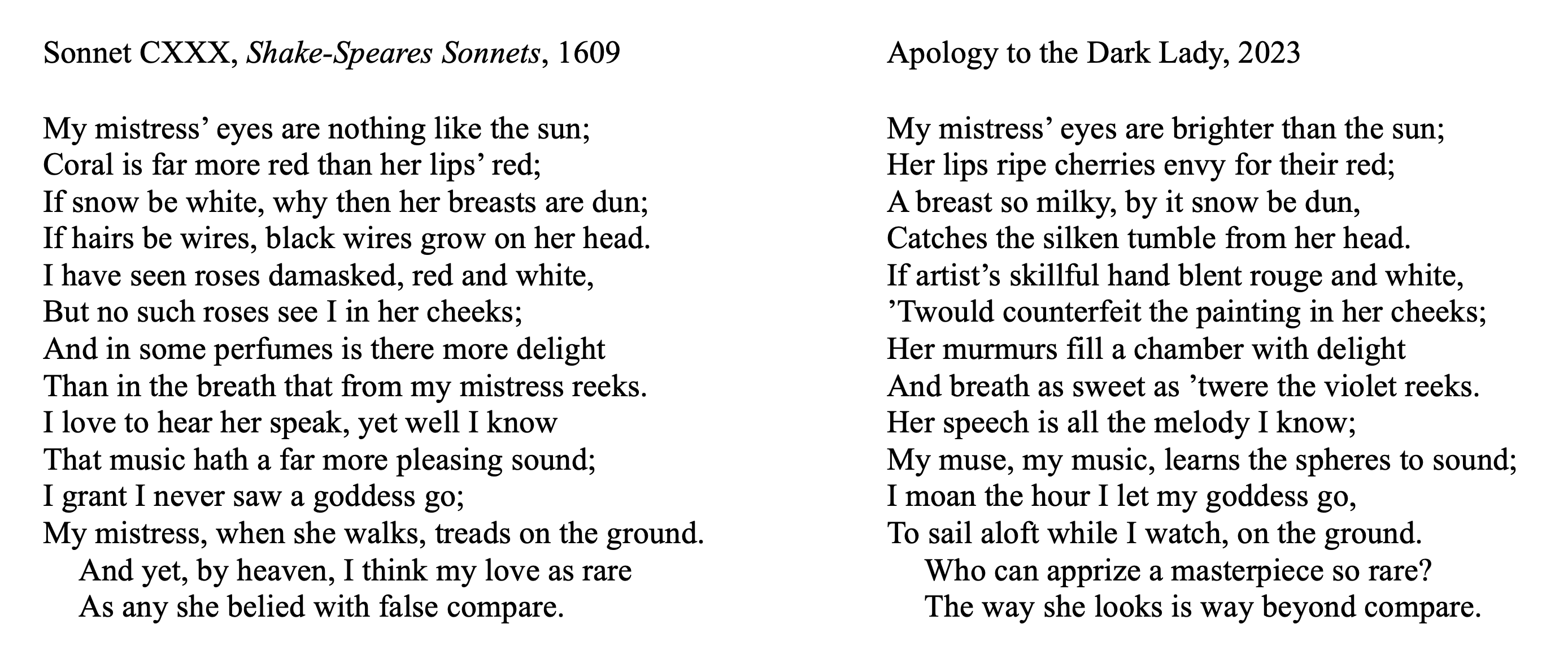
Clue #5: A final nod to the identity of the individual who wrote the works of Shakespeare can be found in the following poem. This is the sonnet Shakespeare never wrote (until now!) about meeting the Dark Lady, the poet’s famous mistress. Of Shakespeare’s 154 sonnets, the final 28 are devoted to the Dark Lady. Remember, I wrote this poem from the perspective of the person who penned the works of Shakespeare.
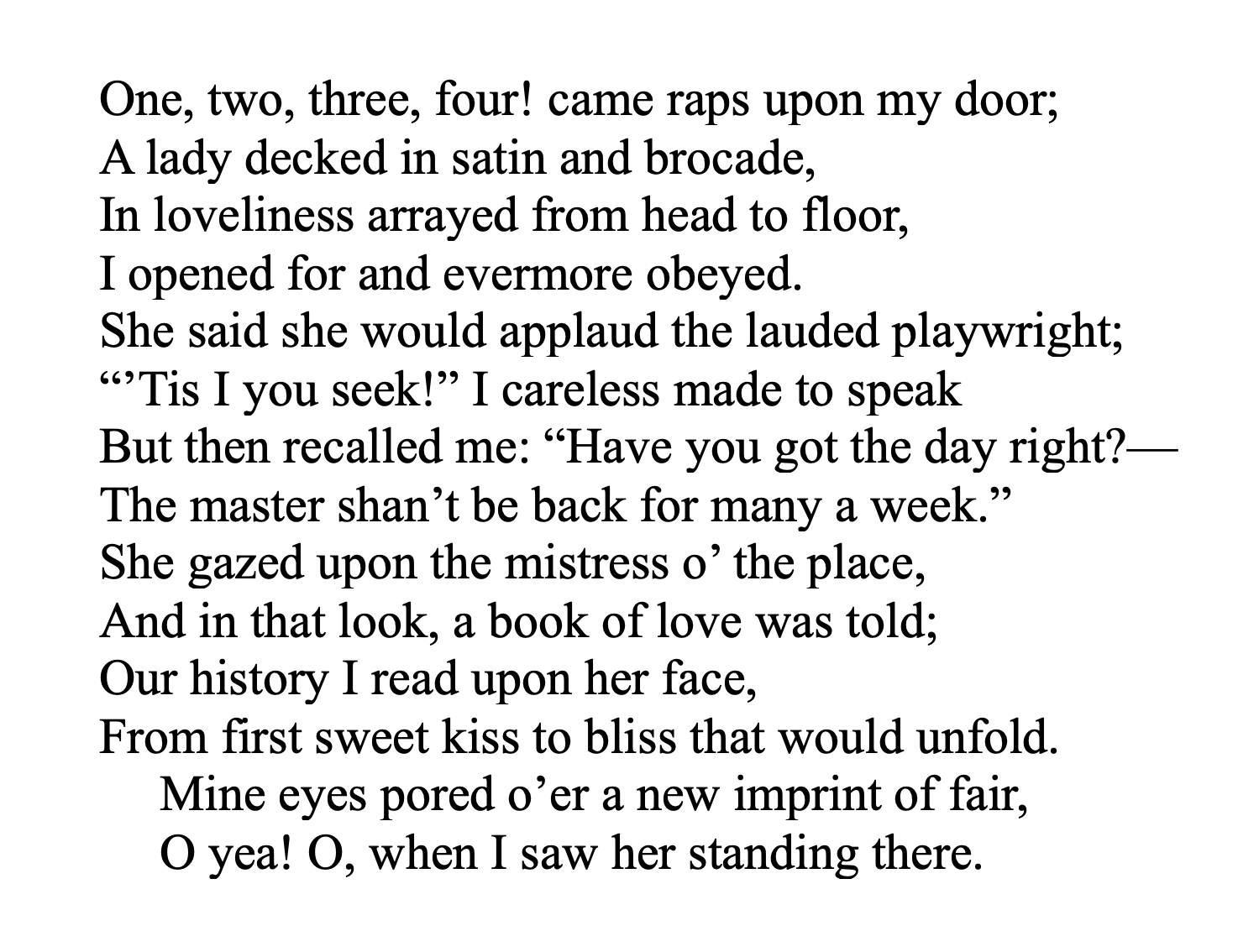
I’ll be back in a future post to let you know if your guess is the same as mine!
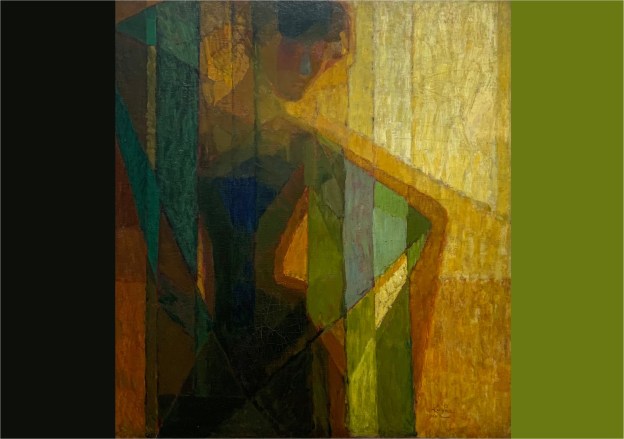
CREDIT: The featured image for this post is Woman in Triangles (1909), by the Czech painter František Kupka (1871–1957), photo taken by me at the Centre Pompidou, in Paris.
 Novel-Gazing