Category Archives: Characters

Warning: This Personality Tool May Blow Your Mind

enneagramIn previous posts, I discussed unconventional approaches to character development, including Chinese face reading and numerology. Well, I’ve got another one for you: the enneagram. This system, which goes back at least as far as classical Greek philosophy, outlines nine basic personality types and their complex interrelationships. The name comes from the Greek words ennea (nine) and gramma (something written or drawn).

Very briefly, here are the enneagram’s nine personality types, with a few key descriptors for each:

  • One, “The Reformer”: rational, idealistic
  • Two, “The Helper”: caring, interpersonal
  • Three, “The Achiever”: success-oriented, pragmatic
  • Four, “The Individualist”: sensitive, withdrawn
  • Five, “The Investigator”: intense, cerebral
  • Six, “The Loyalist”: committed, security-oriented
  • Seven, “The Enthusiast”: busy, fun-loving
  • Eight, “The Challenger”: powerful, dominating
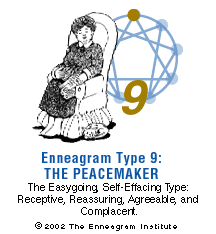
  • Nine, “The Peacemaker”: easygoing, self-effacing

I first heard about the enneagram on a radio show, though I couldn’t pinpoint my type. I took an online assessment, read the type descriptions, and determined that I was the poster child ninefor the Nine personality (“The Peacemaker”). I receive daily “EnneaThoughts”; these inspirational e-mails offer guidance for manifesting my strengths and overcoming my weaknesses. Here are some samples:

  • One of the greatest sources of strength for Nines is their profound patience: a deep “letting be” of other people that allows others to develop their own way. How can you express this rare quality today?
  • What would it be like to let go of your complacency and embrace your higher qualities of excitement and creativity today?
  • Remember that Nines can try not to stand out too much—putting themselves in the background so as not to upset themselves or others. Watch for this tendency today.

Now if you’ll excuse me, I’m going to slip into the background, settle into my routine, and squelch my creativity (at least until the next EnneaThought hits my inbox).

Carrie Bradshaw by the Numbers

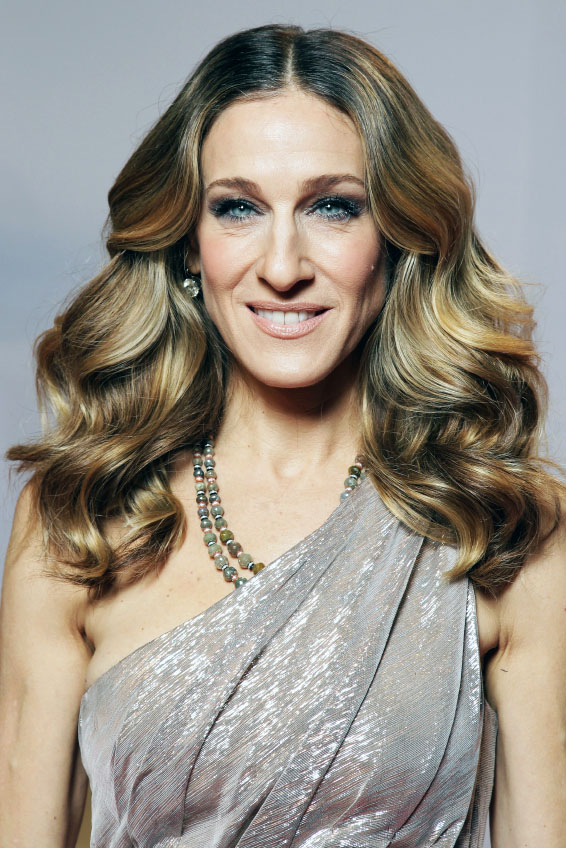
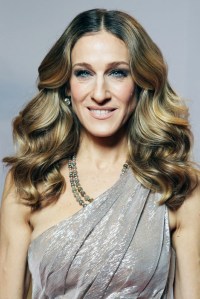
Sarah Jessica Parker

Sarah Jessica Parker, who plays Carrie Bradshaw on Sex and the City

According to numerologist Glynis McCants (and Greek mathematician Pythagoras), numbers possess a vibrational energy that forms the foundation of the universe. In numerology, the numbers associated with a person’s name and birthdate reveal his or her strengths, weaknesses, goals, and gifts. As I mentioned in an earlier post, I have considered using numerology as an aid in character development. So I was curious whether the qualities of successful fictional characters did, in fact, reflect their “numbers.”

I chose to examine Carrie Bradshaw, from HBO’s Sex and the City. Bravo ranked her eleventh on their list of the 100 greatest TV characters, and she came in second among TV Guide’s 25 greatest TV characters of all time. So I think it can safely be argued that she is an effective character. I located her birthdate on an infographic of fictional characters’ birthdays. Based on this date and her name, I calculated her basic numerology blueprint, below. (For an explanation of how the computations are made, please check out Glynis Has Your Number.)

Carrie Bradshaw, born 6/15/1966

Life path: 7

Birth day: 6

Attitude: 3

Soul: 8

Personality: 5

Power name: 4

So what do all these numbers mean?

Your life path number indicates the course your life must take in order for you to be satisfied. The 7 vibration is a truth-seeker, always asking, “Who am I?” In life and in her column, Carrie constantly tries to get to the truth about people. For example:

Later that day, I got to thinking about fairy tales. What if Prince Charming had never shown up? Would Snow White have lain in that glass box forever? I couldn’t help but wonder: inside every confident, driven, single woman, is there a delicate, fragile princess just waiting to be saved? Was Charlotte right? Do women just want to be rescued?

A recent article has compiled everything Carrie ever wondered about, season by season.

Your birth day number signifies how others see you. Someone born on a 6 day, like Carrie, “craves love, friends, and companionship.” Carrie’s character and the entire show are centered around this idea; the four protagonists remain inseparable. As Big observes, “You three know her better than anyone; you’re the loves of her life. And a guy’s just lucky to come in fourth.”

Your attitude number reflects your basic outlook on life. Carrie, as a 3 vibration, “values communication and creative energy”; her job as a writer is a perfect reflection of this aspect. A person with a 3 attitude “tends to be the joker. They have a sense of humor.” Indeed, Carrie uses self-deprecating humor to confront the issues in her life.

Your soul number represents what you feel inside. The 8 soul, like Carrie’s, is happy when it has “financial freedom, job security, and a nice home.” Accordingly, Carrie is very connected to her job and her apartment. She also lives on the dark side of the number 8, as shown in her lack of financial freedom: dismayed that she can’t afford to buy her apartment because of her excessive acquisition of expensive footwear, she laments that she will “literally be the old woman who lived in her shoes.”

Your personality number denotes what you show the world. The 5 personality “has an air of fun and energy” and “wants to know where the party is.” Indeed, Carrie has made appearances at countless parties—the Fleet Week party, the purse party, the party where someone steals her shoes, the all-couples party, and the black and white ball, to name a tiny fraction. The 5 personality is also known for having an addictive streak; Carrie is an on-again, off-again smoker who may have a dangerous shopping habit.

Your power name number represents the strength of your name. Carrie’s 4 vibration signifies “The Teacher.” And she really has made her name in the world by educating and enlightening others through her column and books. The people she meets often refer to her as their relationship guru.

Carrie Bradshaw seems to embody her numerology quite convincingly. Yet I can’t help but wonder: could I have made the numerology of any fictional character work? Am I just that good at twisting information for my own purposes?

Character: Sum of the Parts or Greater Whole?

Here is where you are going to think I am totally mad or a genius, or possibly the entertaining hybrid mad genius. As I mentioned in an earlier post, I needed help developing characters. So I dug up a handout from the writer’s boot camp I attended several years ago. It included an “emotional development profile,” which called for the following information about a character: name, overall goal, obstacles, what he or she stands to lose, flaw, strength, hates, loves, fears, dream, and secret.

Frankenstein's monsterIntellectually, it made sense that a character would be the composite of, well, characteristics. But even if I was able to contrive a character from different traits, would I end up with a well-rounded figure—or Frankenstein’s monster? Is a character constructed from analyzed parts similar to a creature built in a laboratory? After breathing life into my precious creation, would I accept it as pleasingly human—or disavow it in horror, like the mad genius Victor Frankenstein?

To avoid such a terrible scene, I wondered if there might be a more holistic approach to character development, one that started with the whole rather than the parts. Over the last few years, I have been exposed to various systems for understanding myself and others. I am open-minded about these systems; if they work, I don’t necessarily question how or why. Here are some of my favorite tools for gaining insight into people’s personalities and motivations:

  • Archetypes. In Jungian psychology, archetypes are unconscious ideas or thought patterns that are inherited collectively and present in individual psyches.
  • NumerologyNumerology. According to numerology, a person’s name and birthdate possess specific vibrations that directly influence his or her individuality and life purpose.
  • Enneagram. The enneagram (from the Greek ennea, meaning “nine”) outlines nine basic personality types and their complex interrelationships.
  • Astrology. Unless you’re from another planet, you are already familiar with the study of how heavenly bodies influence human affairs.
  • Face reading. Chinese face reading teaches that your facial features carry messages about your true nature.
  • Ayurveda. This system of traditional medicine from India stresses a balance of elemental energies or humors, which define a person’s temperament and qualities.

If I applied these constructs to my characters, I would know their reactions to any situation, thereby creating further situations—which, I think, makes a plot!

For example, how would someone with the Bully archetype deal with rejection? How would a person with a 5 life path, the Adventurer, react to being imprisoned? What would the enneagram’s Loyalist do upon discovering a horrible secret about her spouse? Would an Aries and a Cancer have a successful romantic relationship? How would an individual with twinkling eyes, peaked eyebrows, dimples, and freckles (the fiery Fun Lover) respond to a structured routine? How would someone with the Kapha dosha function in cold, damp weather? Really, it’s almost cheating.

Of course, the challenge will be figuring out what the Trickster-Teacher-Peacemaker-Pisces-Perfectionist-Pitta would do . . .

My Writing Guides, in Form and Spirit

Earlier this year, I was experiencing a digestive disturbance. After several visits to my acupuncturist, it occurred to me to wonder what this rather common malady might be telling me about my life (besides not to consume spicy food, chocolate, wine, and everything good). I arrived at the conclusion that I was failing to express myself and follow my purpose (as simultaneously trite and momentous as those things sound). I knew I was supposed to be writing, and it was time to get down to business.

SorceressI found a local life coach specializing in creative empowerment. In my complimentary phone session with her, I received what seemed like a staggering challenge: to create a table of contents for my book . . . within 24 hours. Pieces of the story had been floating around in my head for a while, and by the deadline, I was able to come up with 17 rough titles—which the coach correctly assessed as “more than rough” when she saw them. Exactly who was this sorceress who had beguiled me into action?

For my first in-person meeting with Ziva, I made sure to wear a collared shirt and freshly laundered jeans. She had looked rather professional in the photo on her Web site, and I wanted to appear to be taking my creative empowerment seriously. I felt immediately overdressed, however, as Ziva met me outside of her building sans footwear. I made a mental note to wear a T-shirt and tennis shoes next time (when, as it turned out, she went business casual).

IncenseI shouldn’t have been surprised by what I found inside Ziva’s condo, given that one of her titles is “intuitive coach.” As she opened the front door, I could smell incense burning. Ogling the extensive collection of mind/body/spirit books, I almost bumped into a draped reiki/massage table. Devotional art hung on the walls. Now, I wouldn’t call myself the New Age type; I am not “love and light” (at least not both at the same time). But the décor told me I was in the right place to develop a novel that had a metaphysical bent.

“How can I adjust my schedule to have more time to write?” “Should this material be presented in one, two, or three books?” “How much research do I have left to do?” A writer and her coach might tackle such questions analytically, discussing them at length and using up much of a 75-minute session. Or the coach could close her eyes, tune in to her guides, and share her psychic hit—informed by her extensive experience shepherding would-be authors. The latter system was working for me.

Spirit guideNear the end of our third in-person meeting, I noticed that Ziva was staring above and behind me. “You have a friend,” she stated. Glancing over my left shoulder, I saw an image of Jesus on the wall. I turned back to Ziva, bemused, and realized she was gazing not at the painting but at a being I could not see. Ziva said she perceived immense love coming from this smiling entity. “The being with you feels to be someone you knew, so a deceased loved one,” she explained. A warmth spread around my heart.

Ziva conveyed a message to me from my spirit friend: “Create characters as human beings.” The advice was apropos, as I had recently been struggling with the idea of portraying a Nazi officer as a real, sympathetic person. Ziva also sensed that angels and other guides were prompting me to tell my story. In fact, a popular intuitive had once told me that a group of guides, called “The Council,” was helping me with my writing.

Now that sounds like an audience for which you’d want to wear a collared shirt.

Not the Most Novel Idea

I am researching a novel set during the Holocaust. I had never intended to write about the Holocaust, or about anything historical for that matter. History was never my favorite subject. I even liked math better. All I can say is that the subject chose me. Then it quickly overwhelmed me. The volume of information available about the Holocaust is, conservatively, infinite. I am reading five books on the topic right now.

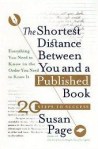
The Shortest Distance Between You and a Published BookMy writing coach, in our first session, added another resource to the mix: The Shortest Distance Between You and a Published Book, by Susan Page. As a would-be writer, I was excited to learn how to ditch the “would-be.” I was especially intrigued by the author’s presentation of the three main categories of fiction: literary, mainstream, and genre. As a former English major, of course I wanted to write something of literary merit! But could I remotely hope to pull it off?

Literary fiction does not rely heavily on plot for its appeal, but instead on the strength and power of the writing. Characters tend to be complex and filled with nuance. Literary novels are read not so much for action as for superb writing, rich character development, and originality of vision.

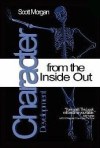
Character Development from the Inside OutI believed I could convey a unique viewpoint using decent grammar. But I didn’t know the first thing about creating psychologically rounded characters. I needed help. Three-quarters of the way through Scott Morgan’s Character Development from the Inside Out, I found myself reading about character clichés. Examples included “the rogue,” “the flaky genius,” and “the tortured artist.” Of course I would avoid these trite, stereotyped figures in my own writing! Then I arrived at the section’s final entry:

Nazis. Please, if there is nothing else you take from this book, let it be this: Don’t write about Nazis. Seriously. You can’t add anything new. Seriously. Stop writing about Nazis. A more interesting idea: Not Nazis.

AriesThe author’s strongly worded advice/plea/mandate touched on my own insecurities about the subject matter. But instead of throwing cold water in my face, it lit a fire under me. Maybe because I have so much Aries in my chart. Aries is my sun sign; I have an Aries rising; and Saturn, my north node, and my ascendant are in Aries. I don’t know what all that means, except that it’s a lot of Aries.

And Aries is a sign that welcomes a challenge.