
I’m pretty sure this blog post is haunted, because it completely disappeared yesterday while I was working on it. Poof! A little while later, it rematerialized. Spooky!
Halloween marks a time for remembering the dead and for celebrating the macabre, so it seems a fitting occasion on which to recount the rather gruesome passing of Paul McCartney, fifty-eight years ago this month.
In my last two posts, I talked about the burial of the original Paul McCartney, his replacement by a lookalike, and his contributions to the Beatles both before and after his death. In these discussions, I attempted to substantiate my assertions with compelling proof. Not so much with today’s post. In developing a theory of how Paul McCartney died, I have relied on psychic impressions, dreams, and flimsy circumstantial evidence.
The Psychic Who Spotted the Difference
My first peek into how Paul McCartney died came in 2018, during a session with my creative coach. I was working with Ziva (not her real name) to self-publish a collection of my blog posts. In addition to being an inspiring guide, Ziva was an intuitive; that is, she was able to access information beyond what is knowable through the traditional five senses. Aware of this talent, I decided to ask her about some strange things that had been happening around the house—curiosities that began shortly after I realized the original Paul McCartney had very likely been replaced.
First, I asked Ziva if she was familiar with the “Paul is dead” urban legend. She laughed. A bit daunted by her apparent skepticism, I produced a sheet of paper on which I had printed side-by-side photos of Paul and his replacement. I was prepared to point out the fine distinctions in their appearances—in face shape, eye color, and the way their hair fell. But I didn’t have to. After studying the page for a few seconds, Ziva announced, “They’re not the same person. They have completely different energies.”
I disclosed to Ziva some of the odd experiences I’d been having of late: intense crying spells; the frequent feeling that there was a being near me, either hovering or directly behind me; the irrational fear that a bloodied Paul McCartney might emerge from the darkness of the backyard when I took the dogs out at night to do their business. I told Ziva about a thought I’d had on the evening of June 3, 2018. As I reported the occasion in my journal:
I was washing the dishes and putting them on the drying rack. I felt like I needed to know what was going on. In my mind, I said, “If there is someone there, give me a sign. But don’t scare me!”
Three days later, on June 6, 2018, I received the first physical sign that something was going on:
I decided to rent Ron Howard’s documentary of the Beatles’ touring years, EIGHT DAYS A WEEK. I remember getting furious at the interview segments with Sir Paul McCartney (whom I strongly suspected was a replacement at that time). His eyes were so green in that movie… It was so obvious, on a gut level, that this guy was a poser. I said out loud, to the screen, “[Something unkind].” Then the lights in the living room, where I was watching the movie, began to flicker. These are six recessed lights. They continued to flicker, with varying degrees of intensity, for the rest of the movie and for a while after. I tried to adjust the dimmer switch to make it stop, but it didn’t. I wondered if the soul of the original Paul McCartney was causing the electrical disturbance. But I remember thinking, “This seems like a John Lennon kind of thing to do.”
Near the very end of that movie [EIGHT DAYS A WEEK], there’s a phrase that comes on the screen: “Three months later,” meaning, three months after the end of the Beatles’ American tour [in August 1966]. The film then presents the Beatles in the studio, recording “Strawberry Fields Forever,” I think. I was frozen [on the couch], and then I broke out in gut-wrenching sobs. How could Ron Howard say, “Three months later”? Didn’t he know what happened in those three months? The original Paul McCartney died and was replaced! You can’t just say, “Three months later.” I still don’t understand how biographers and documentarians miss the fact that there were two different Paul McCartneys.
(Rereading this journal entry, I am struck by how much more anger I used to have about the situation.)
After I shared the foregoing information with Ziva, she said she was going to try to “tune in” and find out how Paul McCartney died. I felt excited and a little panicked by this idea; whatever was happening, it was moving along quickly now! I interjected that the prevailing theory among those in the “Paul is dead” community was that Paul had died in a car crash. But that’s not what Ziva saw at all.
How Paul McCartney Died
My clairvoyant creative coach, in her mind’s eye, saw Paul stepping down and losing his footing because the ground was wet—an action that led to his death. Over time, a fuller picture developed around this premise. I will reveal how I arrived at some of the details in a little bit. But first, I will tell the tale of how Paul McCartney died as if it is fact, and in the spirit of a good, old-fashioned Halloween story:
On a mild October evening, Paul McCartney ran a bath. It was the Swinging Sixties, but the famous bass player was staying in. He was alone in the house—except for Knickers, the sheepdog puppy he had acquired several months earlier. Knickers could be heard howling for Paul, from another room, during a radio interview that aired shortly before the Beatles flew to America for their final tour.
Paul didn’t know it was the night he would die—that the moments leading up to his last would be spent drawing a bath. He was naked. And a little high on marijuana. Had he been able to see into the very near future, he would have wished for a temporary reprieve from gravity—such that water might not pool, or a man might fall up.
Paul lowered himself into the filled tub.
“Bugger!” he swore aloud. He had left his watch on. He considered removing it and putting it on the floor. But Knickers was there, keeping him company. She might think it was a toy—and treat it as such. Paul figured he should place the timepiece safely on the counter, next to the sink.
Paul stood up. He stepped completely over the lip of the tub, which was wide enough to sit on. Regrettably, he slipped on the patterned tiles below and fell back in the direction of the bath. Vertically lining the wall behind the tub were several shiny knobs. Paul’s head made contact with this hardware before he landed, face down, in the water.
Unconscious, he drowned peacefully.
Now outside his body, Paul comforted Knickers. She sensed his presence. On Paul’s submerged watch, the halted hands showed 9:09. As a teenager, Paul had written a ditty called “One After 909,” about a woman and a locomotive. The Beatles performed this song in the early days—at the Cavern Club, in Liverpool; and at the Star-Club, in Hamburg. But there was no train coming after 909; for Paul, 9:09 was the end of the line.
Paul had been expecting company that Sunday night, in the form of his future brother-in-law, Peter Asher, of Peter and Gordon. Paul had written the British pop duo’s debut single, “A World Without Love,” which reached the top spot in the U.K., the United States, and elsewhere.
When Peter arrived at the house, to meet with Paul about a musical matter, he knocked on the front door. Getting no answer, he let himself in; he had the key on him because his sister lived at the same address. Peter called out for Paul. Receiving no response, he began to look from room to room. There were lights on, like someone was home.
Ultimately, Peter discovered Paul in the upstairs bathroom. Knickers was still stationed by her master, where he lay in the bloody water. Peter turned Paul over. It seemed too late; but, of course, an ambulance was summoned. Peter also called his sister Jane, who was in Bristol to rehearse a play; he told her that her fiancé appeared mostly dead.
The ambulance came and took Paul to the hospital. Peter followed. Jane left right away, but London is a drive of several hours from Bristol. For privacy reasons, Peter asked for the Beatle’s identity to be kept quiet. At the hospital, it was confirmed that Paul was quite dead. When Jane arrived, she was devastated.
At this point, it was around midnight. Jane phoned the house of Paul’s father, in Heswall, near Liverpool. She had the lamentable task of waking Jim McCartney from his sleep and telling him that his elder son had died. The line was ringing. Jim’s wife, Angie, picked up. Jane said she had some terrible news and asked to speak to Jim.
In the morning, England awoke to the shocking headline: “Paul McCartney, Beatle, Dead at Twenty-Four.” It seemed like an awful dream. The queen declared a national day of mourning to allow for reflection upon the life of this young man, who had brought so much pride and joy to the nation. As word spread, Beatles fans around the globe grieved the loss of one-quarter of the world’s most famous band.
But nothing in that last paragraph actually happened. Paul’s death would go completely unnoticed by the public—as it largely remains.
A little over a week after he suffocated on his own bathwater, Paul McCartney was buried in an unmarked grave. He was wearing the watch that stopped when he did.
I didn’t want to interrupt the story with supporting links, so here they are:
- Paul, when he acquired Knickers (in his arms) from the breeder Ann Davis
- Knickers, howling during a BBC radio interview that aired August 6, 1966. (The howls start at 6:30 and continue for a while; they resume at 8:14, with an imitation by John and an apology from Paul.)
- Paul’s replacement sitting with baby Mary on the wide lip of the bathtub (sheepdog at the door), in a mirror selfie by Linda McCartney
- Hardware lining the wall behind Paul’s bathtub, as well as the patterned floor tiles, in a mirror selfie by Linda McCartney (with Paul’s replacement)
- The Beatles rehearsing “One After 909” at the Cavern Club, in Liverpool, in 1962
- Peter and Gordon performing “A World Without Love” (written by Paul McCartney), in 1964
- Jane Asher as Juliet in the Bristol Old Vic Company production of Romeo and Juliet, on November 9, 1966 (exactly one month after Paul’s death)
I was able to flesh out how Paul died, in part, with the help of some dreams I’ve had over the last few years.
Dream Memories of Paul’s Death
If you’ve never heard of a dream memory, it’s probably because I coined the term for my own use, to describe an experience I was having. Here’s my thinking:
- The subconscious contains memories of our past lives.
- The subconscious fuels our dreams.
- Therefore, it is possible to dream about our past lives.
When I have a dream memory from my life as Paul McCartney, I might experience it from Paul’s perspective. Or I might observe it from the outside—even through the eyes of another person in the scene. Sometimes, a dream memory is “pure”; at other times, my thoughts as Karen color my perception. Psychologists are well aware of the symbolic nature of dreams; if you’ve ever dreamt you were walking around naked in public, failing an exam, or losing all your teeth, you’ve come face to face with a classic dream symbol. Similarly, dream memories aren’t always strictly literal.
Please bear these nuances in mind as you read about several dream memories I’ve had concerning the death of Paul McCartney:
DREAM MEMORY #1: At the hospital
Date: 2019 or 2020
Description: This dream memory occurred before I was regularly recording my dreams, but parts of it remain quite vivid. What I remember most was seeing Paul’s face, devastated, through a window in a closed door like they have in hospitals—the ones that swing open. It was like his face was melting or distorting with sadness; his expression was a combination of horror and despair. I wondered if Paul’s soul had followed his body to the hospital and was seeing, now, that nothing could be done to save him. In the same dream, Jane Asher walked across my field of vision; I saw her from above, from the waist up, as she passed at a bit of a downward diagonal, from right to left.
DREAM MEMORY #2: Falling in the bathroom
Date: April 5, 2023
Description (from my journal):
I fed the dogs at 6:00 a.m. When I got back in bed, I turned on SEINFELD. I fell asleep around 6:40 a.m. I dreamt that I was sitting at a computer, absorbed in doing something. Upon reflection, the room and the computer are not familiar to me. Then I remembered I was running the shower. I went into the bathroom, which was the next room. It was my real bathroom, the one here in my house. I kneeled and pulled back the curtain a little. Only a trickle of water was falling. And I couldn’t hear it. I panicked momentarily, worried I was deaf. But then I realized I could hear SEINFELD. (Perhaps I was somewhere between being asleep and being awake, since I could hear the TV in my dream.) I adjusted the faucets.
I found myself standing half outside the shower [which is a shower-tub]. I caught a glimpse of myself in the mirror. I was naked and crouched over, but where I would typically see my long blonde hair, I saw a dark mass. I was aware of losing consciousness as I started to fall toward the floor, onto my left side. My left eye was already closed, and I struggled to keep my right eye open. But it closed. I thought, “I’m dying.” Then I was all the way on the floor. I was SHOCKED to wake up and find it had been a dream. It was 7:10 a.m. I wondered if Paul had given me a very strange gift—the gift of feeling what it was like to lose consciousness before drowning in the bathtub.
DREAM MEMORY #3: Crying with Jane
Date: October 12, 2023
Description (from my journal):
Later in the morning, in a dream, I felt very sentimental about Jane Asher. I had the thought that I could see in her the girl I once knew… It was a dream memory of Jane Asher—a sad one. It was at the hospital… She was sad and crying. She didn’t know I was standing right next to her, also crying.
Upon reflection, maybe JPM [James Paul McCartney] and I were supposed to take away from this memory that people were actually upset we were gone—since any such emotion would have to have been suppressed, at least publicly.
Thankfully, not all my dream memories of Paul are somber. Last year, I had quite a lighthearted one (an encounter between Paul and his brother)—which I was able to verify with a photograph! But that’s a story for another time.
Flimsy Circumstantial Evidence
In my last post, I shared a photo of what I suspected to be Paul’s grave. Posing at the site are Ringo, Yoko, John, George, and Paul’s replacement. The photo was taken by Linda McCartney, at the McCartneys’ home (formerly Paul’s home), for the sleeve of a Beatles single. On that afternoon in April 1969, Linda also photographed the group in what appears to be an upper-story window. I believe that window marks the room where Paul died.
Here’s what I think happened during that shoot: The group posed in the window of the upstairs bathroom, where Paul had been knocked unconscious and drowned two-and-a-half years earlier. Being in this space prompted John, George, and Ringo to meditate upon the death of their former bandmate, in “yon bathtub.” This emotional state inspired them to mark out Paul’s grave, where it lay in the garden below, using various collected items.
Do we know for sure that the window in the group photo is the window in Paul’s bathroom? A few similarities can be noted:
- The window in the group photo has curtains; the window in Paul’s bathroom also has curtains.
- The subjects in the group photo seem to be leaning or kneeling; there appears to be a ledge inside the window of Paul’s bathroom that would have provided the necessary support.
Moving on to a different detail of my story, why did I make Paul’s bathwater bloody? The suggestion came from George Harrison’s own lips. If you play the song “Blue Jay Way” backwards, starting about thirty-eight seconds in, George says, “Paul is bloody” and “Paul is very, very bloody,” over and over. I was going to count how many times, but the extremely clear pronouncement of “Paul is bloody” at 1:20 was enough for me.
Paul wrote “Blue Jay Way” in Los Angeles, in August 1966. He had been separated from his bandmates and dropped off at a borrowed house in the Bird Streets neighborhood of the Hollywood Hills—to be murdered. He was told that John, George, and Ringo would join him later. Paul had already had a very long day of traveling, performing, and cluelessly dodging attempts on his life. Now he was alone, in a remote location, with no protection against the attack of a paid killer. This individual arrived, in the guise of a newspaper reporter. Paul managed to neutralize the assassin, nonviolently, without ever suspecting her original motives.
After the assassin left, surely on her way to be fired, Paul grabbed a piece of stationery (scroll down at the link) and began to write “Blue Jay Way.” The first verse sets up the scene:
There’s a fog upon L.A.
And my friends have lost their way
“We’ll be over soon,” they said
Now they’ve lost themselves instead
Paul had lived to die another day.
[Edit, November 2, 2024: In reexamining the handwritten lyrics at the link, I realized that they appear to have been written by Paul to start, but then George (in a different pen and in a different hand) made an edit to the first line and added a fourth verse (which didn’t make it into the final song). Therefore, Paul’s original first line was, “There’s a fog on Blue Jay Way”—a fitting way to begin a song about being stuck in a house on a street of that name. Note that Paul’s next line also ends in “way” (“And my friends have lost their way”). So, I appreciate George’s edit (changing “on Blue Jay Way” to “upon L.A.”), for the sake of varying the rhyme.
However, I also like the subtlety of Paul’s original intent, to use “way” in successive lines but with somewhat different meanings. Paul triples down on “way” by writing, in the fourth line of that first verse, “they’ve lost their way.” By the time the song is recorded, however, George changes this lyric to, “they’ve lost themselves”—which I quite like. It suggests a fog so thick you can’t even find yourself.
I want to point out that George’s added fourth verse is metrically sound; that is, it matches the rhythm of the first three verses, written by Paul. I’m not sure why it wasn’t used in the final song, but I might have an idea. Paul, in his verses, refers to his friends (the ones he’s waiting for) in the third person (“they”). George, in his verse, refers to his friends in the second person (“you”). So, perhaps, in the end, it was decided that the added fourth verse didn’t flow with the others.
Finally, Paul’s name is intoned several times, as an eerie background vocal, when “Blue Jay Way” is played forwards (at 1:54, 1:59, 2:04, and 2:10).
Postscript: The Beatles started recording “Blue Jay Way” on September 6 and 7, 1967; they finished on October 6, 1967, just three days shy of the first anniversary of Paul’s death. Maybe Paul was especially on their minds during this time, so they filled the song with references to him and his passing.]
Mother Mary’s Passing
Halloween is a day for remembering Mary Patricia McCartney, formerly Mohin, who died on October 31, 1956, at the age of forty-seven. Mary was the wife of Jim McCartney, and the mother of Paul and Mike. Mary had been admitted to the hospital for a mastectomy, which never took place; when the surgeon opened her up, he saw the cancer had spread too far. Mike has been quoted as saying: “I can’t remember the details of the day we were told. All I remember is one of us, I don’t remember who, making a silly joke.” I’m pretty sure it was Paul, being a fool.
In a magazine interview, Paul was upfront regarding his feelings about his mother’s death:
Q: Do you live with your parents?
A: My mum passed away when I was 14, so I live with my dad, who is a cotton salesman now, and brother Mike, in a comfortable private home. I deeply regret that my mum did not live to see me succeed.
From what I’ve read, Paul often mentioned the fact that his mother died when he was young. I don’t think he ever got over her loss, in the ten years he survived her.
Bury Paul in Liverpool
My song “If I Roam (Bury Me in Liverpool)” began, very simply, as instructions for what to do with Paul’s body if it was ever found. Quickly, however, it became an anthem to Paul’s hometown of Liverpool, England.
I have now set the song to photographs taken by Mike McCartney—with a handful taken by his brother, Paul. Below the video, you will find the song’s lyrics, and below those, an important credit.
Next time, I’ll tell you how Paul McCartney really broke his left front tooth, based on clues from primary source materials.
Lyrics:
If I fall and need a hand
Of all the places in the land—
Carry me to Liverpool
Where folks live by the Golden RuleIf the world forgets my name
And I could use some local fame—
Ferry me to Liverpool
Where I grew up and went to schoolIf I roam, roam, roam
My soul will call me home
If I roam, roam, roam
My heart will lead me home
Lead me homeIf I’m feeling gray and sad
Or if I’m feeling fine and glad—
Tarry me in Liverpool
To meet me mates and grab a stoolIf you wonder where I’m free
To be myself and very me—
Query me in Liverpool
Where kettles warm and breezes coolIf I roam, roam, roam
My soul will call me home
If I roam, roam, roam
My heart will lead me home
Lead me homeIf you like the way I look
And if I kiss not by the book—
Marry me in Liverpool
G’wed and wed in Mersey’s jewelIf I die in London Town
Don’t let them put me in the ground—
Bury me in Liverpool
St. Peter’s, welcome back your fool!If I roam, roam, roam
My soul will call me home
If I roam, roam, roam
My heart will lead me home
Lead me home (oh-oh)If I roam, roam, roam
(Roam, roam, roam)
My soul will call me home
If I roam, roam, roam
(Roam, roam, roam)
My heart will lead me home
Lead me home
Lead me home
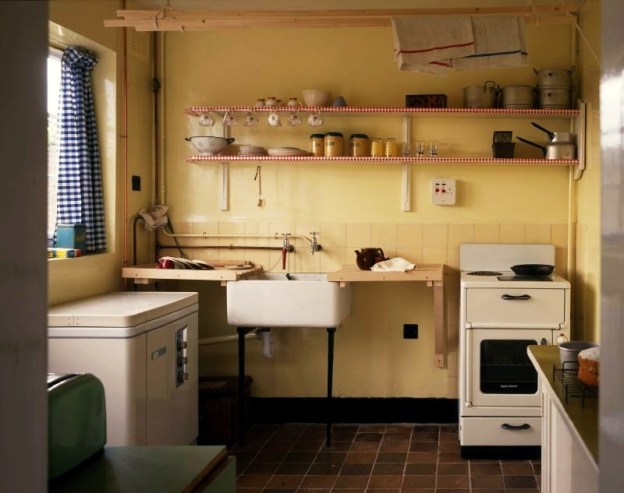
CREDIT: The image at the top of this post, of the McCartneys’ restored kitchen at 20 Forthlin Road, Liverpool, is from the National Trust Photographic Library, credited to the photographer Dennis Gilbert. I have “borrowed” it without permission; if challenged, I am fully prepared to grovel and beg forgiveness.
 My recently published book appears to be a collection of blog posts but is actually a devious plot to expose people to the idea of archetypes.
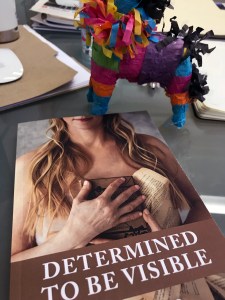 I self-published

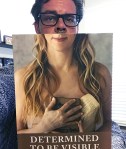

 Fast-forward forty-one years, and I finally have a book of my own! (God forbid a student should ever have to write a report on it.)
  I was not completely unfamiliar with the components of book design—margins, font sizes, line spacing, indents, page numbers, chapter openers. In my role as an in-house editor for a publishing company almost half a lifetime ago, one of my tasks was to create “design memos” identifying and describing the items in a manuscript that needed to be prettified (by a hired professional) for publication. I don’t mean to brag, but one designer said my design memo was the best she had ever received.
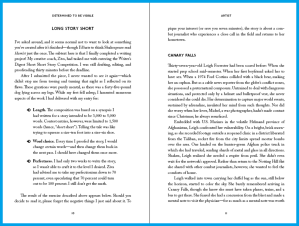 Still, during the process of laying out Determined to Be Visible, I experienced both pros and cons, presented below (with the cons listed first, since I’m a bad-news-first kind of person):

 Novel-Gazing