Category Archives: Archetypes

Damsel, Wizard, Knight: Discovering Your Archetypes

My recently published book appears to be a collection of blog posts but is actually a devious plot to expose people to the idea of archetypes. Determined to Be Visible reveals the twelve “psychological patterns” that govern my  existence, inspiring my every thought and action. These mental motivators are derived from “historical roles in life” (to quote modern-day expert Caroline Myss). My unique combination of archetypes includes the Artist, Clown, Daydreamer, Student, and Teacher.

I know what you’re thinking: “How can I find out what my archetypes are?” What you should do is read Caroline Myss’s New York Times best seller Sacred Contracts. But since you’re (still somehow) reading this post, I’m happy to share my unofficial approach to determining the dozen spiritual energies that rule your life. Regardless of who you are, I already know four of them: Child, Prostitute, Saboteur, and Victim. (We all share these survival-related archetypes.) That leaves eight for you to identify, by following these steps.

  1. Agree to see yourself honestly. Prepare to dig deep.
  2. Review the accompanying list of archetypes. Yes, the one on the blue background there.
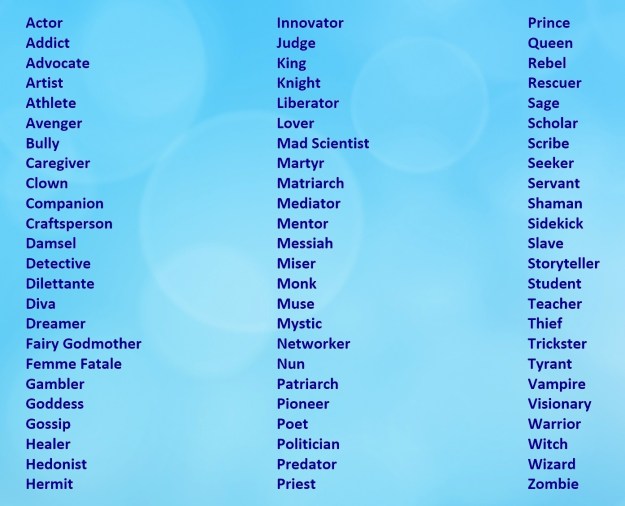
  3. Try each archetype on for size. Does it fit? Does it fit a little? Keep in mind that archetypes may be lifelong forces, occupational identifiers, or other influences.
  4. Think beyond the options presented here. For example, if you have always viewed yourself as a daredevil (or a philosopher or a counselor), consider that a possible archetype.
  5. Make a list of the archetypes that fit well or fit a little. Now is not the time for editing.
  6. Narrow down the list to the eight archetypes that fit best. Now is the time for editing. In the paring-down process, be wary of wishful thinking and of avoiding archetypes that seem negative. Some of us are martyrs, not mystics—and that’s okay! There are light and shadow aspects to every archetype.
  7. Ask a few friends for feedback. Sometimes (and by “sometimes,” I mean most of the time), others can be more objective about us than we can.
  8. Play with your final lineup until it feels right. Getting authentic with yourself, you might let go of an archetype that truly doesn’t suit you. Or upon reflection, you might bring back an archetype you eliminated earlier.

So, how did you do? Are you ready to embrace the wisdom of your Goddess, Hermit, or Vampire?
Determined to Be Visible

This month’s post is about a sign from the universe—or a remarkable coincidence, depending on your philosophy. Either way, it’s the story of how the title of my upcoming book came to be.

When I try to explain the organizing principle of my collection of blog posts, I expect to be received like someone speaking Mycenaean Greek. But people seem to “get” it, and almost immediately. First, I tell them I had to come up with a way to group my posts into chapters. Then I ask, “Have you ever heard of archetypes?”

Carl Jung, the founder of analytical psychology, introduced archetypes to the modern world (though the idea dates to Plato). I think of archetypes as characters, which can be found in movies, plays, novels, religions, and myths. Examples include the Goddess, Hermit, King, Rebel, and Warrior. Present-day authority Caroline Myss (pronounced “Mace”) defines archetypes as “psychological patterns derived from historical roles in life.”

According to Myss, twelve archetypes make up who we are. We all share four universal archetypes (Child, Victim, Prostitute, and Saboteur), but the other eight vary from person to person. I decided to figure out my dozen archetypes and use them to categorize my writings. I reasoned that if I truly embodied these “fundamental forces,” my blog posts, which are expressions of me, should reflect them. (With me so far?)

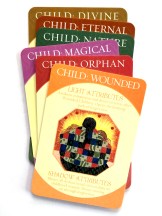
Caroline Myss’s Archetype Cards

As I mentioned, everyone has the Child archetype. But in her written materials, Myss identifies variations:

  • Wounded (suffers a traumatic upbringing)
  • Orphan (is excluded from the family circle)
  • Magical (sees beauty in all things)
  • Nature (bonds with natural forces, befriends animals)
  • Eternal (remains young forever)
  • Divine (is united with spirit)
  • Dependent (is needy, self-focused)

Unfortunately, I didn’t identify with any of them.

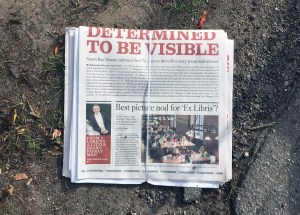
A neighbor’s newspaper

As I walked my dog one morning, however, I listened to Myss’s archived podcast (she used to have a radio show) about the Invisible Child. When the program ended, I felt I had found my Child archetype. Within seconds of making this observation, I encountered a newspaper at my feet. Just below the fold was a headline in big red letters: “DETERMINED TO BE VISIBLE.” I had never received a more obvious sign—or experienced a more stunning coincidence. (If you’re curious, the article was about Leonard Nimoy’s widow, Susan Bay Nimoy, whose short film was about to debut at Sundance against enormous odds.)

Myss states the following regarding the Invisible Child:

There’s nothing comfortable or pleasant about feeling that, as a child, you were invisible. . . . The positive end of the Invisible Child is that it can bring out in a person the opportunity to create an extraordinary journey toward visibility. Because developed in you is a yearning to become a visible person. And the option is that you can become a visible person through creativity, through clever, clever paths of using your imagination.

I could see that my book was a step in my journey toward visibility. Naturally, I appropriated the newspaper headline for its title.

Character: Sum of the Parts or Greater Whole?

Here is where you are going to think I am totally mad or a genius, or possibly the entertaining hybrid mad genius. As I mentioned in an earlier post, I needed help developing characters. So I dug up a handout from the writer’s boot camp I attended several years ago. It included an “emotional development profile,” which called for the following information about a character: name, overall goal, obstacles, what he or she stands to lose, flaw, strength, hates, loves, fears, dream, and secret.

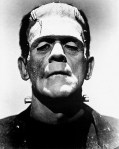
Frankenstein's monsterIntellectually, it made sense that a character would be the composite of, well, characteristics. But even if I was able to contrive a character from different traits, would I end up with a well-rounded figure—or Frankenstein’s monster? Is a character constructed from analyzed parts similar to a creature built in a laboratory? After breathing life into my precious creation, would I accept it as pleasingly human—or disavow it in horror, like the mad genius Victor Frankenstein?

To avoid such a terrible scene, I wondered if there might be a more holistic approach to character development, one that started with the whole rather than the parts. Over the last few years, I have been exposed to various systems for understanding myself and others. I am open-minded about these systems; if they work, I don’t necessarily question how or why. Here are some of my favorite tools for gaining insight into people’s personalities and motivations:

  • Archetypes. In Jungian psychology, archetypes are unconscious ideas or thought patterns that are inherited collectively and present in individual psyches.
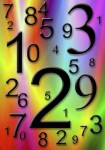
  • NumerologyNumerology. According to numerology, a person’s name and birthdate possess specific vibrations that directly influence his or her individuality and life purpose.
  • Enneagram. The enneagram (from the Greek ennea, meaning “nine”) outlines nine basic personality types and their complex interrelationships.
  • Astrology. Unless you’re from another planet, you are already familiar with the study of how heavenly bodies influence human affairs.
  • Face reading. Chinese face reading teaches that your facial features carry messages about your true nature.
  • Ayurveda. This system of traditional medicine from India stresses a balance of elemental energies or humors, which define a person’s temperament and qualities.

If I applied these constructs to my characters, I would know their reactions to any situation, thereby creating further situations—which, I think, makes a plot!

For example, how would someone with the Bully archetype deal with rejection? How would a person with a 5 life path, the Adventurer, react to being imprisoned? What would the enneagram’s Loyalist do upon discovering a horrible secret about her spouse? Would an Aries and a Cancer have a successful romantic relationship? How would an individual with twinkling eyes, peaked eyebrows, dimples, and freckles (the fiery Fun Lover) respond to a structured routine? How would someone with the Kapha dosha function in cold, damp weather? Really, it’s almost cheating.

Of course, the challenge will be figuring out what the Trickster-Teacher-Peacemaker-Pisces-Perfectionist-Pitta would do . . .